










For scheduled days, dense headcount
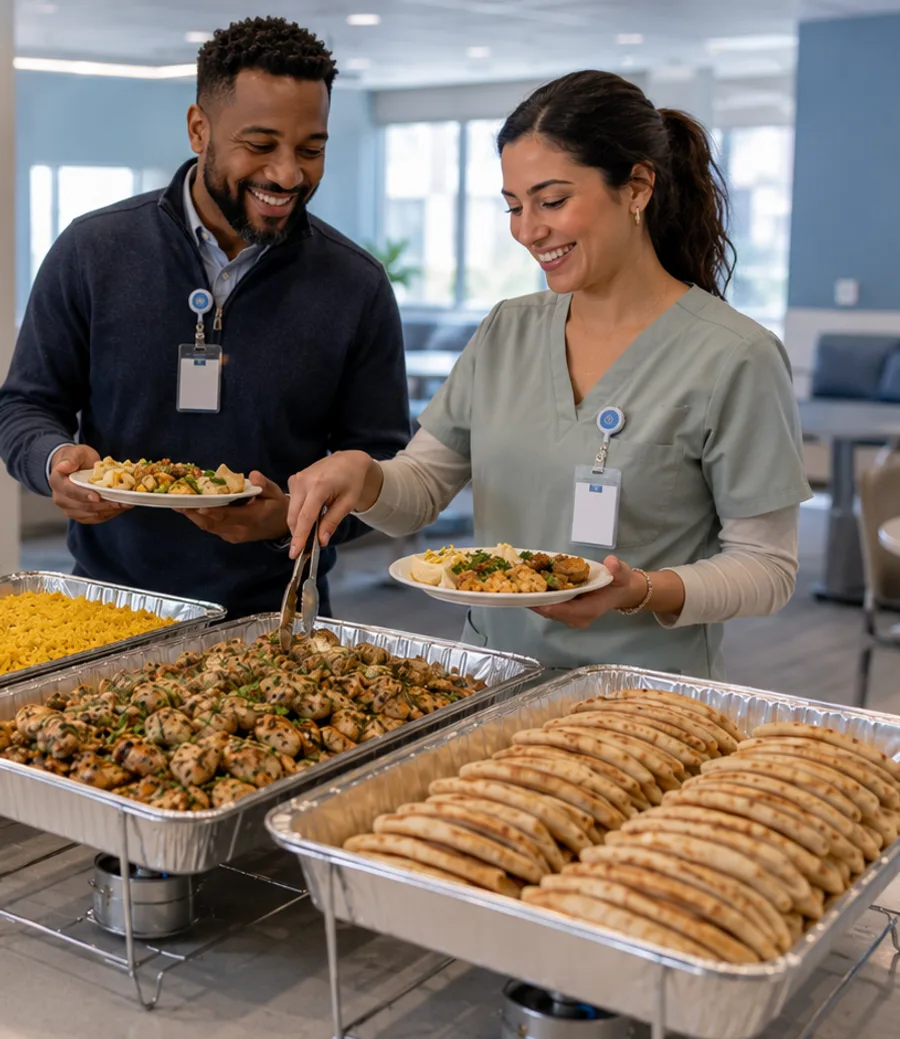
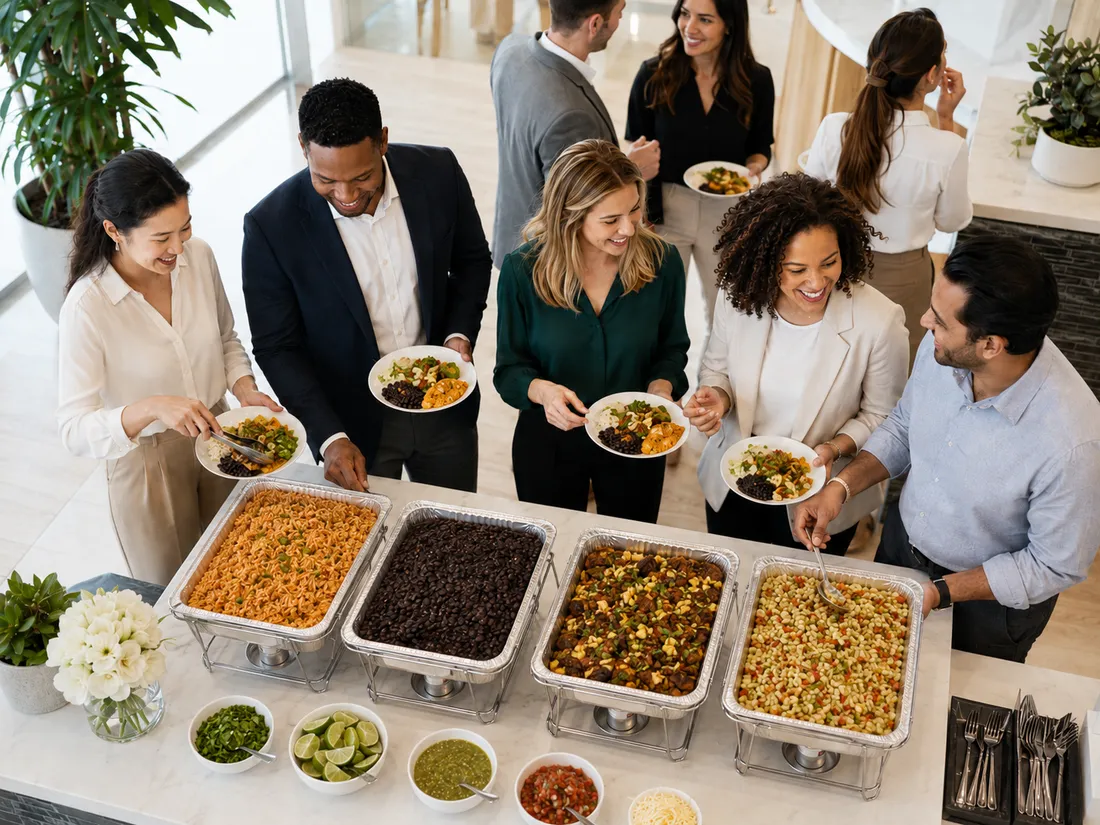
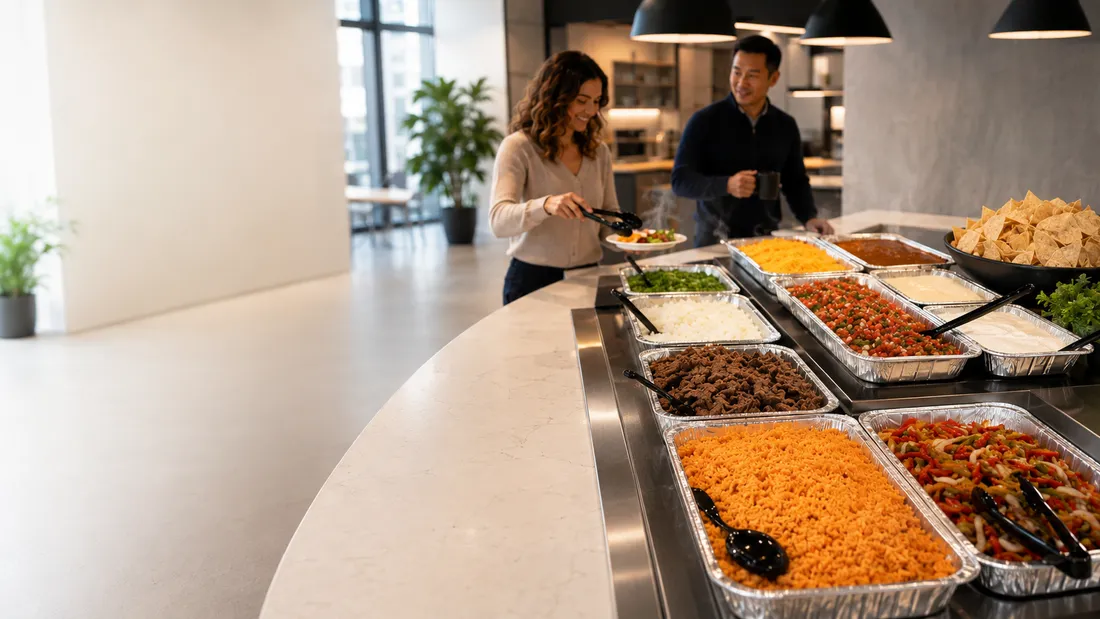
Best fit when 50+ employees are on-site on the same days. Hot pans dropped at your service window, your team self-serves, we leave. Lowest per-meal cost when used at frequency.
See the lunch program →A six-step guide for HR partners, office managers, and operations leads in Southern California. Written to be useful whether you end up working with MHP or not — and to answer the questions that show up in every internal stakeholder review.

The single decision that determines every later one.
If the goal is anchor-day attendance, the program needs to land on the days you want people on-site, with enough quality and consistency to feel like a real benefit.
If the goal is reducing turnover, the program needs to feel like an actual benefit to the workforce demographics you're trying to keep — not just decoration on the perk page.
If the goal is feeding 24/7 or multi-shift teams, the right model is almost always a Smart Fridge or a layered program — not a single daily catering drop.
If the goal is competing for talent against bigger employers, the program needs to be visible during recruiting conversations — listed in the offer letter, mentioned on the tour.
Real numbers, not "about 200 people." This step takes one afternoon and saves three weeks of program changes.
Monday through Friday, including hybrid splits. A Tuesday-Thursday office runs a different program than a five-day-on-site plant.
If the workforce runs swing or graveyard, list those headcounts separately. They drive whether the program is catering-only, fridge-only, or both.
Bilingual workforce, dietary restrictions you can't ignore (vegetarian, gluten-sensitive, halal/kosher), and any cultural menu fit for your team.
Loading dock or front entrance, break room location, available outlet for a Smart Fridge, COI requirements, security and check-in process.
Three program types. Most workplaces combine two.

Best fit when 50+ employees are on-site on the same days. Hot pans dropped at your service window, your team self-serves, we leave. Lowest per-meal cost when used at frequency.
See the lunch program →

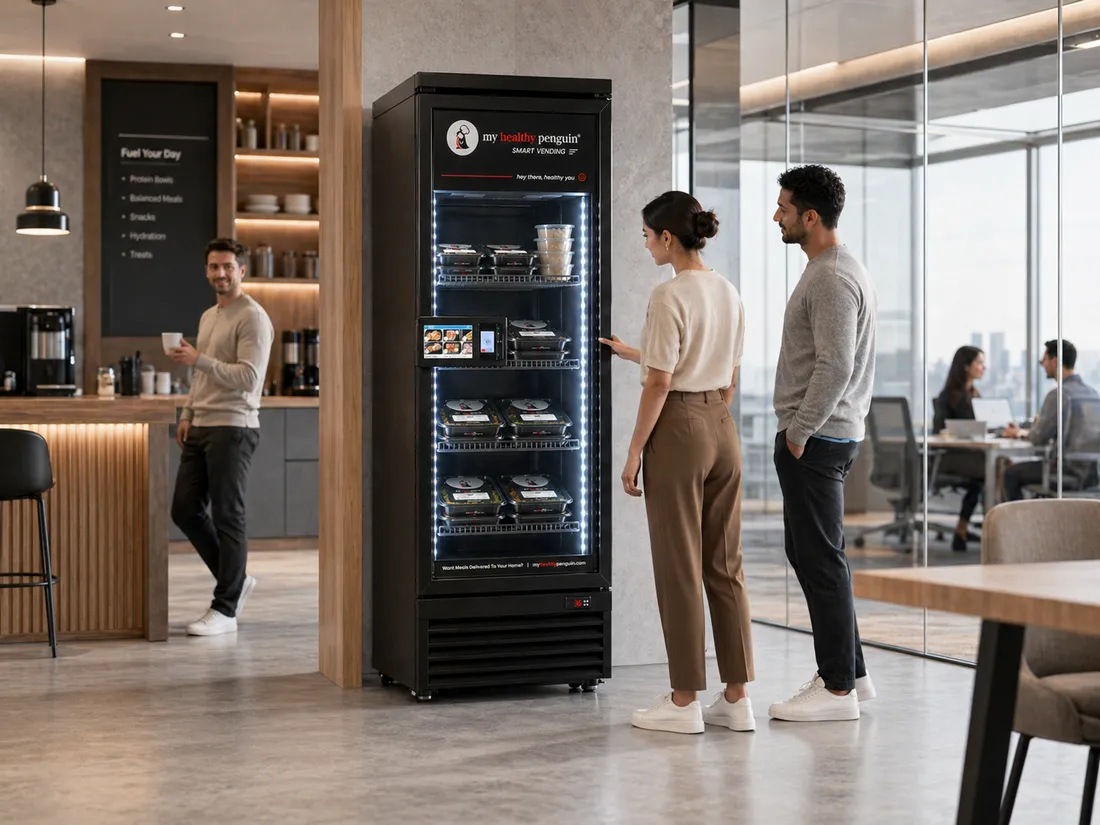
Best fit for multi-shift, satellite-office, or always-on workplaces. Always-stocked tap-to-open fridge, no app, no ordering. Fully managed restock.
See the Smart Fridge →
Best fit when the goal is a felt benefit employees take home, or when on-site headcount is too small for daily catering. Pre-portioned weekly delivery.
See weekly meals →
A vendor demo, a sample menu, a glossy proposal — none of it tells you whether the program lands at your specific worksite. The pilot does. Run it short, set a clear opt-out, measure utilization and satisfaction honestly. The pilot data is what makes the next decision easy, whether that decision is scale, adjust, or stop.
The pilot is the only way to know whether the program lands at your specific site. Build the pilot to give you real signal.
A week-2 cancel checkpoint means you stop early if the program isn't landing. Without it, the pilot becomes a sunk-cost decision instead of a learning one.
Don't start with catering plus a fridge plus weekly meal-prep across all sites. Pilot the single component you most want to learn about, then layer.
People use what they know about. A short Slack post or email the day before the first service goes further than rolling out silently and hoping people notice.
"This pilot succeeds if utilization is above X percent and satisfaction is above Y" beats a vague "let's see how it goes."
Four metrics, in order of importance.
What percent of eligible employees actually used the program? Below 30% means the program isn't reaching the people it's for. Above 60% means it's landing.
One-question survey. "Did this make your work day better? Yes / Somewhat / No." Simple to run, hard to game.
Track delivery time variance and any incidents. A program that works 4 days a week and falls apart on the fifth is not a program your team will trust.
If the goal was anchor-day attendance, did it move? If the goal was retention, what's the 90-day signal? The program lives or dies on this metric — not on the food quality alone.

A pilot with real measurement is the difference between a program that grows and a program that quietly dies at month three. By the end of week four, the utilization rate, satisfaction survey, and underlying business metric usually point at one clear next step — scale, adjust, switch model, or stop.
Based on what the pilot showed, the next 90 days look like one of three things.
Utilization above 60%, satisfaction strong, business metric moving — add days, add programs, expand sites.
Utilization mixed, satisfaction split — typical signal that the model needs tweaking. Cadence change, menu change, or layering a Smart Fridge onto a catering program often fixes it.
Utilization low, no business metric movement — the right call is to stop and free up the budget for something else. Better operators will tell you this honestly.
If the pilot showed the issue was program type (recurring catering, but the workforce is multi-shift), the answer is often switching models — not abandoning the program.
Patterns we see at workplaces that started a program and pulled the plug at month three.
The biggest single reason a workplace lunch program underperforms in the first 30 days. People can't use what they don't know exists.
Catering, fridge, and weekly meal-prep at three sites in week one means you can't isolate what worked. Pilot one component, one site.
Recurring catering at $14 a head is cheaper than a Smart Fridge program — but if the workforce is multi-shift, the fridge is what they need. Cheap-but-wrong is the most expensive mistake.
One late drop in week three, no follow-up from the vendor — and the program dies on the rumor mill. A good operator owns the miss publicly and the program survives.
Real words from our partners we prepare for every week.
Send us your headcount, your shift mix, and the goal. We will quote a 30-day pilot built around it, with a clear cancel checkpoint.
Start a pilot conversation ↗