Employee Benefits
Employee food perks that actually get used
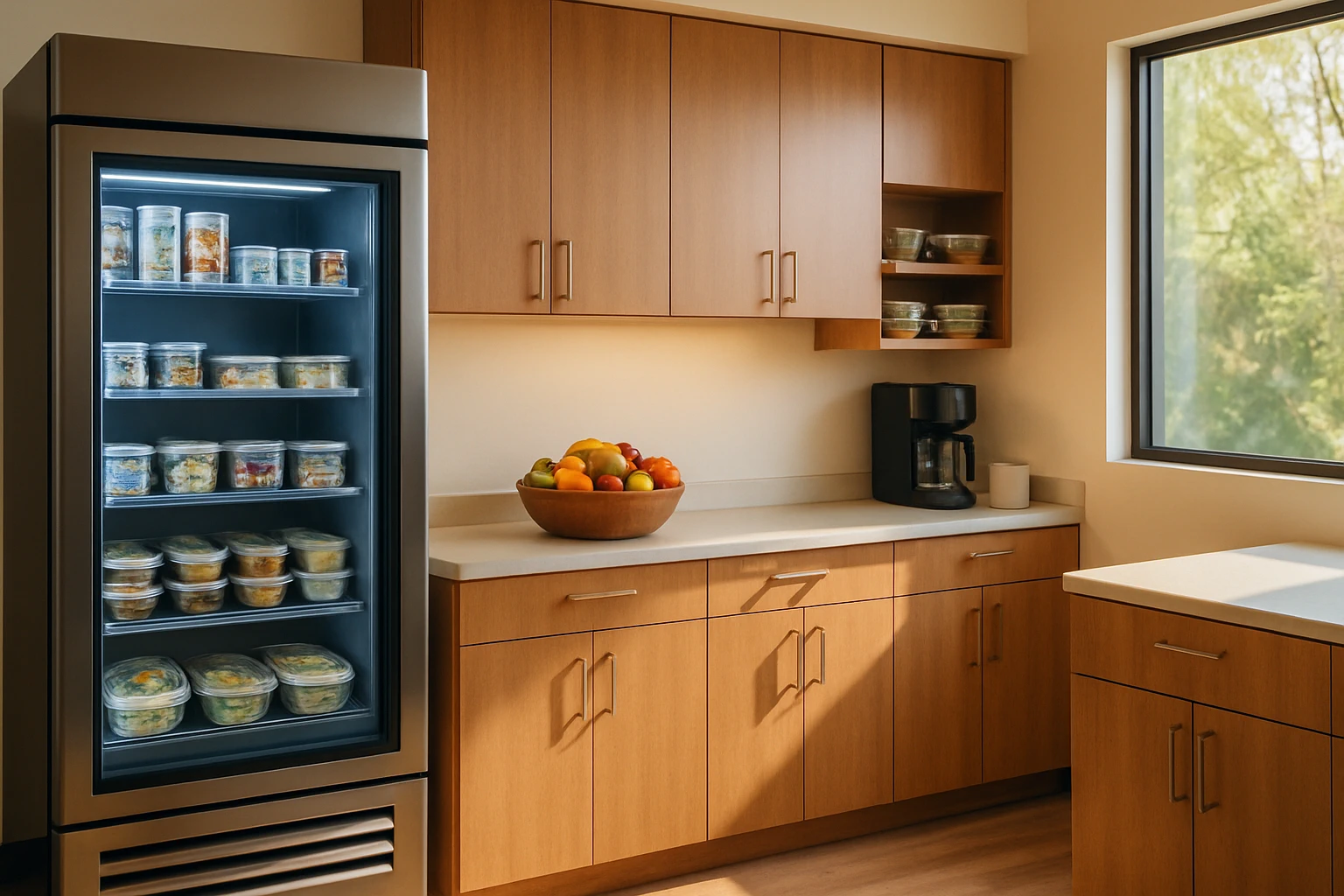
Employee benefits are expensive on paper and often underperform in practice. HR teams know this better than anyone. They see the utilization data on wellness programs, gym reimbursements, and professional development stipends that look good in job postings but generate low actual engagement. When benefit budgets come under scrutiny, the programs that survive are the ones employees demonstrably use. Food benefits are unusual in this regard: they are among the highest-utilization benefit types available, and understanding why changes how you should think about including them in your program.
The canonical example of low-utilization benefits is the gym membership. Research consistently shows that roughly 80 percent of gym memberships go underused, people sign up with good intentions, attend for the first few weeks, and then gradually stop going while the monthly charge continues. Employers who subsidize gym memberships or fitness center access are paying for a benefit that the majority of their workforce is not actually receiving.
This is not unique to gym memberships. Wellness stipends, cash allowances for employees to spend on health-related expenses, have notoriously low redemption rates when they require employees to submit receipts or use designated platforms. Tuition reimbursement programs are used by a small fraction of the eligible workforce. Employee assistance programs (EAPs) see utilization rates in the low single digits for many service types. The pattern is consistent: benefits that require the employee to initiate action, navigate a process, or make a scheduling decision are used by a subset of employees who are already motivated, not by the full workforce the benefit is meant to serve.
Food benefits have close to 100 percent utilization for a reason that has nothing to do with how much employees appreciate them: everyone eats every day. The need that the benefit addresses is universal, daily, and non-optional. There is no analog to the gym membership problem where an employee could decide not to eat on their break. The benefit activates at the exact moment of need, hunger, without any action required on the employee's part beyond walking to the break room.
This is the "present when needed" advantage of food benefits. A wellness stipend requires an employee to remember they have it, decide to spend it, find an eligible expense, and submit documentation. A food benefit requires an employee to be hungry, which, on an eight or twelve-hour shift, they will be. The friction between the employee and the benefit is as close to zero as any benefit type can get.
SHRM research on benefit satisfaction consistently shows that employees rate benefits they actually use significantly higher than benefits they theoretically have access to but don't use. This is not surprising, a benefit you use feels real, while a benefit you could theoretically use but don't feels abstract. The utilization gap is partly why food benefits tend to score disproportionately high on employee satisfaction surveys relative to their dollar cost: the cost-per-use is low, and every use is a moment when the employee directly experiences the employer's investment in them.
Glassdoor research on workplace culture and perks has consistently found that food benefits rank among the top workplace perks employees cite when describing companies they would recommend to others. The mechanism is the same: high utilization means high experiential salience. Employees can't easily speak from experience about whether the 401k match compound-interest structure is competitive, but they can speak clearly about whether their employer feeds them well.
The timing of when a benefit is experienced matters more than most HR professionals consciously account for. A benefit that arrives at the moment of need creates a distinctly different psychological association than a benefit that requires advance planning to access.
Consider the comparison: a $50 monthly wellness stipend requires an employee to identify an eligible expense, make a purchase, photograph a receipt, and submit it through a platform. The benefit arrives as a reimbursement, separated in time from the original need by at least several days. The employer's role in the transaction feels bureaucratic rather than caring.
A meal that is available in the break room when the employee is hungry on a shift creates a direct, immediate, and emotionally resonant experience: my employer put food here for me. The connection between the employer's investment and the employee's direct experience is instantaneous and visceral. This is why food benefits punch above their weight class in engagement research. It is not just that they are appreciated, it is that they are experienced directly, repeatedly, and in a moment of genuine need.
Food benefits are not immune to underperformance. They just fail differently than other benefit types. Understanding what kills utilization is essential for HR teams designing a program:
Bad food: This is the most common failure mode. An employer who offers a food benefit filled with low-quality options, stale vending machine items, lukewarm catering from a vendor chosen on price, a fridge full of items that have been there too long, has not provided a food benefit. They have provided a lesson in why not to bother. Employees who try the food once and find it unappetizing will not return. The quality of what is actually served determines whether the utilization advantage of food materializes or evaporates.
Inconsistent schedule: A food program that is there sometimes and not other times creates learned helplessness. Employees who show up on a Tuesday expecting a lunch and find nothing become less likely to plan around the program on future Tuesdays. Reliability is a prerequisite for the kind of habitual utilization that makes food benefits work. The program needs to be there every scheduled day, stocked consistently, without employees needing to guess whether it will be there.
Wrong format for the workforce: A weekly team lunch drop-off is a great format for an office that eats together at noon. It is not a great format for a warehouse running three shifts where the 4pm and midnight crews never interact with a noon drop-off. Matching the program format to the actual schedule and physical distribution of the workforce is essential. A smart fridge that is always accessible outperforms a catered event that only works for the day shift.
No dietary variety: A food benefit that consistently offers nothing a worker can eat is not a food benefit for that worker. On any diverse team in Southern California, there will be employees with dietary requirements that need to be served, halal, plant-based, gluten-aware, culturally specific preferences. A program that doesn't account for this has implicitly excluded part of the workforce from the benefit, which is the opposite of the universal-utilization advantage that food benefits are supposed to provide.
The mirror image of the failure modes is the utilization driver list:
Reliable schedule: Employees habituate to a food program that is always there. Once the program is part of the routine, "there's always food in the break room on Tuesday" or "the fridge is always stocked before the overnight shift", utilization becomes self-sustaining. The first few weeks of a new program are critical for establishing this expectation.
Genuine quality: High quality drives repeat use. An employee who grabs a grain bowl on Monday and finds it genuinely good will plan around that option again on Wednesday. Word travels in a break room, employees who have a good experience tell colleagues, and the program builds its own momentum. Quality is the single variable with the highest use on sustained utilization.
Dietary variety: Inclusive menus ensure that every employee can participate. Programs that maintain genuine variety, not token variety, but a real rotating menu that consistently includes options for the dietary profiles present in the workforce, achieve higher sustained utilization because no one opts out by necessity.
Physical accessibility: The food needs to be where the employees are, at the time they are there. A fridge on the second floor that the loading dock crew never passes isn't a benefit for the loading dock crew. For large or multi-building sites, placement matters as much as quality.
MHP's programs, the daily drop-off lunch, the smart fridge, and weekly team meal delivery, are all designed around these utilization drivers. Consistency, quality, variety, and accessibility are the operating principles rather than the aspirational ones. For more on how food benefits compare to other benefit types in employee value, see our post on meal benefits and turnover reduction.
For smart fridges, utilization is measured directly, MHP tracks items sold per unit per day, which gives a precise utilization rate against the eligible workforce population. For drop-off lunch programs, participation is typically tracked through headcount served relative to eligible employees on each delivery day. For weekly meal programs, usage is visible in how quickly deliveries are consumed. Most MHP clients see utilization rates well above 80 percent for programs that are sized correctly and positioned well, notably higher than almost any other benefit type in an HR portfolio. This data is available to HR teams who want to demonstrate program value internally.
Yes, and this is one of the most consistent findings in food benefit implementation. Employees who "skip lunch" are usually not choosing to skip. They are choosing not to navigate the friction of getting food during a short break window. When real food is available in the break room, the friction disappears and the meal happens. The behavior change is not attitudinal; it is logistical. The same employees who were skipping lunch when the alternative was a drive-through or a vending machine will consistently take their meal break when there is food worth eating within walking distance. This is particularly pronounced in physically demanding roles where the nutritional need is higher and the time pressure is more acute.
Program design matters here. A smart fridge that is accessible to all shifts and all employee levels has inherently democratic utilization, there is no seniority advantage in walking to a fridge. A catered executive lunch, by contrast, is definitionally exclusive. When the goal is broad utilization across the full workforce, program formats that are available to every employee on every shift outperform formats tied to scheduled events or specific locations that only some employees access. MHP's programs are designed for full-workforce utilization, not executive perks.
For on-site employees, the standard smart fridge or lunch program applies. For remote employees, who are present at the office only sometimes or not at all, the weekly team meal delivery format provides a version of the benefit that works for dispersed teams: scheduled meal deliveries to employees' locations, covering the days they are working remotely. The utilization principle still applies, everyone eats, so the benefit reaches everyone. But the delivery mechanism adapts to where the employees actually are.
MHP works with teams as small as 20 to 30 employees for smart fridge programs, and smaller teams can be served through weekly meal delivery. The utilization advantage of food benefits doesn't require a large team to materialize, a 30-person team with a well-run food program can achieve the same near-100 percent utilization as a 300-person team. For very small teams, the weekly meal delivery format often makes more sense than a fridge, both on cost and logistics. The right answer depends on your team size, shift structure, and budget, contact us and we'll tell you which format fits.
Tell us about your team and we will recommend the right program and a worksite-specific quote. No high-pressure sales.