Employee Benefits
How weekly meal delivery became a retention tool for Orange County employers
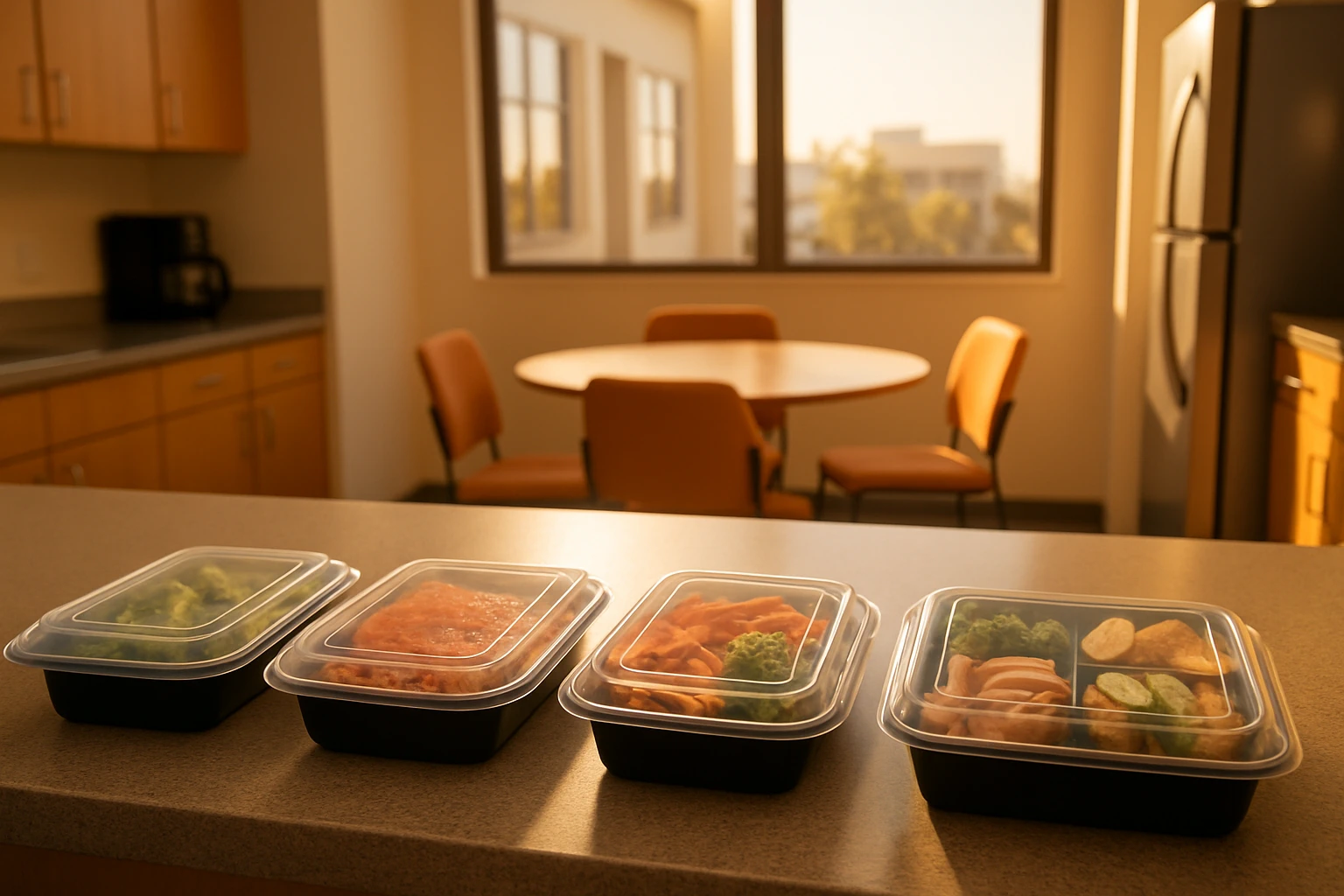
Orange County employers have been dealing with the same challenge as the rest of Southern California: a competitive labor market, compressed wage bands, and a workforce that has more choices than it did five years ago. What has changed in the past couple of years is the benefit that is most consistently showing up in conversations about retention and it is not the gym membership or the commuter stipend. It is weekly meal delivery.
The program is straightforward. Once or twice a week, MHP Food Service delivers fresh, chef-prepared, individually portioned meals to the office, or to employee home addresses for remote and hybrid staff. Meals arrive in labeled containers ready to heat and eat. No catering setup, no headcount guessing, no surplus. The employer receives one invoice per delivery cycle. Employees get a real meal on a predictable schedule.
This is the weekly team meal delivery format, different from a daily buffet (which requires consistent large headcount and serving infrastructure) and different from a smart fridge (which is better suited to 24/7 and mixed-shift operations). Weekly delivery occupies the sweet spot for teams of 20–80 employees on relatively predictable schedules. It is the benefit that does not require a cafeteria, does not require a kitchen, and can be up and running in a matter of weeks.
The employers using weekly meal delivery in OC cluster into a few groups. Irvine tech and biotech companies, teams of 30–60 where the kitchen is a break room with a microwave, have adopted it as a recruiter-mention benefit that shows up in Glassdoor reviews. Anaheim manufacturing employers have found it useful for teams that are too small for a full daily buffet but want something better than vending. Costa Mesa creative agencies use it as a culture signal: "we take care of our people, including lunch."
In each case, the driver is similar: the company wants to offer a food benefit that is concrete and appreciated, without the capital outlay or operational complexity of a full catering program. Weekly delivery delivers that, literally.
The retention mechanism for weekly meal delivery is different from a one-time gesture or a quarterly perk. Frequency is the key variable. A benefit that is experienced 50 times a year is far more retention-relevant than a benefit experienced twice a year. Every delivery is a small, fresh reminder that the employer invests in the team. Over time, that cadence builds a low-level loyalty that is difficult to displace with a competing job offer that is slightly better on salary but offers nothing comparable on daily care.
There is also a decision-fatigue angle. Orange County knowledge workers, whether in biotech in Irvine or agency work in Newport Beach, are making dozens of decisions every day. Having lunch figured out, reliably, is a small but real reduction in cognitive load. Employees who do not have to think about what they are eating at 12:30 because a good meal is already there have slightly more mental bandwidth for the afternoon. That is not a dramatic effect, but it is a consistent one, and it compounds over time.
One of the underappreciated properties of a food benefit that reaches employees at home, through the remote delivery component, is that it extends the employer's presence into off-site life in a positive way. An employee who receives fresh meals at their home address on work-from-home days is experiencing the employer's investment even when they are not physically at the office. That "always-on" signal is unusual in the benefits landscape and generates a distinctly personal form of appreciation.
This is particularly relevant in OC's hybrid-heavy professional services sector. When a consulting firm, law firm, or tech company sends weekly meals to its employees' homes on remote days, it is making a claim about how it values those employees that goes beyond any HR memo. The physical experience of the benefit does the communication that messaging cannot.
Most working adults in Orange County do not have a consistent, nutritious lunch routine. They eat out inconsistently, skip meals on busy days, or eat at their desk while still working. Weekly meal delivery from a program using fresh, chef-prepared ingredients addresses this directly. The meals are portioned and nutritionally balanced, which means employees who use the benefit regularly are eating better than they would without it and that has downstream effects on energy, focus, and sustained afternoon productivity.
For OC employers in healthcare and life sciences, where the workforce is explicitly educated about nutrition, this is a particularly resonant signal. You are not just providing calories, you are providing the kind of food that the people on your team already know matters for how they feel and perform.
Daily catering is the gold standard but requires consistent large headcount, serving infrastructure, and a higher per-week cost. A smart fridge works well for multi-shift or 24/7 operations but is a capital investment with a longer setup. Ad-hoc delivery apps give employees freedom but generate variable costs, inconsistent utilization, and no employer control over quality. Weekly meal delivery sits between these options as the most practical choice for the majority of OC employers who want a reliable, appreciated, low-overhead food benefit without the complexity of a daily program.
It is also the easiest to pilot. Starting with one delivery day per week requires a minimal commitment and provides immediate data on participation and employee response. Most teams that pilot weekly delivery expand to two days within the first quarter because the feedback is uniformly positive and the logistics prove to be as simple as advertised.
MHP Food Service serves Orange County employers from our Rancho Cucamonga kitchen, with delivery routes covering Irvine, Anaheim, Costa Mesa, Newport Beach, Tustin, and surrounding areas. The onboarding process is straightforward: confirm headcount, select a delivery day or days, and provide any dietary notes. Most programs launch within two to three weeks of initial inquiry.
For more on the retention value of meal benefits, see Do meal benefits reduce turnover? The data for SoCal employers. For the broader OC workplace lunch landscape, see Workplace lunch in Costa Mesa and Irvine tech corridors.
Weekly delivery sends fresh, chef-prepared portioned meals to the office (or to employee homes for remote staff) on a fixed schedule, typically once or twice per week. The benefit is experienced consistently, costs less per employee than daily catering, and has near-100% utilization because it is a real, prepared meal rather than a stipend or platform credit.
Tech and biotech companies in Irvine, manufacturing teams in Anaheim, and creative agencies in Costa Mesa are the most common users in Orange County. Weekly delivery tends to work best for teams of 20–80 employees where a daily buffet is more than necessary but doing nothing for meals is not acceptable.
Frequency matters enormously for benefit perception. A quarterly bonus is appreciated twice a year. A weekly meal delivery is appreciated 50 times a year. The weekly cadence means employees notice and appreciate it consistently, which builds loyalty in a way that less frequent rewards cannot match.
Yes. MHP Food Service can deliver to the office for on-site employees and to employee home addresses for remote or hybrid staff who are home on delivery days. Both can be covered by a single program with one invoice.
There is no hard minimum, but the per-meal cost is most favorable for teams of 15 or more participating employees. Smaller teams can still access the program, contact MHP for a quote based on your specific headcount.
Tell us about your team and we will recommend the right program and a worksite-specific quote. No high-pressure sales.
Hot buffet lunches, a 24/7 smart fridge, or weekly meal drops — cooked in our Rancho Cucamonga kitchen and run as one simple program.