Smart Fridge
Smart fridge for fitness centers and gyms in SoCal
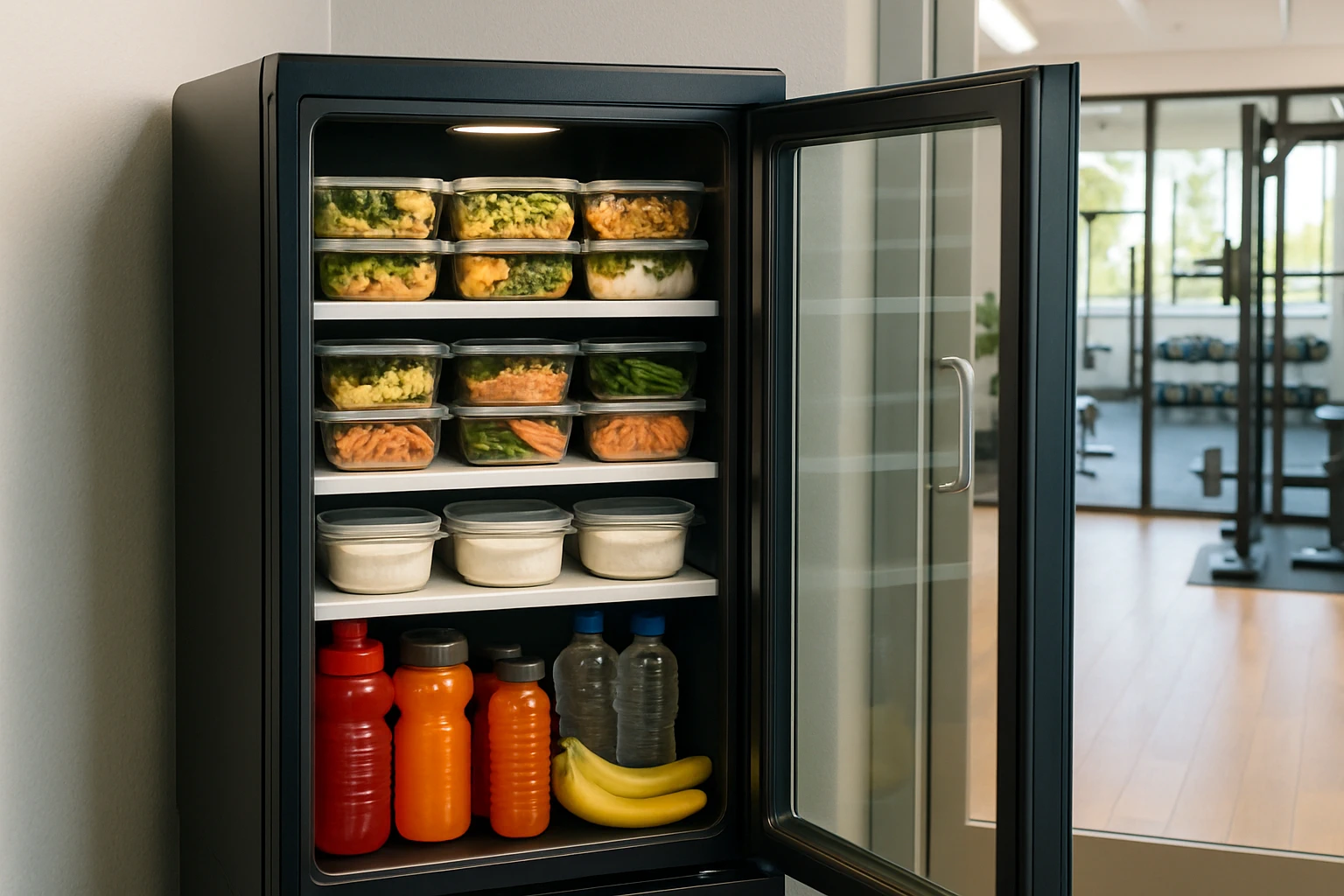
Fitness centers and gyms in Southern California are a natural fit for the smart fridge model, perhaps more than any other industry vertical. The culture already values food quality. The staff are professionally invested in nutrition. The scheduling is built around split shifts that make conventional lunch options impractical. And members, increasingly, are looking for post-workout nutrition that goes beyond a protein shake from a vending machine.
This post covers both dimensions of the smart fridge in a fitness center context: as a staff nutrition benefit and as a member-facing amenity. Both are real use cases, and they can operate simultaneously from the same unit or from separate units depending on the facility's size and layout.
Gym and fitness center staff operate on some of the most fragmented schedules in the service industry. A personal trainer at a large Southern California fitness club might work 6am to 9am with three clients, take a break, return for a noon class, have another gap, and then run a 5pm block of sessions. That is three separate working windows across a 12-hour span, with breaks in between that do not always align with normal mealtimes and may not last long enough to leave the facility and return.
Group fitness instructors, coaches, and class-based staff have similarly broken schedules. Yoga instructors may teach a 7am class, a noon class, and a 6pm class. CrossFit coaches run programming across multiple time slots. Front desk staff work shifts that may start at 5am (when the facility opens) or end at 11pm (when it closes). The staffing of a busy gym is spread across a very long operating day with highly variable individual schedules.
What all of these workers have in common is that a single, predictable lunch window does not exist. They eat when they can, in whatever time they have between obligations. For many, that has meant protein bars, fast food grabbed between clients, or whatever snack happens to be in the break room. None of those options are consistent with the health and performance values that fitness professionals embody in their work.
This is worth stating plainly: fitness professionals are advocates for healthy living as their core professional identity. A personal trainer who spends their day coaching clients on nutrition, recovery, and sustainable physical performance and then eats a vending machine snack between sessions because the employer has not provided anything better, is experiencing a real contradiction between their professional values and their employer's investment in those values.
For gym operators in Southern California, this is not a trivial HR concern. The best fitness professionals have options. A certified personal trainer or a sought-after group fitness instructor can work at multiple gyms in a region like the Inland Empire, Orange County, or greater Los Angeles. The workplace culture, the quality of the facility, and the benefits, including something as practical as having real food available, factor into where they choose to work and how long they stay.
A smart fridge stocked with high-quality, protein-forward meals communicates that the gym takes care of its staff in a way that is consistent with the fitness culture it embodies. A bag of chips in the vending machine does the opposite. The message is not subtle, and fitness professionals notice it.
The nutritional requirements of fitness professionals during a working day are specific. Personal trainers doing active sessions, demonstrating exercises, spotting clients, moving through the facility, expend meaningful energy across a shift. They need real food, not a light snack. But the window between clients is often 15 to 20 minutes, which makes complex food preparation impossible and restaurant trips unrealistic.
The smart fridge solves this by providing grab-and-go meals that are substantive enough to fuel a physically and mentally demanding work session. MHP's protein-forward menu is particularly well-aligned with fitness professional needs: high protein (30 to 45 grams per meal) to support muscle recovery and sustained energy, complex carbohydrates for steady fuel, and low simple sugar content to avoid the kind of blood glucose fluctuation that a trainer doing back-to-back sessions cannot afford.
A trainer eating a grain bowl with chicken and roasted vegetables between a 9am client and a 10am client is fueled for the rest of the morning. A trainer eating a bag of chips is going to feel it by noon. The difference is visible in performance and in how the trainer presents to clients, energy, attentiveness, physical capability.
The second smart fridge use case for fitness centers is member-facing: placing a unit in the lobby, recovery area, or common space where members can access post-workout nutrition as they leave the facility or cool down after class.
Post-workout nutrition is a genuine need for regular gym-goers. The 30 to 60 minutes after a meaningful workout session is when the body is most receptive to protein for muscle repair and carbohydrates to replenish glycogen. Many fitness members have a clear intention to eat well post-workout but no reliable mechanism to do so, a drive home, errands, or a return to work intervenes and the window passes.
A smart fridge in the gym lobby changes this calculus. Members can grab a real meal, not a protein bar, not a shake, not fast food from across the parking lot, immediately after finishing their session. The fridge is stocked with options that align with post-workout nutritional goals: protein-forward, moderate in carbohydrates, low in processed ingredients. For a gym that has built a brand around health and performance, this is a genuine value addition to the member experience.
The member-facing fridge can be priced at market rate (member pays full price through the smart fridge payment system), discounted for members (gym subsidizes a portion), or operated as a free perk for premium membership tiers. MHP supports all of these configurations.
Southern California fitness culture sets a high standard for food quality. In a region where fresh, organic, and locally-sourced food is a mainstream expectation rather than a premium niche, a gym that serves its members and staff processed food from a vending machine or offers only protein bars and energy drinks is operating below the expectations of its clientele.
Large regional gym chains in the OC, IE, and LA markets have members who are sophisticated about nutrition. They read labels. They have opinions about ingredient quality. They will not use a smart fridge that stocks items they consider low-quality or inconsistent with their health goals. The MHP menu, fresh, California cuisine-style meals with clean ingredient profiles, full labeling, and a protein-forward design, meets the quality threshold that SoCal fitness consumers expect.
This matters because the member-facing fridge is only as valuable as the food in it. A smart fridge stocked with the wrong food will be ignored by the members it was intended to serve. MHP's menu was developed with an understanding of what the SoCal health-conscious consumer actually wants to eat, not what is cheapest to procure, not what sells best in a convenience store, but what someone who cares about their health will choose when given a real option.
Gym operators are not in the food business. Managing inventory, coordinating food deliveries, handling spoilage, and training staff to operate a food service function is not a core competency for most gym management teams and it should not have to be. The smart fridge model removes all of that operational overhead.
MHP handles everything after the unit is installed: stocking, rotation, quality control, billing. The gym's facilities team does not check inventory, place orders, or coordinate with a vendor. The fridge is stocked on a schedule calibrated to usage, and MHP adjusts that schedule as patterns change, busier summer months, a new class format that drives more traffic to the lobby area, or a shift in membership demographics. The gym manager's job is to make sure there is an outlet and floor space. MHP's job is to keep the fridge stocked with food worth eating.
See our Smart Fridge program page for the full program overview. Our gyms and fitness industry page covers the sector in detail. We have also written about the general topic of gym staff meals in SoCal, which covers the daily meal delivery format as a complement or alternative to the smart fridge for facilities that want both options.
Yes. The smart fridge can be placed in any accessible area, lobby, recovery room, juice bar area, hallway adjacent to the training floor. The unit is self-contained and does not require special plumbing or ventilation beyond the standard 120V outlet. For member-facing placement, we discuss traffic flow and visibility during the pre-installation site visit to identify the optimal location.
MHP's standard menu is protein-forward and low in simple sugars, which aligns well with post-workout nutritional goals. The typical entrée provides 30 to 45 grams of protein, moderate complex carbohydrates, and a significant vegetable component. For fitness center deployments, MHP can weight the rotation toward options with the highest protein-to-calorie ratios and prioritize formats that appeal to fitness-conscious consumers, grain bowls with extra protein, high-protein wraps, and salads with substantial animal or plant protein components.
Yes. The smart fridge payment system supports multiple price tiers, staff rate, member rate, and guest rate, which can be configured based on who is accessing the unit and how payment is set up. Subsidy configurations are also supported: the gym can cover a portion of staff meals while members pay full price, or offer a member discount as a benefit of a premium membership tier. MHP discusses payment and subsidy configurations during program setup.
MHP monitors consumption data from the unit and adjusts restock frequency as usage increases. January, when gym memberships spike, and summer, when outdoor fitness culture peaks in Southern California, both tend to drive higher smart fridge usage at fitness facilities. MHP builds this seasonality into the service plan so the fridge is well-stocked during high-demand periods without the gym manager having to intervene or request additional restocks.
Yes. Multi-location accounts are standard at MHP. A gym chain operating five locations across the Inland Empire and Orange County can run smart fridges at all five under a single service agreement with consolidated billing. Each location has its own restock schedule calibrated to its usage and traffic patterns, and the account is managed through a single MHP contact. This is a common configuration for growing regional gym brands.
Tell us about your team and we will recommend the right program and a worksite-specific quote. No high-pressure sales.