Wholesale
Vending machine operators: when to add fresh meals to your offering
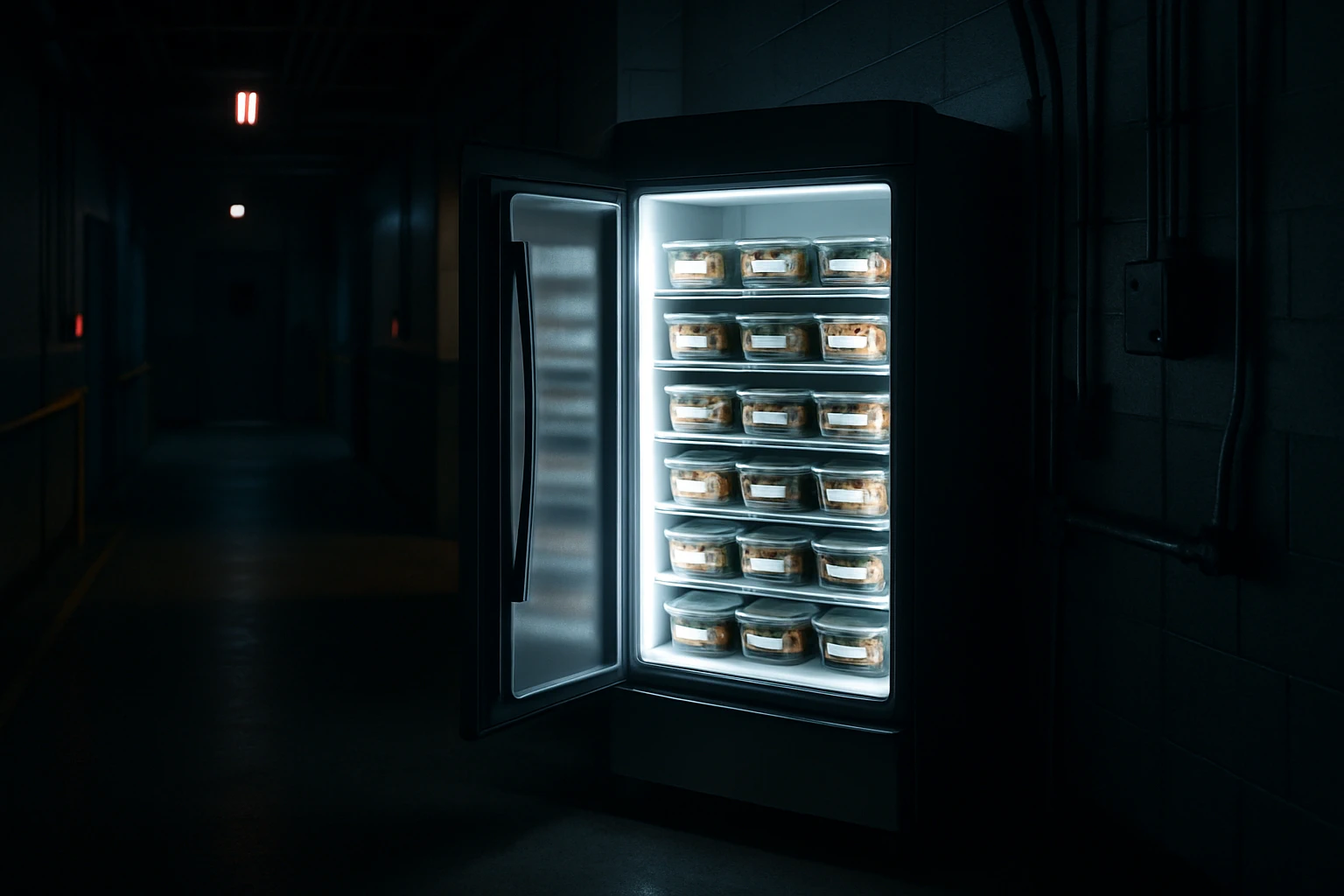
Vending machine operators in Southern California have spent the last decade watching workplace buyers ask for things they could not deliver: real food, healthy options, fresh meals their teams would choose over delivery apps. The operators who could add fresh meals to their offering took the accounts. The operators who stuck with packaged snacks lost them. This guide is for the vending operator evaluating whether to make that shift.
The vending category has been under structural pressure for ten years. Workplace buyers used to accept a snack and beverage offering as the answer to "what should employees eat between meetings?" That answer no longer holds. Buyers want fresh food, the same way they want a real coffee program instead of an instant coffee machine.
For operators running standard packaged vending, the pressure shows up as account loss and pricing compression. New accounts are harder to win without a fresh component. Existing accounts get renegotiated downward on the assumption that the offering is commoditized. Operators who can offer fresh meals see the opposite pattern: account wins, longer renewal cycles, and pricing that holds.
The transition from packaged-only to fresh-inclusive is a real operational shift, but the economics for operators who make it have been clear for several years.
The lightest-touch version of adding fresh meals is to convert one machine slot or one shelf in an existing micromarket location to fresh prepared meal SKUs. The operator does not have to replace anything. They add a stocked fridge or a refrigerated shelf carrying 20 to 40 meal SKUs alongside the existing packaged offering.
The fresh meals usually become the highest-velocity category in the location within the first month. Customers who used to skip lunch or order delivery start buying a meal from the on-site offering. The packaged snack and beverage business does not go away. It simply takes its rightful place as the secondary category instead of the primary one.
For operators already running a refrigerated route, the logistics cost of this upgrade is small. The truck is already cold. The delivery is already happening. Adding wholesale meal cases to the existing drop is a marginal change. For operators running only ambient-temperature vending, the upgrade requires real investment in refrigerated trucks and on-site cases, and the math has to be run honestly.
The first decision for any vending operator adding fresh meals is the wholesale supplier. The supplier determines the meal quality, the pricing structure, the delivery reliability, and the menu rotation. A bad supplier choice produces a fresh meal category that does not sell. A good supplier choice produces the highest-velocity SKUs in the location.
The questions to ask any wholesale meal supplier:
A wholesale supplier worth working with answers these specifically. A reseller hedges or routes through a partner. The operator who asks these questions before signing usually knows whether to keep talking by the end of the first call.
MHP cooks every meal in our Rancho Cucamonga kitchen and delivers wholesale meals to vending and micromarket operators across SoCal. The format is engineered for unattended retail: individually packaged, code-dated, allergen-tagged, in containers that hold up in a refrigerated case for 7 to 10 days.
The menu rotates weekly across a 4-week cycle, so the customer who buys from the same location daily sees variety. The pricing is per-location-minimum, which means operators can scale small and large locations into the same wholesale relationship. The delivery is SoCal-specific, with route windows built around the actual time-of-day logistics in the Inland Empire, OC, and LA.
For an operator running an existing refrigerated route, adding MHP wholesale meals is a marginal logistics change. For an operator building a refrigerated route from scratch, MHP can be the anchor category that justifies the route investment.
Operators usually price fresh meals at retail of 1.8 to 2.0 times the wholesale cost. A $7 wholesale meal lands at $13 to $14 at the location. That price point is competitive with delivery apps after fees, and it is meaningfully better than the cost of leaving the building to eat.
Adoption follows when the retail price is reasonable and the food is good. Locations where the offering is calibrated correctly see 60 to 80 percent weekly sell-through of stocked inventory. Shrinkage from code-date expiry runs 4 to 8 percent at calibrated velocity, which is built into the unit economics from the start.
The margin on fresh meals is meaningfully better than the margin on packaged snacks once shrinkage and cold-chain costs are accounted for, because the retail price point is higher and the customer base buys it more often.
Operators who add fresh meals to their offering see three measurable outcomes: account retention improves because the offering is differentiated, new account wins accelerate because the fresh meal category is the conversation starter, and per-location revenue increases because fresh meals attract customers who were not buying anything from the existing offering.
The operators who tried it early ten years ago saw mixed results because the supply chain was not there. The operators who try it today have access to industrialized cold-chain wholesale partners with predictable weekly delivery and clean labeling. The supply problem that held the category back is largely solved.
The fastest way to evaluate adding MHP wholesale meals to your vending operation is a short call about your existing route, your account mix, and the locations where you want to pilot the fresh meal category. From there we can quote per-location minimums and have a delivery schedule in place within a week or two of agreement.
Workplace vending and unattended retail category trends are tracked by NAMA (National Automatic Merchandising Association). Fresh-meal velocity benchmarks in unattended retail come from NAMA member operator data and the Society for Foodservice Management.
The standard practice is to pull anything within 24 hours of code-date expiry, count it as shrinkage, and stock against demonstrated weekly velocity at the location. Code-date losses on a calibrated location run 4 to 8 percent of stocked units. Locations where velocity is hard to predict run higher, and operators adjust stocking pace until the loss rate stabilizes.
Tell us your locations and the volume you move, and we’ll come back within one business day with wholesale terms for your route.