Employee Benefits
How to build a food benefit budget for a 50- to 500-person team
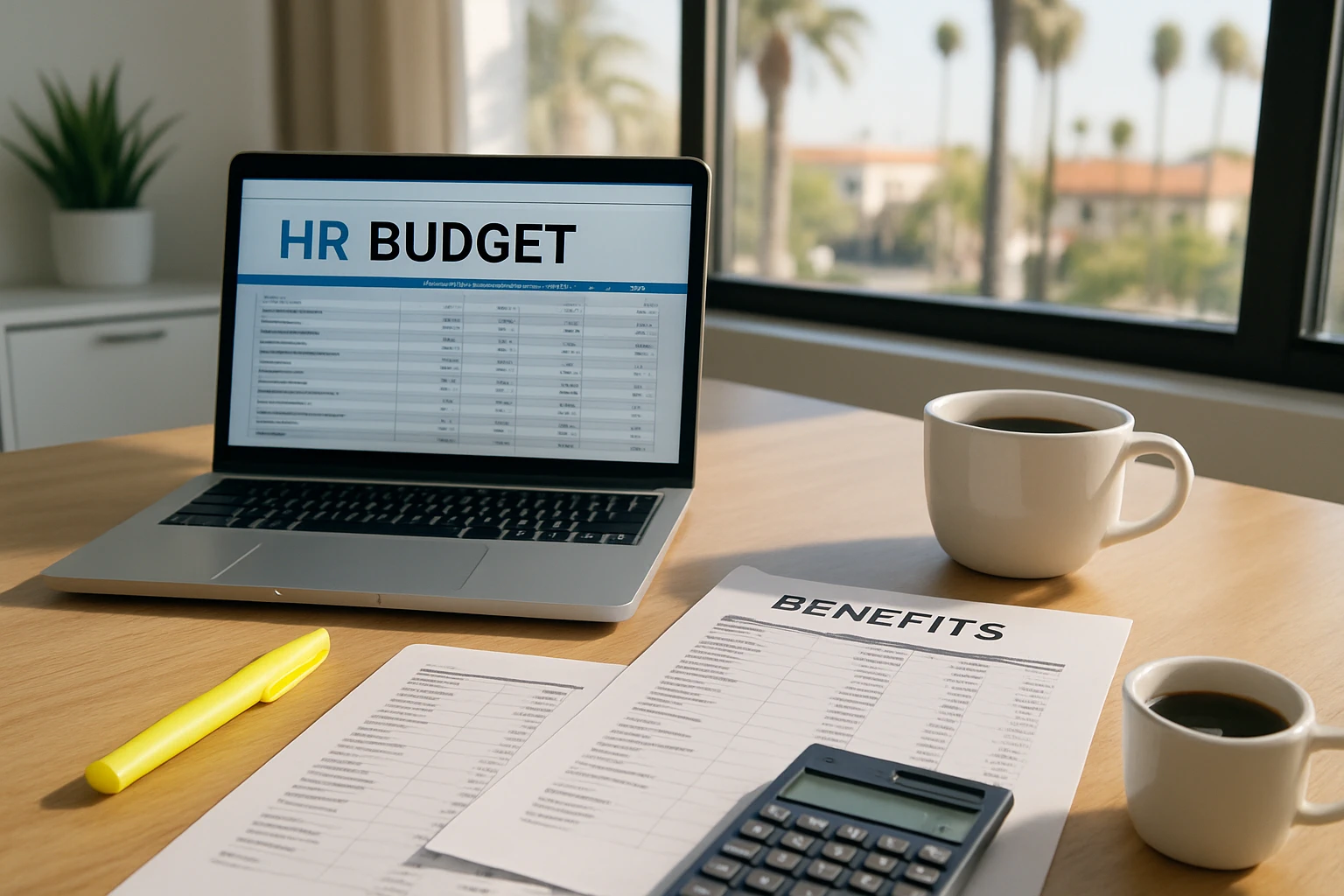
The question HR leaders ask most often about workplace food programs is not "what food should we offer". It is "how do I size the budget, get it approved, and keep it from being the first thing cut?" This guide walks through the practical mechanics of building a food benefit budget for teams between 50 and 500 employees, from first estimate to signed program agreement, with the framing you need to get finance on board.
Before you can estimate cost, you need to decide how much of the meal cost the employer will cover. There are three standard models:
Fully subsidized: The employer pays 100% of meal cost. Employees receive the meal as a free benefit. This is the highest-impact model for employee experience and the most straightforward to communicate ("lunch is on us"), but it carries the full cost of the program on the company's books.
Partially subsidized: The employer pays a fixed amount per meal (for example, $8), and employees pay the remainder. This splits the cost, reduces the employer's exposure, and still provides a meaningful financial benefit to employees, the meal they get for $3–$5 at the office is still better than a $14 restaurant lunch. This is the most common model for medium-sized teams.
Zero subsidy / access-only: The employer pays for the program infrastructure, delivery costs, smart fridge equipment, stocking logistics. But employees pay the full market price per meal. This model provides access to better food without a direct meal subsidy. It works best where the employer wants to remove the "there is nowhere good to eat near this facility" problem without carrying per-meal cost. Participation tends to be lower than subsidized models, but the infrastructure cost is predictable and lower.
For a buffet program: multiply the number of employees who eat on each buffet day by the per-meal cost. If you have 200 employees and expect 70% participation (140 meals) at $11/meal, your daily cost is $1,540. At three days per week and 50 weeks per year, that is $231,000 annually. Divide by 200 employees and you are at $1,155 per person per year, or about $22/week per participating employee.
For weekly meal delivery: headcount times meals-per-week times per-meal cost times weeks per year. At 100 employees, one delivery per week, $12/meal, 50 weeks: $60,000 annually, or $600 per employee per year.
For a smart fridge with partial subsidy: equipment cost (typically no upfront cost with MHP) plus the per-meal subsidy times estimated daily purchases. A 100-person facility where 60 employees buy one subsidized meal per day at an $8 employer contribution generates $400/day, or $100,000 annually at five days per week.
The common mistake in presenting a food benefit budget is framing it as a standalone expense. Finance sees "$231,000/year for food" as a luxury. Finance sees "$231,000/year to reduce annual turnover by 10% in a team where replacing one employee costs $35,000" as an investment with a potential return of $175,000 per year on a five-person retention improvement.
The numbers that matter to CFOs: SHRM estimates the average cost of replacing an hourly employee at 50–100% of annual salary, and salaried professional staff at 100–200%. For a SoCal warehouse team with 200 employees at $22/hour and 30% annual turnover, the annual replacement cost is approximately $6.6 million. Reducing turnover by even a few percentage points pays for a generous food program many times over. Our ROI guide has a full framework for this calculation.
How you classify a food benefit in the budget affects which department owns it, which approval level is required, and how it appears in financial reporting. The three most common classifications:
Employee benefits / perks: If it is a fully subsidized direct benefit, classify it here alongside health insurance and 401k matching. This makes it visible as a benefit line item and associates it with compensation, which reinforces its value in total compensation calculations.
Wellness and employee engagement: Many companies have a separate wellness budget where food programs land, especially if the framing is around health outcomes. This is appropriate if your company has a wellness committee or wellness benefit budget that is separate from core benefits.
Facilities or operations: For access-only programs where the employer pays for infrastructure but not meals, facilities is the most natural home. The program is more analogous to a break room appliance than a direct benefit in this model.
The fastest path to approval is a short pilot with a capped budget. "I would like to approve a 60-day pilot for $X to test a food program on Tuesdays and Thursdays, with a full evaluation at the end of the pilot." This frames the ask as a bounded experiment, not an open-ended commitment. It limits finance's risk and gives HR a concrete evaluation period.
The key elements of a successful approval conversation: the pilot cost (specific and bounded), the metrics you will measure (participation rate, employee survey data, any observable attendance changes), and the decision criteria (what results would justify expansion or discontinuation). Bringing a prepared one-page brief with these elements answers the questions finance will ask before they ask them.
MHP Food Service does not require a long-term contract to start. Pilots run on a monthly billing basis with no penalty for not continuing. That flexibility is specifically designed to make it easy to get the approval you need to run a real test. See our guide to writing a workplace food program proposal for your CFO for a full template.
A well-run pilot generates its own expansion case. Track participation week over week, distribute a short employee survey at the four-week mark, and note any comments that surface in 1:1s or all-hands meetings. At the end of the pilot, you will have real data: X% of the team participated, Y% rated the program positively, and anecdotally, [specific employee comments]. That is a far more compelling budget request than a theoretical ROI estimate.
Plan your budget request for the full program in advance of the pilot ending. If the pilot goes well, you want to be ready to present the expansion request at the 45-day mark, not scrambling to get numbers together at day 60 while the program is in limbo.
These are ballpark ranges for SoCal employers. Contact MHP for a worksite-specific quote.
Daily buffet (50–150 employees): $9–$13/meal fully subsidized. At 3 days/week and 80 participating employees: approximately $115,000–$165,000/year.
Daily buffet (150–500 employees): $8–$11/meal with volume pricing. At 5 days/week and 300 participating employees: approximately $600,000–$825,000/year. Partially subsidized models reduce employer exposure by 30–60%.
Weekly meal delivery (any size): $10–$15/meal. At once per week and 100 employees: approximately $50,000–$75,000/year fully subsidized.
Smart fridge (partial subsidy model): $4–$8 employer contribution per meal, variable based on daily purchase volume and participation rate.
Fully subsidized (employer pays 100% of meal cost), partially subsidized (employer pays a fixed amount per meal and employees pay the remainder), and access-only or zero subsidy (employer pays for the program infrastructure but employees pay per meal at market price). Each model works for different budget situations and team cultures.
For a fully subsidized daily buffet, expect $8–$14 per employee per meal day depending on headcount and program format. For weekly meal delivery (once per week), expect $9–$15 per employee per delivery. Smart fridge programs vary based on participation and subsidy level. Contact MHP Food Service for a site-specific quote.
Most companies classify a food benefit as either an employee perks/wellness line item or a direct employee benefits expense, depending on whether it is fully or partially subsidized. A zero-subsidy access program may classify under facilities or operations. Work with your finance team to determine the correct GL code.
The numbers that move finance are turnover cost reduction (SHRM estimates $10,000–$50,000+ per replaced employee depending on role), absenteeism reduction, and productivity impact. Frame the food benefit against the annual cost of losing and replacing even one or two employees. It often pays for itself on that basis alone.
MHP Food Service does not require a long-term contract to start. A short pilot lets you measure participation and employee feedback before committing to a full annual program. This makes it easy to get finance approval: the initial ask is small, and the data from the pilot makes the expansion case for you.
Tell us about your team and we will recommend the right program and a worksite-specific quote. No high-pressure sales.
Hot buffet lunches, a 24/7 smart fridge, or weekly meal drops — cooked in our Rancho Cucamonga kitchen and run as one simple program.