Employee Benefits
Meal perks that work for warehouse and manufacturing workers
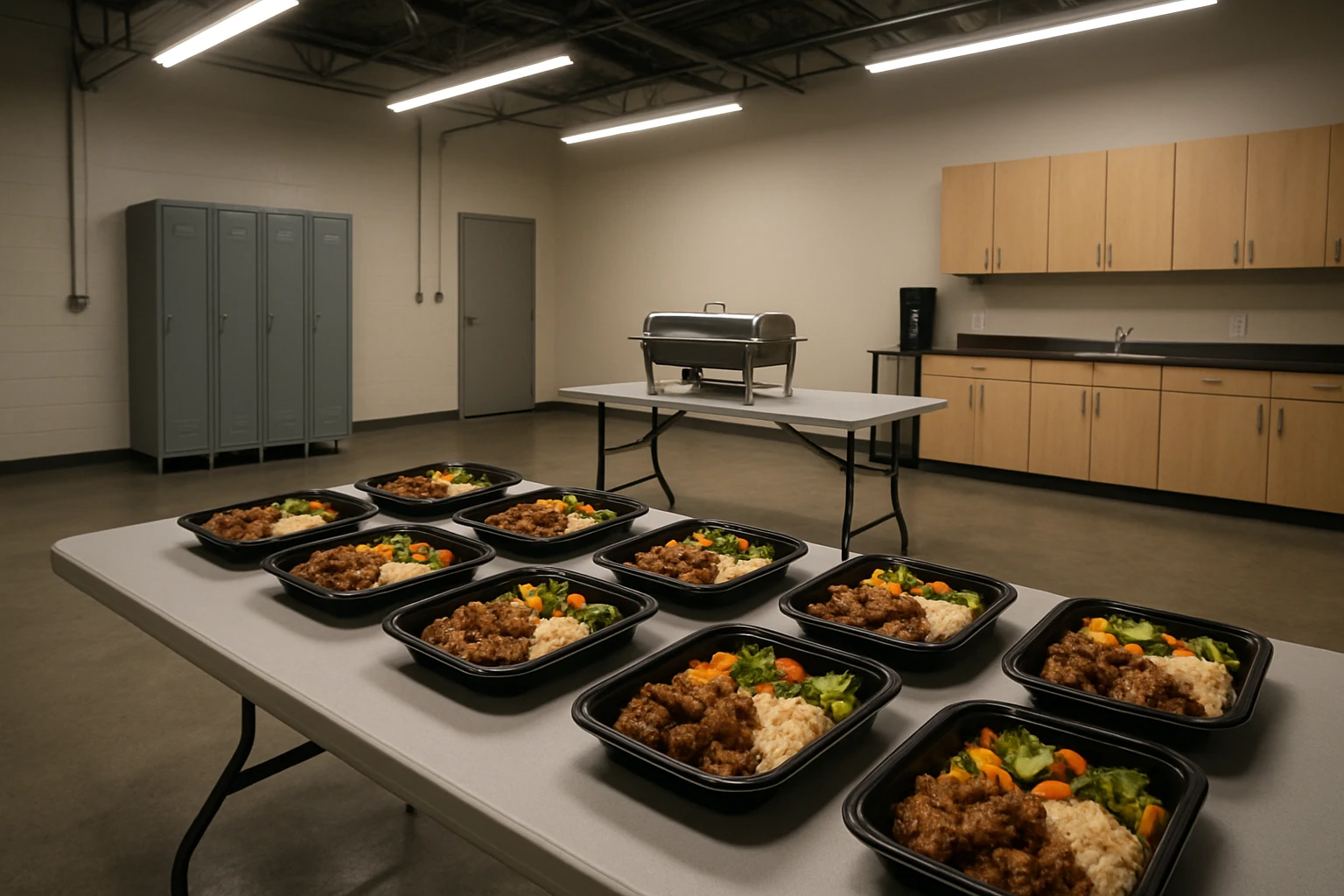
Most of the conversation about employee food benefits is oriented toward knowledge workers: tech teams, corporate offices, biotech campuses. That is understandable, those employers tend to be early adopters of new perks. But the workforce with the most to gain from a well-designed food benefit is often the one that receives the least attention: warehouse and manufacturing teams in the Inland Empire, working physical jobs with demanding caloric requirements, irregular breaks, and limited food options anywhere near most industrial facilities.
A warehouse associate pulling product for eight hours or a manufacturing worker operating equipment on a standing shift is burning significantly more energy than someone sitting at a desk. Active physical workers typically need 2,500–3,000 calories per day to maintain energy and support muscle recovery. For comparison, the standard 2,000-calorie desk-worker guideline is not the right frame for this population.
Protein is especially important. Physical labor causes microtrauma to muscle tissue throughout the day, and adequate protein in the lunch meal supports recovery and maintains energy for the remainder of the shift. A meal of rice and vegetables is fine. A meal of protein, vegetables, and a complex carbohydrate is much better. Vending machine chips provide none of the above and generate an energy spike followed by a crash, which is the opposite of what a facility manager wants during the second half of a shift.
Hydration is also a factor that food programs can address. Facilities that provide meals can also station water and electrolyte drinks alongside them, which reduces heat-related fatigue in the warm SoCal climate, particularly relevant for facilities with large open-dock areas.
The most common failed food benefit for warehouse and manufacturing teams is the delivery app stipend. The logic seems reasonable, give employees a credit to order from whatever they want. In practice, it fails for this workforce consistently and for specific reasons.
First, many warehouse and manufacturing employees are on early shifts (5am–1:30pm or 6am–2:30pm) or late shifts (2pm–10:30pm or 6pm–2:30am). These hours do not align with the delivery windows for most food apps. Night crew workers cannot order DoorDash during their midnight break. Early shift workers may have a 10am break, and delivery options at that time are extremely limited.
Second, stipends require smartphone app accounts and credit card information, which creates friction for hourly workers who may not have set up app accounts or who share a phone between family members. Third, stipends that expire if unused are frequently forfeited. This is money the employer spent that generated zero benefit. Fourth, when stipends are used, they are often spent on fast food that does not support sustained physical performance, because that is what is available and convenient from the apps.
The next most common failure is generic catering, a tray of sandwiches dropped in the break room for a workforce that does not eat lunch at noon, does not prefer cold sandwiches after physical work, and does not have the same twelve-person team structure as the office meeting that catering was originally designed for. A warehouse break room with 150 rotating workers on staggered breaks is not a board meeting. The catering format does not fit the environment.
For IE warehouse and manufacturing facilities with 80 or more employees on a predictable day shift, a hot drop-off buffet is the most effective format. Hot food matches what physical workers want after a demanding morning. The buffet format allows for self-service during a short break window without requiring individual orders. The serving time is flexible, MHP typically drops off buffets in the late morning so they are ready for a 10:30am, 11am, or noon break depending on the facility's schedule.
The menu for physical workers should emphasize protein, grilled meats, eggs, legumes and complex carbohydrates that provide sustained energy rather than a quick spike. MHP's buffet menus for warehouse and manufacturing clients are designed with this in mind, different from the lighter fare that tends to appear on office buffet menus.
For facilities running two or three shifts, or for teams smaller than 80, a smart fridge is the right format. It is stocked with fresh, individually portioned meals and is accessible at any hour, which means the night crew gets the same quality food as the day shift. There is no serving window, no break coordination with the food schedule, and no waste from unsold buffet items.
For a mixed-shift facility in Fontana or Rialto, the smart fridge provides a food benefit that genuinely covers every worker on every shift. This is rare. Most food programs serve the day shift and leave everyone else to the vending machine. A smart fridge eliminates that inequity.
For smaller manufacturing sites, 20–50 employees, or satellite warehouse locations that are too small for a daily buffet, weekly meal delivery provides a meaningful benefit at a lower cost. A once-weekly drop-off of fresh portioned meals gives every employee in the facility a real meal at least once a week, which signals investment even if it does not cover every shift every day. It is a good starting point for employers who want to test a food benefit before committing to a full daily program.
White-collar employees in the same company as warehouse workers often have access to a company cafeteria, free snacks, office perks, and sometimes a food budget. Hourly warehouse and manufacturing workers typically have none of these. The perk gap is real and is noticed. When an IE employer introduces a genuine daily meal benefit for its warehouse team, it is often the first time those employees have received a workplace perk beyond health insurance and holiday pay. That novelty generates a disproportionately strong retention signal.
The competitive angle is equally important. IE employers competing for the same pool of warehouse workers in Ontario, Fontana, Rialto, and San Bernardino have a meaningful differentiation advantage when they provide food. It comes up in word-of-mouth referrals: "My company feeds us" is a sentence that travels. It shows up in Glassdoor reviews. And it is directly mentioned in the retention conversations that supervisors have with workers considering leaving.
MHP Food Service serves warehouse and manufacturing employers across the Inland Empire from our Rancho Cucamonga kitchen. We have direct experience with the break schedules, shift structures, and caloric requirements of this workforce. See our warehouse and logistics service page and our post on warehouse lunch programs in Fontana and Rialto for more specifics. Contact us for a site-specific recommendation and quote.
Active warehouse and manufacturing workers typically require 2,500–3,000 calories per day, with an emphasis on protein for muscle recovery, complex carbohydrates for sustained energy, and adequate hydration. Standard office-sized portions and desk-worker menus do not serve this workforce well, programs designed for physical workers need higher caloric density and more substantial protein content.
Several reasons: night shift and split-shift workers often cannot use delivery apps during their break windows because most delivery services are limited to daytime hours. Stipends also expire if unused, require app accounts and smartphones, and are often spent on fast food rather than nutritious meals. For a warehouse worker on a 5am–1:30pm shift, a DoorDash credit is effectively useless.
For a team of 80 or more employees on a predictable day shift, a hot drop-off buffet is the most effective format. It provides the caloric density and variety that physical workers need, creates a shared meal experience during the break, and requires no employee management of accounts or credits.
A smart fridge is the right answer for smaller teams or facilities with multiple shifts. It provides access to fresh, chef-prepared meals at any hour, does not require a serving window, and can accommodate 20–150 employees with no infrastructure investment.
Typically very significant. Blue-collar and hourly workers often have fewer perks than their white-collar counterparts in the same company. A real daily meal benefit stands out dramatically in a sector where the standard benefit package is health insurance, a 401k, and not much else. Glassdoor reviews and exit interview data from IE employers consistently show food benefits mentioned as a positive differentiator.
Tell us about your team and we will recommend the right program and a worksite-specific quote. No high-pressure sales.