Workplace Lunch
How warehouses in Fontana and Rialto keep workers fed on every shift
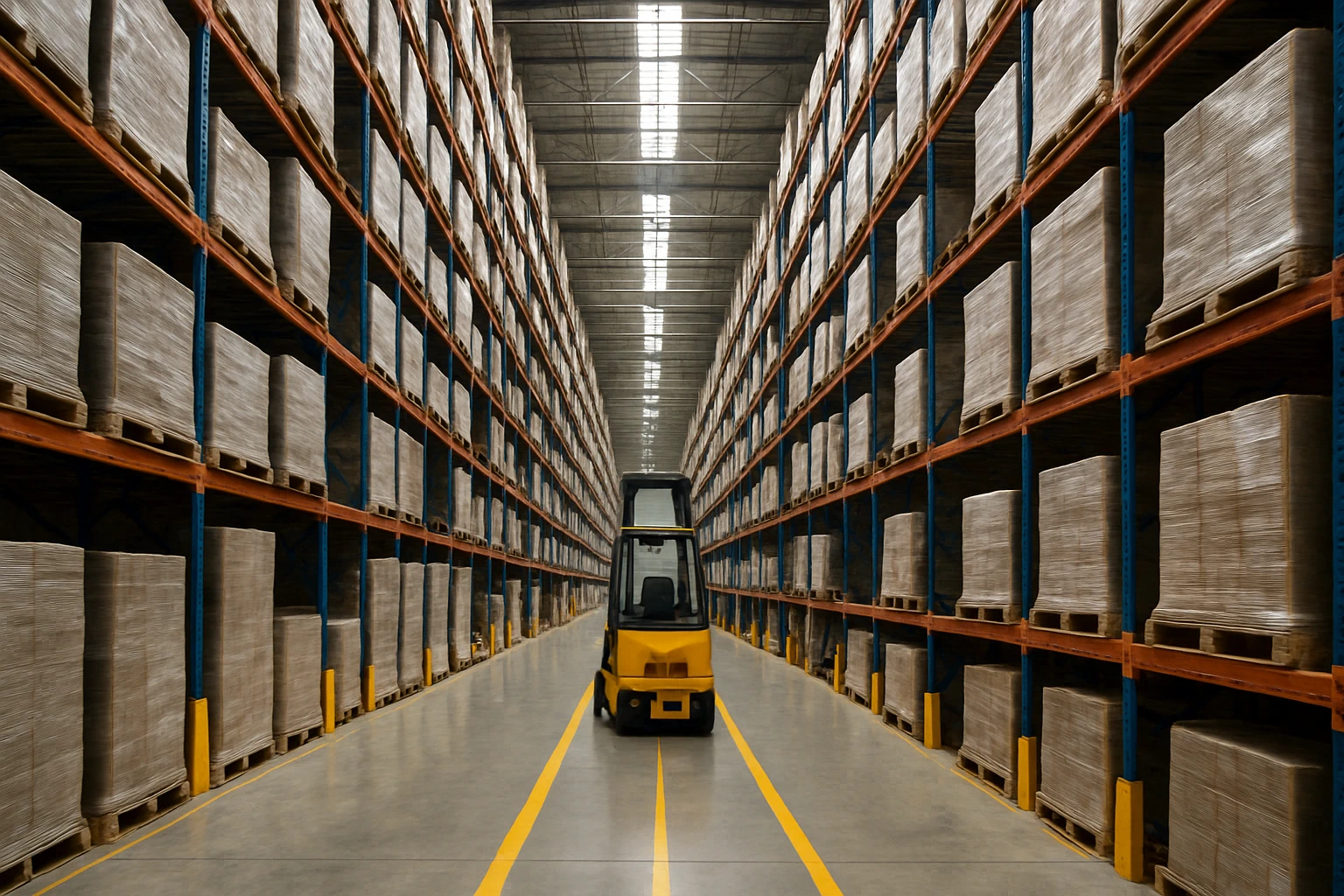
Fontana and Rialto anchor the western stretch of the Inland Empire's industrial belt, a continuous band of warehouses, distribution centers, and 3PL facilities running along the I-10 and I-215 corridors that stretches east from Pomona all the way to San Bernardino. The workforce here is large, hourly, predominantly Latino, and working in 10 to 12-hour shifts that make the food question simple: when do they eat, what is available, and how do you get real food to them without anyone leaving the site.
This guide covers what actually works for Fontana and Rialto warehouse operators, from daily drop-off buffets for day shifts to smart fridges for overnight crews and why getting this right matters more here than in most other industries.
Fontana's industrial corridor runs along Slover Avenue, Sierra Avenue, and the I-10 East frontage roads. Rialto's distribution zone clusters near Riverside Avenue and the intersection of the 210 and 215. Both areas are zoned for industrial use, which is exactly what you do not see in those zones: restaurants, food trucks, or any fresh food option that a 250-person crew can access in a 30-minute window.
Most workers are buying from one of four sources: the vending machine in the break room, the fast food drive-thrus on Valley Boulevard or Foothill Boulevard (a 10-to-15 minute round trip that barely fits inside a 30-minute break window), gas-station food near the I-10 exits, or packed food from home that either goes cold or waits in a line for the one or two shared microwaves. Workers who skip the real meal eat energy drinks and chips, which carries a documented cost: safety incident rates on night shifts run roughly 30% higher than on day shifts, with fatigue and poor nutrition among the contributing factors.
For sites with 100 or more workers sharing a day-shift lunch window, the most effective setup is a daily drop-off hot buffet. Hot pans arrive before the first break wave, workers serve themselves over a 60 to 90 minute window across staggered break times, and there is no queue, no drive-thru math, and no one from your team managing it. The per-person cost at this scale is typically in the $10 to $15 range, comparable to or less than what workers spend individually at drive-thrus daily, and far below the all-in cost of turnover.
For the second and third shift crews at Fontana and Rialto facilities, the swing shift starting at 5pm and the overnight crew starting at 8pm or 10pm, a smart fridge is the standard complement. After 10pm, the surrounding food landscape is drive-thru only or closed. A smart fridge stocked with fresh, labeled meals is available 24/7. Workers tap a badge or card, grab what they want, and are back at their station in 90 seconds. No app, no delivery window, no vending machine compromise.
California's AB 701, in effect since 2022, requires warehouses to disclose production quotas in writing and prohibits quotas that prevent workers from taking California-mandated meal and rest breaks. A missed 30-minute meal break triggers one hour of premium pay per occurrence. For a 300-person site with a pattern of shortened breaks, even when driven by food-access problems rather than manager pressure, the exposure compounds quickly.
The California Labor Commissioner secured a $1 million settlement in 2024 against Inland Empire warehouse operators specifically for meal break violations. An on-site food option is not a guarantee of compliance, but it removes the most practical barrier: workers who have nothing to eat on-site, and not enough time to leave, will shorten or skip breaks. Remove the food-access problem and you remove the most defensible worker explanation for a shortened break. Our full post on California meal break compliance and on-site food covers the legal landscape in more detail.
Fontana and Rialto's warehouse workforce is predominantly Latino. UCR's 2025 State of Workers in the Inland Empire found that nearly 62% of IE warehouse workers are Latino, with many preferring Spanish as a primary language. Standard corporate catering menus, sandwiches, wraps, pasta salad, fail this workforce. Participation in a workplace food program is directly tied to whether workers want to eat what is being served.
MHP's Fontana and Rialto programs run menus from a Rancho Cucamonga kitchen that has served the IE workforce since 2015: carne asada, pollo asado, chile verde, rice and beans, rotating weekly. Spanish-language menus. Allergen labeling per item. These are not extras. They are what drives the participation rate from 40% to 90% in a warehouse break room.
Industry-wide warehouse turnover ran above 40% per year through 2024, according to BLS data analyzed by Opensend. The Center for American Progress puts replacement cost for a warehouse worker at 16% to 20% of annual salary, roughly $5,600 to $7,000 per departure for a $35,000 role. At a 300-person site with 50% annual turnover, that is a $840,000 to $1.05 million annual line item from departures alone.
Food programs appear consistently among the top-cited retention factors in Glassdoor and Indeed reviews of IE warehouse employers. Workers who feel their employer cares about what they eat during a 10-hour shift are measurably more likely to stay. The math makes a food program one of the highest-ROI retention investments available to a Fontana or Rialto operator. Our post on employee meal benefits and retention goes deep on the data.
MHP cooks in Rancho Cucamonga, which shares a border with Fontana to the east. The drive to any Fontana or Rialto industrial site is 10 to 20 minutes. For operators comparing a local IE kitchen to a national vendor shipping out of a central facility, the proximity matters for the practical realities of a daily food program: real-time headcount changes, same-day schedule adjustments, and a driver who knows the gates and checkpoints at your specific facility.
If your Fontana or Rialto warehouse has 100 or more workers on a regular shift schedule, the conversation starts with three questions: headcount by shift, break room capacity, and what coverage you want to provide. Get in touch and we will put together a worksite-specific proposal. No long-term contract required to start. If you want to understand how to choose between a buffet, a smart fridge, and weekly meals, our guide to choosing the right on-site food program has the framework.
For day-shift crews of 100 or more, a daily drop-off hot buffet. For second and third shifts, a smart fridge stocked with fresh meals provides 24/7 access. Many sites run both formats, one invoice, one kitchen, complete shift coverage.
AB 701 prohibits quotas that prevent workers from taking meal breaks. An on-site food program removes the most common practical reason workers skip breaks, nothing on-site and not enough time to leave. It strengthens the employer's compliance position and reduces premium-pay exposure on missed breaks.
Yes. MHP cooks in Rancho Cucamonga, immediately adjacent to Fontana. Delivery to Fontana, Rialto, Colton, and San Bernardino is a direct route, typically 10 to 20 minutes.
For a daily hot buffet, 100 or more on-site during a predictable window. For smaller sites of 30 to 100 workers, a smart fridge or weekly meal drop is a better fit.
Yes. A smart fridge in the break room is stocked with fresh meals and available 24/7. Night shift workers in Fontana and Rialto can access fresh food at 2am the same way the day shift does at noon.
Tell us about your team and we will recommend the right program and a worksite-specific quote. No high-pressure sales.