Employee Benefits
Employee meal benefits that actually boost retention
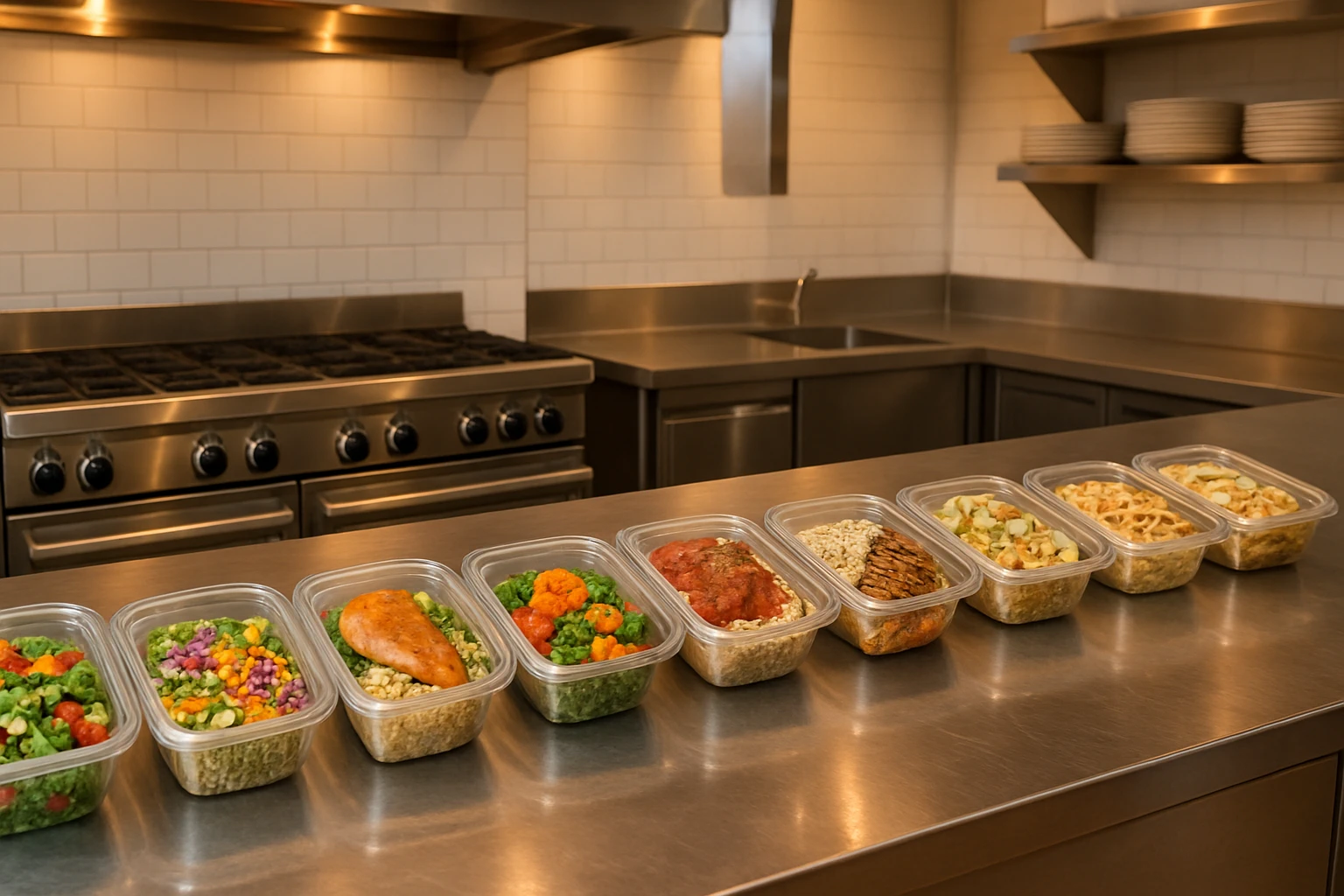
Employee meal benefits have quietly moved from a "nice to have" to one of the more cost-effective levers HR has for retention and attendance. Food is visible, daily, and genuinely appreciated, which is exactly why it punches above its weight as a perk. This guide covers why food benefits work, how the smarter employers roll them out, and how to answer the budget question when it inevitably comes up.
Unlike many benefits that employees forget they have, a meal shows up every day. It gives people a reason to come in, a moment to eat together, and one less thing to worry about during a busy shift. That daily, tangible value is why workplace food perks consistently rank high when employees describe what keeps them at a company. A 401k match matters, but nobody feels it at 12:30 on a Tuesday. Lunch they do.
The pattern across workplace studies is consistent: food benefits influence how employees feel about their jobs and, increasingly, whether they take or keep them. A large share of workers say meal benefits factor into job decisions, and HR leaders increasingly name workplace food as a retention lever rather than a simple perk. You do not need to treat any single statistic as gospel to see the direction of travel. When a benefit is used daily, noticed daily, and appreciated daily, it earns loyalty in a way a once-a-year stipend rarely does.
For teams pushing for more in-office days, food is one of the few incentives that reliably moves behavior. "Lunch is on us on Tuesdays and Thursdays" is far more concrete than a memo about collaboration. Pairing a meal program with your anchor days turns return to office from a mandate into something people look forward to. It also rewards the behavior you are asking for, on the exact days you are asking for it, which is a far better deal than enforcement.
The catch with meal benefits is fairness. If only the 9-to-5 crowd can use them, your night and weekend staff feel skipped, and a benefit meant to build goodwill quietly breeds resentment. That is where format matters. A smart fridge keeps fresh meals available around the clock, a hot buffet covers large day-shift teams, and weekly meal drop-off works for smaller or satellite sites. The goal is a benefit everyone can actually access, not just the people who happen to work standard hours. Our guide to choosing a program walks through which format fits which team.
Meal benefits do double duty. They help you keep people, but they also help you recruit and build culture. "Lunch is provided" is a concrete line in a job post that candidates remember. On-site meals pull people out of their desks and into the same room, which is where the casual conversations and cross-team relationships actually happen. For companies trying to rebuild in-person energy, shared food is one of the few levers that reliably brings people together without feeling forced or gimmicky.
A meal benefit only helps retention if it does not create a second job for HR. Look for a fully managed program: one invoice, a set schedule, and a provider that handles delivery, stocking, and support. The benefit should feel effortless to the team offering it, not just the team eating. If rolling it out means weekly order forms, headcount chasing, and invoice reconciliation, the program will be quietly killed the first time someone gets busy, no matter how much employees liked it.
The most common objection is cost, and the answer is flexibility. You decide how much of each meal the company covers, from a small subsidy to a full benefit, and you can target spend where it matters most, such as specific shifts or anchor in-office days. Compared with the cost of replacing an employee who leaves, a daily meal benefit is modest, and it is far easier to budget than scattered delivery stipends that swing month to month. Start at a level you are comfortable with, measure participation, and adjust from there.
Introduce the benefit clearly and make it effortless to use. Tell the team which days food is available and where, keep access simple with no app to install, and let consistency do the work. A simple recurring calendar note or a sign by the serving area handles most of the communication. A benefit that reliably shows up in the same place on the same days becomes part of why people like working somewhere, which is exactly the outcome you are after.
You do not need a complicated dashboard. Watch participation over the first few weeks, gather a quick round of feedback at the two-week mark, and note whether more people are choosing to come in on the days food is offered. With a smart fridge, purchase data gives you an exact read on adoption. Those simple signals tell you whether to expand to more days or more sites, and they give you the evidence to defend the line item when budgets get reviewed.
Two objections come up most. The first is that food is frivolous compared with raises or healthcare. In practice the two are not competing; a daily meal is a high-visibility, relatively low-cost addition that employees feel every shift, and it does not replace core compensation. The second is fear of complexity. That fear is valid for app stipends and ad-hoc catering, but a fully managed program with one contact and one invoice removes it. When the objection is cost, reframe it against the price of turnover; when it is effort, point to the managed model that makes running it someone else's job.
You do not have to commit to five days a week across every site to find out whether a meal benefit works for your team. Start with one or two days, or a single location, watch participation, and gather a quick round of feedback. A short pilot with no long-term contract lets the program earn its expansion on real evidence rather than a hunch, and it gives you a clean story to bring to leadership when you ask to grow it. If the food is good and the program is reliable, the numbers tend to make the case for you.
Employee meal benefits work because they are daily, visible, and genuinely useful. Done right, with every shift covered and the logistics handled for you, they are one of the most reliable and affordable levers you have for keeping good people and getting them in the door. Done as an afterthought, they fizzle. The difference is almost entirely in the rollout, not the size of the budget.
MHP Food Service helps Inland Empire employers roll out meal benefits without the overhead of a kitchen or the chaos of delivery apps, all from our Rancho Cucamonga kitchen. Tell us about your team and we will recommend a program and a worksite-specific quote, with no long-term contract to start.
Research on meal benefits, satisfaction, and retention: DoorDash for Business, HR.com / ezCater, and the ezCater / SeatGeek case study.
The honest answer is that meal benefits rarely move retention on their own, but they shift the things that drive retention. Daily food is one of the few perks employees notice every shift, which makes it punch above its dollar weight in engagement and culture surveys. Workplaces that pair a meal program with anchor in-office days typically see better attendance on those days within the first month. Treat food as a high-visibility, low-cost layer on top of strong compensation and management, not a substitute for either, and the retention contribution shows up in stay interviews more often than exit ones.
Most Inland Empire employers we work with land somewhere between $8 and $14 per person per meal day, depending on format and how much of the cost the company covers. A weekly meal drop-off program for a 40-person team typically costs less per head than a daily hot buffet because the labor and delivery profile is different. A smart fridge can be the most flexible because you set a subsidy level and let usage scale to actual demand. We send a worksite-specific quote rather than a flat figure, but for budgeting purposes that range gets you in the right ballpark.
A Smart Fridge has the lightest rollout burden for HR. There is no weekly headcount to collect, no order form to circulate, and no setup window to staff. We install the fridge, restock it on a schedule, and employees tap a card to take what they want. A Daily Drop-Off Lunch Buffet is also low-overhead once the schedule is set, since we handle delivery, setup, and breakdown. The format to avoid if you want zero ongoing work is anything that requires HR to chase individual orders or reconcile delivery app receipts every week.
It can, and the framing matters more than the dollar amount. Tying food to specific anchor days, such as lunch on Tuesdays and Thursdays, gives people a concrete reason to come in without making it transactional. Most teams describe it as a reward for the behavior the company is already asking for rather than a payment for showing up. The version that does feel like a bribe is a one-off catered lunch tied to a single all-hands; the version that works is a predictable recurring program employees can plan around for weeks at a time.
That is the most common fairness problem with workplace meal benefits, and it is solvable. A Daily Drop-Off Lunch Buffet alone will quietly exclude any off-hours staff and can do more harm than good for morale. A Smart Fridge stocked around the clock fixes the gap because the night crew, weekend team, and early arrivals all access the same fresh meals as the day shift. For mixed-shift sites we often recommend a hot buffet for the day crowd and a smart fridge for off-hours, so the benefit reaches every shift on equal footing.
Tell us about your team and we will recommend the right program and a worksite-specific quote. No high-pressure sales.