Guides
Meal-break compliance and on-site food in California
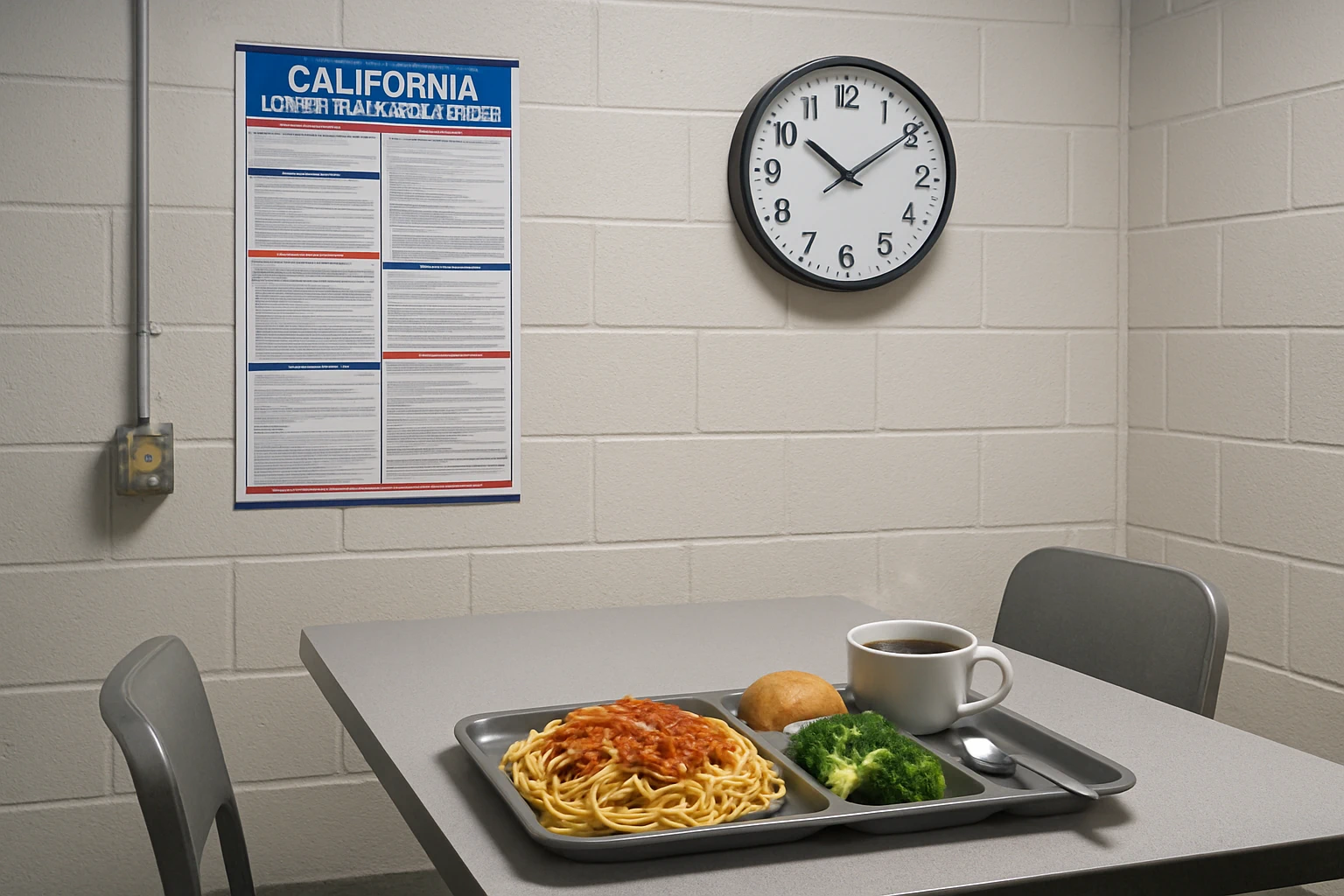
California's meal-break law is among the strictest in the United States. For employers in the Inland Empire, particularly in warehouse, manufacturing, healthcare, and distribution. It is also one of the most litigated. This guide covers what the law requires, where employers routinely fall short, what the financial exposure looks like, and why on-site food access is one of the most practical operational tools for reducing break violations. It is written for HR, operations, and compliance professionals, not attorneys. For legal advice specific to your situation, consult employment counsel.
Under California Labor Code Section 512 and Industrial Welfare Commission (IWC) Wage Orders, non-exempt employees are entitled to:
The employer must "provide" the meal period, meaning relieve the employee of all duties, relinquish control, and permit a real opportunity to take the break. If the employer fails to do this, it owes one additional hour of pay at the employee's regular rate for each missed meal period, and one additional hour for each missed rest period. The penalty is called "premium pay" or a "meal period premium." It is not a fine. It is a wage obligation, and it accrues per violation, per employee, per day.
The most common reason IE warehouse and manufacturing workers miss meal breaks is not malice, it's logistics. A 30-minute break at a 300,000-square-foot fulfillment center in Ontario begins at the line. By the time a worker walks to the break room, there is no food. The nearest fast food is a 10-minute drive. The vending machine has chips and energy drinks. Workers either eat chips in 3 minutes and go back early, or skip the break entirely and grind through to end of shift.
That pattern, workers skipping or shortening breaks because there is nothing on-site worth eating, is the operational root cause of most California meal-break class actions. It is also exactly what the California Labor Commissioner found in its 2024 investigation: the agency secured a $1 million settlement against Inland Empire warehouse operators for wage and hour violations including break failures. The workers were not being denied breaks on paper. In practice, the breaks weren't real because nothing in the break environment made them worth taking.
AB 701, effective January 1, 2022, created additional requirements specifically for warehouse distribution centers in California:
For IE warehouse operators in Ontario, Fontana, Rialto, Moreno Valley, and San Bernardino, AB 701 didn't change the underlying break requirement, California has always required this. What it changed is the documentation and enforcement exposure. Now, if a quota system is in place and workers are skipping breaks, the link between the two is presumed. That makes defense harder and settlement numbers higher.
The Private Attorneys General Act (PAGA) allows employees to sue on behalf of themselves and all other aggrieved employees for Labor Code violations. Meal break claims are among the most common PAGA triggers in California because each violation is per-employee, per-day, and scales fast at large sites.
In June 2025, RTX (formerly Raytheon) settled a California meal-break class action for $19.9 million covering approximately 1,755 employees, per Jackson Lewis. That's roughly $11,300 per employee covered, not a small-company problem, but the same legal mechanism applies to every California employer, regardless of size. IE manufacturers in Rancho Cucamonga, Chino, Corona, and Riverside are in the same legal environment.
In healthcare, missed breaks are not primarily about food access. They are driven by patient care obligations, mandatory staffing ratios, and shift handoff timing. But food access makes a bad problem worse. A 2022 peer-reviewed study of 31 hospitals found hospital vending environments scored just 11.6 out of 100 on nutritional quality, and night-shift staff consistently reported that cafeterias closed before their shift meal period, leaving vending as the only option.
When the only available food is chips and candy from a vending machine, nurses and CNAs report skipping the break or eating at the nursing station, both of which constitute compliance failures under California Wage Order 5. At Inland Empire hospitals in Colton, Moreno Valley, Redlands, and Riverside, the structural fix is on-site access to real food at the break window, not policy alone.
One hour of premium pay per missed meal break per employee may sound manageable. But at scale, it isn't:
These numbers assume the violations are documented and paid when they occur. In practice, if they aren't being tracked and paid, the exposure compounds with liquidated damages, PAGA civil penalties (generally $100 per aggrieved employee per pay period for initial violations, $200 for subsequent violations), and attorney's fees.
An on-site food program doesn't replace a break policy or timekeeping system. It removes the operational friction that causes workers to skip breaks. When food is available on-site and ready in under two minutes, whether that's a smart fridge stocked with fresh meals a worker can tap-and-grab, or a daily drop-off buffet set up before the meal window, the most common reason workers shorten or skip breaks disappears.
This is not a legal defense on its own. But it is part of a defensible operational record: we make it easy to take a real break, we time deliveries to match shift meal periods, and we remove the "there's nothing to eat" friction that otherwise shortcuts the break. Combined with proper timekeeping and policy, that operational record matters.
For sites in Ontario, Fontana, Moreno Valley, and across the Inland Empire, this means:
Night shifts have the worst meal-break compliance record of any shift pattern, in both manufacturing and healthcare. Cafeterias are closed. Nothing is open nearby. Workers default to vending. The smart fridge was built for exactly this use case: a tap-to-pay refrigerator stocked with fresh, chef-prepared meals that is available around the clock. At a warehouse in Fontana or a hospital in Colton, a smart fridge in the break room means a second-shift or third-shift worker can actually eat a real meal during a break. That is a concrete operational change, not a policy memo.
Food access is one lever. It doesn't fix broken timekeeping, an understaffed shift where no one can cover the unit, a supervisor who discourages breaks, or a quota system that pressures workers to skip. Those require policy and management changes. Employment attorneys who handle PAGA defense will tell you the same thing: the best compliance program is multi-layered, and food access is one layer in a functioning break environment, not the whole answer.
If your IE worksite is in a sector where meal-break compliance is a live concern, warehouse, manufacturing, healthcare, public safety and you haven't evaluated what on-site food access could do for your break environment, it's a practical starting point. Book a short call with the MHP team and we will walk through your shift pattern, your site, and the program that fits. We also recommend reading our post on the cost of a workplace lunch program in the Inland Empire if you're building the business case for your CFO.
A 30-minute unpaid meal period for shifts over 5 hours, and a second for shifts over 10 hours. Plus two paid 10-minute rest periods per 8-hour shift. Failure to provide a break triggers one hour of premium pay per violation per employee per day.
PAGA allows employees to sue on behalf of themselves and all other aggrieved employees for Labor Code violations including meal break failures. A single PAGA letter can trigger a class-style action. Meal break claims are among the most common PAGA triggers in California.
Yes. AB 701 prohibits warehouse quotas that prevent workers from taking meal or rest breaks and creates a presumption of retaliation if discipline follows a break-related complaint within 90 days.
It removes the most common reason workers skip or shorten breaks: no food available on-site, and leaving takes the entire break window. When food is ready on-site, workers are more likely to take the full break.
No. A food program is one operational tool, not a legal defense. Employers still need proper timekeeping, documented policies, and procedures for handling break waivers. Consult employment counsel for your specific situation.
Tell us about your team and we will recommend the right program and a worksite-specific quote. No high-pressure sales.