Guides
Workplace lunch program cost in the Inland Empire
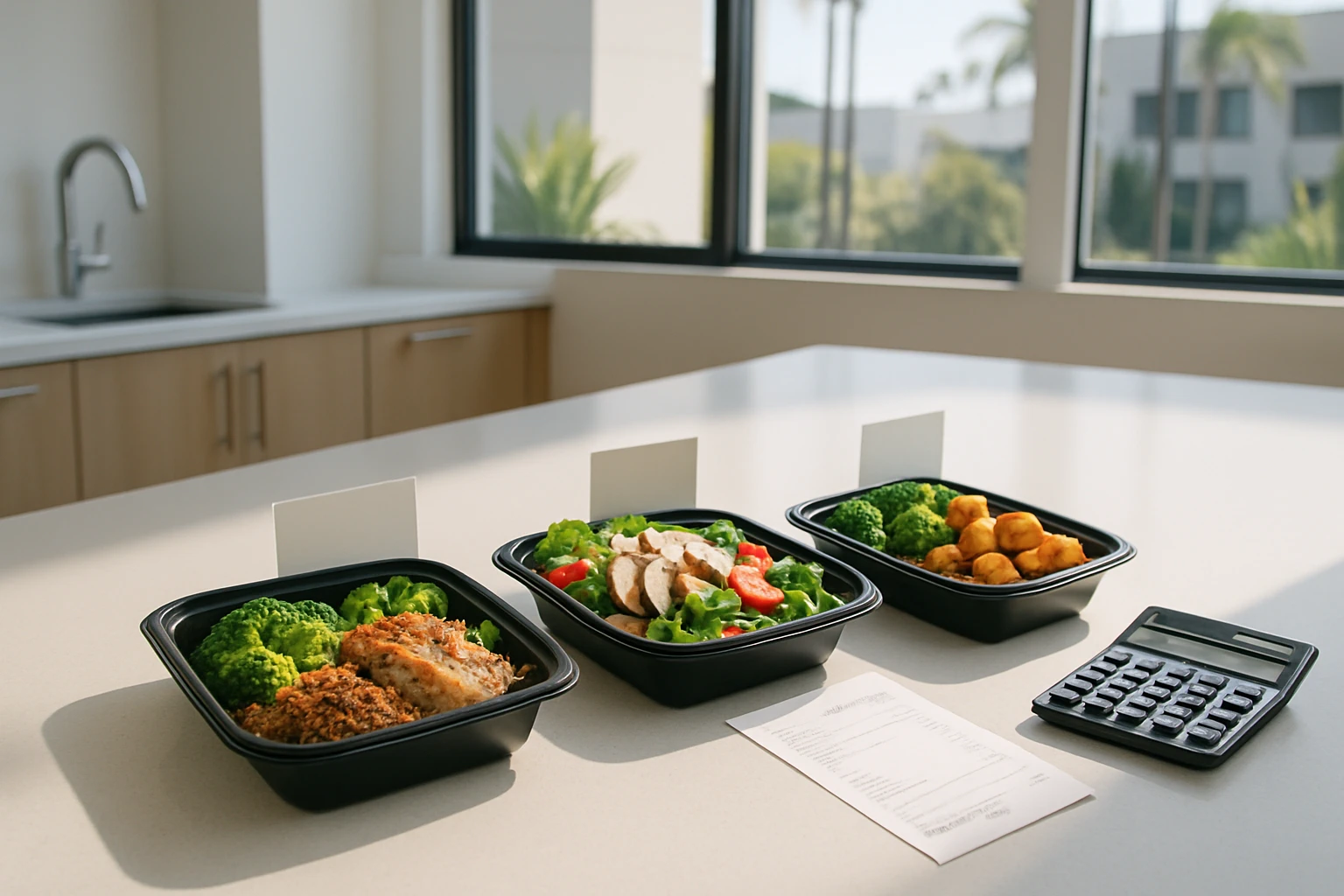
Cost is one of the first questions that comes up when an HR or operations leader starts exploring workplace food programs. The answer varies more than most people expect, because the cost structure depends on who is paying, how many people are eating, and which format fits the site. This guide gives you a clear breakdown of what the numbers actually look like for Inland Empire employers, whether you're in Rancho Cucamonga, Ontario, Riverside, Fontana, or anywhere else in the two-county region.
Workplace food programs in SoCal typically run on one of three models, and the model you choose shapes the employer's cost more than anything else.
The employer pays for every meal. Employees eat for free. This is the highest-cost model but also the most powerful as a retention and return-to-office lever. Research from ezCater's 2025 Food for Work report found that 75% of hybrid employees would come into the office more often if their employer provided lunch, a significant data point for IE companies pushing RTO policies. At full subsidy, expect an employer cost of roughly $10 to $15 per meal per participating employee, depending on program type and menu complexity.
The employer covers part of the meal price, typically $3 to $7 per meal and employees pay the balance. This is the most common model in the Inland Empire because it balances genuine perceived value with cost control. A $6 employer subsidy on a $12 meal makes the meal feel like a meaningful benefit without the full employer cost of a free-food program. For a 150-person site eating five days a week, a $5 subsidy per meal runs roughly $195,000 per year. Against a worker replacement cost of $5,600 to $52,000 per departure (per the Center for American Progress and McKinsey estimates), that math closes quickly if the program retains even a handful of employees per year.
The employer hosts the program but pays nothing per meal. Employees pay the full price. The employer provides the space, the access window, and the communication, the vendor handles everything else. This is how many warehouse and manufacturing programs in Ontario, Fontana, and Moreno Valley start. Workers get fast on-site access to a real meal at a competitive price (often cheaper than a drive-thru, because the meal is there and ready). The employer gets the compliance and engagement benefits with zero food cost. It's the lowest-friction entry point for a new program.
The format you choose also affects the numbers. Here's how the three MHP programs compare:
| Program | Best for | Employer cost range (per meal) | Employee cost |
|---|---|---|---|
| Daily Drop-Off Lunch Buffet | Daily on-site, single lunch window | $0 (access) to $12+ (full subsidy) | Full price to $0 |
| Smart Fridge | Mixed shifts, 24/7 sites, smaller teams | $0 (access) to $8+ (partial subsidy) | Full price to $0 |
| Weekly Team Meal Delivery | 50–150 people, satellite offices | $0 (access) to $12+ (full subsidy) | Full price to $0 |
To calibrate the numbers, consider what your people are spending right now. A delivery-app order that starts at $13 typically lands at $22 to $28 once you add delivery fees, service fees, and tip and that's for a meal that arrives late and cold. A drive-thru run in Ontario or Fontana takes 20 to 30 minutes round-trip and costs $12 to $16. A vending machine run costs $3 to $5 and isn't a meal.
A well-run on-site program at $10 to $14 per meal is cheaper than delivery and faster than leaving the building. When the employer subsidizes part of the cost, it becomes genuinely competitive with bringing food from home. That's how adoption gets built, not through mandatory participation but through convenience.
Workplace food programs in the Inland Empire typically come out of one of four budget lines: HR/People Operations (engagement and retention programs), Total Rewards or Benefits, Facilities or Workplace Services, or a discretionary line at the site or department level. For most companies under 500 employees, the Workplace Experience or Office Manager budget is where it lands. For warehouse and manufacturing sites, it often starts in Operations discretionary spend before moving to a formal HR program.
The critical framing for any internal pitch is not "this costs $X per employee" but "this costs $X per employee against a turnover replacement cost of $Y per departure." The retention data is strong enough that the math works at almost any headcount above 50 people.
A few things about the Inland Empire specifically affect pricing:
If you're pitching a workplace food program internally, the simplest model has three lines:
For a 200-person warehouse in Ontario with 40% annual turnover and a $7,000 replacement cost per worker, the baseline turnover cost is $560,000 per year. A $5 daily subsidy for all 200 employees costs $252,000 per year. The program pays for itself if it reduces turnover by about 23 people, roughly a 3-percentage-point improvement. That is a realistic outcome for a well-run food program in a competitive IE labor market.
The numbers in this guide are benchmarks. The actual cost for your site depends on headcount, shift pattern, subsidy model, and program type. The best next step is a 20-minute conversation where we can look at your specifics and build a real proposal. Get in touch with the MHP team, there's no commitment, and we'll tell you honestly if a program makes financial sense for your worksite. If you're still comparing formats, this guide on choosing the right on-site program is a good starting point.
It depends on the subsidy model. At full employer subsidy, expect $10 to $15 per meal per person. At a partial subsidy where employees pay half, the employer's cost runs $4 to $7 per meal. A program where employees pay the full meal price typically has no per-meal employer cost, the employer covers access and logistics only.
Usually yes, when you factor in the full cost of delivery apps: platform fees, service charges, tips, and time spent ordering. A DoorDash or Uber Eats order that starts at $13 typically reaches $22 to $28 delivered. A managed on-site program at the same quality level runs $10 to $14 per meal, and eliminates the time and friction overhead.
Yes. A zero-subsidy model means employees pay the full meal price and the employer hosts the program, providing the space, access, and communication. Workers gain fast on-site access to a real meal at a competitive price. The employer carries no food cost but still gets the engagement and compliance benefits.
The most straightforward ROI argument ties to turnover. The Center for American Progress estimates replacing a frontline worker costs 16 to 20 percent of annual salary. For a $45,000 role that's $7,200 to $9,000 per departure. A meal subsidy of $3 per day costs roughly $720 per employee per year at 240 working days. If the program retains one additional worker per year, it pays for itself many times over.
Contact MHP Food Service directly. We build worksite-specific quotes based on headcount, shift pattern, location within the Inland Empire, and the program type that fits best. There is no standard price list because every site is different.
Tell us about your team and we will recommend the right program and a worksite-specific quote. No high-pressure sales.