Smart Fridge
Feeding a 24/7 workforce: a practical guide to off-hours meals
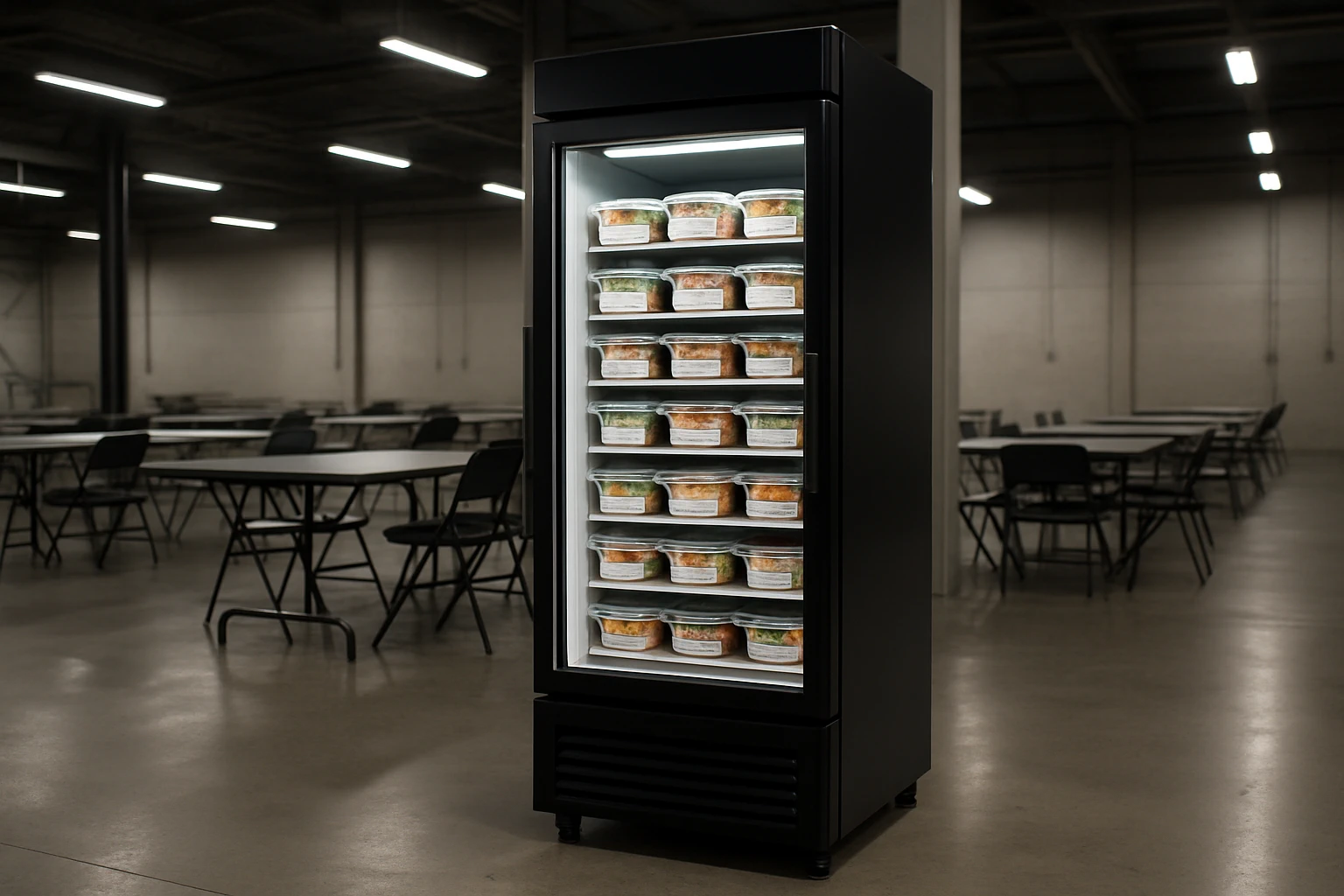
Day-shift teams have options at lunch. They can hit a cafeteria, walk to a nearby spot, or order delivery. The overnight nurse, the swing-shift warehouse crew, and the weekend dispatcher usually cannot. By the time their break lands, the kitchen is closed and the nearest open option is a gas station or a vending machine. If part of your workforce runs outside normal hours, the food benefit you offer the day shift quietly never reaches them. This guide explains why that gap matters and how an on-site smart fridge closes it without adding a kitchen or a single staff member.
Every around-the-clock operation has a version of the same problem. There is a stretch of hours when the building is staffed but nothing nearby is open and no internal food option exists. People plan around it by packing ahead, skipping meals, or driving off-site on a short break and coming back late. None of those are good outcomes. The gap shows up in morale, in breaks spent in a car instead of resting, and in the kind of turnover that is hard to trace back to a single cause because no one writes "the food situation" on an exit interview.
Off-hours food access is a real issue for more workplaces than people realize. Distribution and fulfillment centers run multiple shifts with tight, staggered breaks. Hospitals and skilled nursing have 24/7 floors where the cafeteria closes long before the night staff eats. Manufacturing plants run swing and graveyard schedules. Public agencies, dispatch centers, and first responders work through the night. Gyms and studios have early-morning and late-evening rushes. If your team works when the rest of the neighborhood is closed, this is your problem to solve.
A vending machine technically provides food at 2am. It does not provide a meal. Rows of chips, candy, and soda do not help someone get through a twelve-hour shift, and they certainly do not read as a real benefit when an employee is deciding whether to stay with your company. The goal is fresh, balanced food that happens to be available at any hour, not snacks. Treating a snack machine as a food program is one of the most common and least effective ways employers try to patch the off-hours gap.
Delivery apps are the other common patch, and they break down for off-hours teams in predictable ways. Coverage thins out late at night, delivery windows stretch, and fees and surcharges climb. Worse, the burden falls on each employee to order, pay, and wait, often on a thirty-minute break that does not have room for a forty-minute delivery. For the employer, app-based stipends are hard to budget and impossible to make consistent across shifts. They can supplement a program, but they do not solve the core problem of reliable, on-site food when people actually need it.
A smart fridge is a stocked, self-serve fridge of fresh, chef-prepared meals that lives on your site. An employee taps a card or badge, the door unlocks, they take what they want, and the door locks behind them. Each meal is clearly priced on the screen before checkout, they are charged only for what they actually take, and an itemized receipt is emailed automatically. There is no app to download and no account to create. The experience is closer to grabbing something from your own fridge than to using a vending machine, which is exactly why adoption tends to be high.
The footprint is small. A standard outlet and roughly two square feet of floor space are enough. There is no plumbing and no buildout. On our side, we deliver and install the fridge, stock it on a regular schedule with fresh meals from our Rancho Cucamonga kitchen, rotate the menu, monitor inventory, pull anything close to its date, and handle service. Your team provides the space and the power, and we handle everything else. That "fully managed" piece is the difference between a benefit your staff actually trusts and a fridge that slowly goes stale because no one owns it.
How much of the cost your team sees at the fridge is entirely up to you, and the flexibility here is part of what makes the model work across very different budgets. A few common approaches:
You can start with one model and adjust as you learn how your team uses it.
The quiet advantage of a smart fridge is fairness. A noon buffet rewards the people who happen to work a standard day. A fridge that is open on every shift gives the night crew, the weekend team, and the early arrivals the same access to the same fresh meals. For a workforce that already feels like the off-hours staff get the short end, that equal footing is worth as much as the food itself, and it is the part employees notice and talk about.
Because every purchase is logged, a smart fridge gives you clean signal on whether it is working. You can see how many meals leave the fridge, which items move fastest, and how usage breaks down across the day. That data lets us tune the menu to what your team actually eats, so the program gets better over time instead of drifting. It also gives you a simple, honest number to share when leadership asks whether the benefit is earning its keep.
A smart fridge tends to be the right call if you have mixed shifts or 24/7 operations, a site where a full buffet would be too much food, or simply no good food options within a quick walk. It fits distribution centers, hospitals and nursing floors, manufacturing, public agencies, and gyms especially well. If your team all works a single day shift and there is a cafeteria on-site, a hot buffet may serve you better, and our guide to choosing a program compares the options side by side.
Two questions come up on almost every call. The first is space and power, and the answer is reassuring: a standard outlet and about two square feet, with no plumbing or buildout. The second is what happens to food that does not sell. We monitor inventory, rotate the menu based on what your team actually eats, and remove anything close to its date during restocks, so the fridge always reads as fresh rather than as a place where forgotten meals pile up. Those two answers tend to clear the last hurdles between an interested manager and a working program.
MHP Food Service installs and fully manages smart fridges for Inland Empire workplaces from our Rancho Cucamonga kitchen. If feeding your off-hours team has been the gap you have not solved, the Smart Fridge page covers it in detail, or tell us about your site and we will recommend a fit and a worksite-specific quote.
Research on workplace meal benefits and employee satisfaction: DoorDash for Business and HR.com / ezCater.
A vending machine sells snacks and drinks; a Smart Fridge serves meals. The fridge is stocked with fresh, chef-prepared entrees, proteins, and sides from our Rancho Cucamonga kitchen, rotated regularly and pulled before any item gets close to its date. Employees tap a card or badge to unlock the door, take what they want, and the fridge charges only for what actually leaves. There is no app to install and no account to create. The experience is closer to grabbing food from your home fridge than to feeding a vending machine, which is why night-shift adoption is consistently higher with a smart fridge than with any snack-based alternative.
Any worksite that has staff on the floor when the surrounding neighborhood is closed. The strongest fits are distribution and fulfillment centers with overnight pick-and-pack shifts, hospitals and skilled nursing facilities with 24-hour floors, manufacturing plants running swing and graveyard schedules, dispatch centers and public safety agencies, and 24-hour gyms or studios. The common thread is a stretch of hours when the building is staffed but nothing nearby is open. If your team currently solves the off-hours food gap with vending machines, delivery apps, or telling people to pack ahead, a Smart Fridge is usually the cleaner answer.
We stock the fridge on a regular delivery cadence sized to your site's actual usage, monitor inventory remotely between restocks, and pull anything close to its date during each visit. Menu rotation is tuned to what your team actually buys, so the items that move fastest stay in the lineup and the items that sit get replaced. Overnight staff get the same freshness as the day shift because the fridge is restocked frequently enough that nothing lingers. The data side of the fridge is what makes this work: we can see exactly what is selling and when, so the program gets sharper over time rather than drifting.
You set the subsidy model and we configure the fridge to enforce it. Three common patterns work well for 24/7 workforces. A percentage discount applies the same employer-paid share to every meal regardless of shift. A monthly meal credit gives each employee a balance to draw down, which frames the food as part of compensation. A time-based model makes meals free during specific shift hours and paid outside them, which targets the overnight and weekend windows where the need is greatest. You can start with one approach and adjust once you see how your team actually uses the fridge.
Less than most people expect. A standard 110V outlet and roughly two square feet of floor space are enough. There is no plumbing, no buildout, and no electrical work for facilities to schedule. We deliver and install the fridge ourselves, stock it on a recurring schedule, rotate the menu, monitor inventory, and handle any service issues. Your team provides the space and the power; we handle the rest. The minimal footprint is part of what makes a Smart Fridge a realistic answer for warehouses, hospitals, and other 24/7 sites where carving out room for a real food program would otherwise be a serious project.
Tell us about your team and we will recommend the right program and a worksite-specific quote. No high-pressure sales.