Guides
Dietary-inclusive workplace menus: vegetarian, halal, and allergen-aware
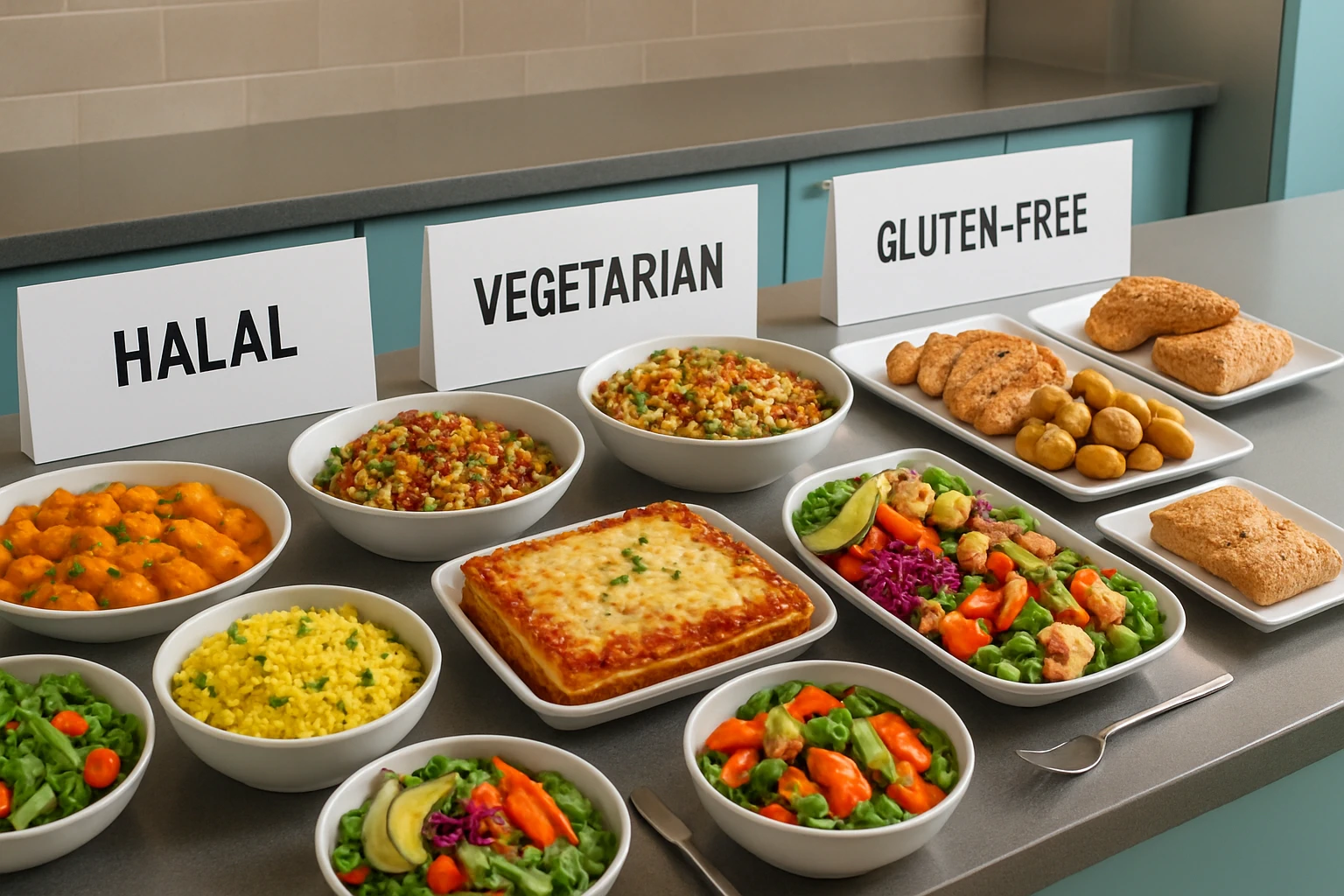
A workplace food program that does not work for 20% of your team is not a benefit. It is a daily reminder to those 20% that they were an afterthought. For HR and People Ops leaders in Southern California, where workforce demographics are among the most diverse in the country, dietary inclusivity is not a nice-to-have. It is a basic requirement for any program that is supposed to improve morale and participation. This guide walks through what dietary-inclusive workplace food actually requires and how to get it right without adding complexity to program management.
The Inland Empire's workforce is majority Latino, over 54% per UCLA's Latino Policy and Politics Institute analysis of IE regional labor force data (UCLA Latino Policy and Politics Initiative, 2025). That demographic reality includes a significant share of workers who have strong food culture preferences, some of whom observe religious dietary guidelines, and many of whom prefer familiar flavors over generic national-chain food. At the same time, Orange County and Los Angeles workforces include substantial South Asian, East Asian, Middle Eastern, and other communities, each with their own dietary norms.
On top of cultural preferences, roughly one in eight Americans identifies as vegetarian or mostly vegetarian, and the share following low-carb, high-protein, or medically managed diets (including those using GLP-1 medications) has grown significantly in recent years. A food program that only serves one cuisine or one dietary profile will visibly exclude a portion of your workforce and that exclusion shows up in participation rates and employee sentiment surveys.
This is the most commonly needed accommodation. At a minimum, every delivery should include at least one substantive vegetarian option, not a side salad, but a protein-rich entree that works as a standalone meal. Black bean dishes, lentil preparations, paneer, egg-based entrees, and grain bowls with roasted vegetables and legumes all qualify. Planning one vegetarian option per three to four proteins is a reasonable starting ratio for most IE and SoCal teams.
For workforces with Muslim employees, which is common in IE industrial, healthcare, and corporate settings, halal protein sourcing is the key requirement. Halal certification covers how the animal is raised and slaughtered; a kitchen that sources certified halal chicken, beef, and lamb can rotate those proteins into the regular menu without creating a separate menu track. The accommodation is in procurement and labeling, not in a special menu. Clear labeling on each item ("halal chicken" rather than "grilled chicken") enables employees to self-select confidently.
Federal law requires food businesses to disclose the eight major allergens: milk, eggs, fish, shellfish, tree nuts, peanuts, wheat, and soybeans. A well-run workplace food program goes beyond legal disclosure and uses clear per-item labeling so employees with allergies can read their options without asking a question every day. Pre-portioned, individually labeled meals, as opposed to shared buffet trays, make allergen communication significantly more reliable, because each item carries its own label rather than relying on a serving card that may not be read.
A growing share of the workforce is actively managing carbohydrate intake, whether for diabetes management, GLP-1 medication protocols, athletic performance, or personal preference. A program that defaults to rice, pasta, and bread as the primary carbohydrate components will leave this group underserved. Including at least one or two high-protein, lower-carb options per delivery (grilled or roasted proteins with roasted vegetables, salads with protein, egg-based dishes) addresses this without creating a special track.
Clear, consistent labeling is the single most practical thing a food vendor can do for dietary inclusivity. Each meal item should carry:
For buffet-format service, labeling each pan clearly and providing tent cards with this information is the baseline. For pre-portioned meals, every container should carry its own label. If your current food vendor does not provide this, it is worth asking for it explicitly. It does not cost more; it requires attention to process.
Before launching a program, send a short survey, three to five questions maximum. Ask: do you have any dietary restrictions (select all that apply, with common categories listed), what proteins do you prefer, and are there any cuisines or dishes you particularly want to see. Keep it anonymous to get honest responses. Share the results with your food vendor before the program starts and revisit the survey every six months as the team changes.
For larger teams in Riverside, Ontario, or Anaheim, a bilingual survey (English and Spanish) substantially increases response rates from non-primary-English speakers, and the dietary information you collect will be more accurate. This is especially relevant in warehouse, manufacturing, and healthcare settings where Spanish is a primary working language for a significant share of the workforce.
For dietary inclusivity, pre-portioned individual meals have a structural advantage over buffet service. With a buffet, cross-contact between dishes (a serving spoon from a meat dish landing in a vegetarian tray, dairy inadvertently added to a tray) is difficult to prevent at scale. With pre-portioned meals, each container is prepared and labeled separately, which provides a meaningful safety margin for employees with allergies or strict religious dietary requirements.
That said, a well-run buffet with clearly separated proteins and labeled stations, served by a professional who understands the plan, can accommodate most requirements short of severe allergies. The key is the conversation upfront with the food vendor about what your team needs, not the format alone.
Dietary-inclusive workplace food is not a specialty product. It is the output of a food vendor who asks the right questions, plans a menu with real variety, labels items clearly, and adjusts as the team's needs evolve. The good news is that a kitchen built around fresh, chef-prepared food, rather than volume-produced processed items, is naturally better positioned for this than a vending or delivery model. Fresh cooking means real ingredients, which means dietary flexibility is a question of planning rather than product reformulation.
MHP builds dietary accommodation into every program we run. When you get in touch, dietary profiling is one of the first conversations we have, before the menu is planned and before the first delivery is made. We serve teams across the Inland Empire, Orange County, and greater Los Angeles, and the diversity of those teams is built into how we plan our menus. See also our guide to choosing the right on-site food program for how dietary needs affect which program format is right for your site.
Halal accommodation requires sourcing halal-certified proteins and clear labeling. A well-run managed food program communicates directly with the kitchen about requirements and adjusts the menu rotation to include clearly labeled halal options. This is straightforward for a dedicated kitchen but harder to guarantee through delivery apps or event catering.
At minimum, labels should identify the eight major allergens: milk, eggs, fish, shellfish, tree nuts, peanuts, wheat, and soybeans. Pre-portioned, labeled meals make this easier because each item can carry its own label, unlike a shared buffet where cross-contact is harder to control.
Very common. Roughly one in eight Americans identifies as vegetarian or mostly vegetarian, and culturally motivated dietary preferences are widespread across the diverse SoCal workforce. Vegetarian options are a baseline expectation in any program serving a mixed-diet team.
Yes. We build dietary inclusivity into our menu planning. When you set up a program, we discuss your team's dietary profile and adjust the menu rotation to ensure that vegetarian, allergen-aware, and halal options are consistently available and clearly labeled.
A simple three-question survey works well: what dietary restrictions do you have (if any), what cuisines do you prefer, and are there any specific items or proteins you want to see regularly. Keeping it short increases response rates. Share results with your food vendor before the program launches.
Hot buffet lunches, a 24/7 smart fridge, or weekly meal drops — cooked in our Rancho Cucamonga kitchen and run as one simple program.