Smart Fridge
Smart fridge for government and municipal worksites
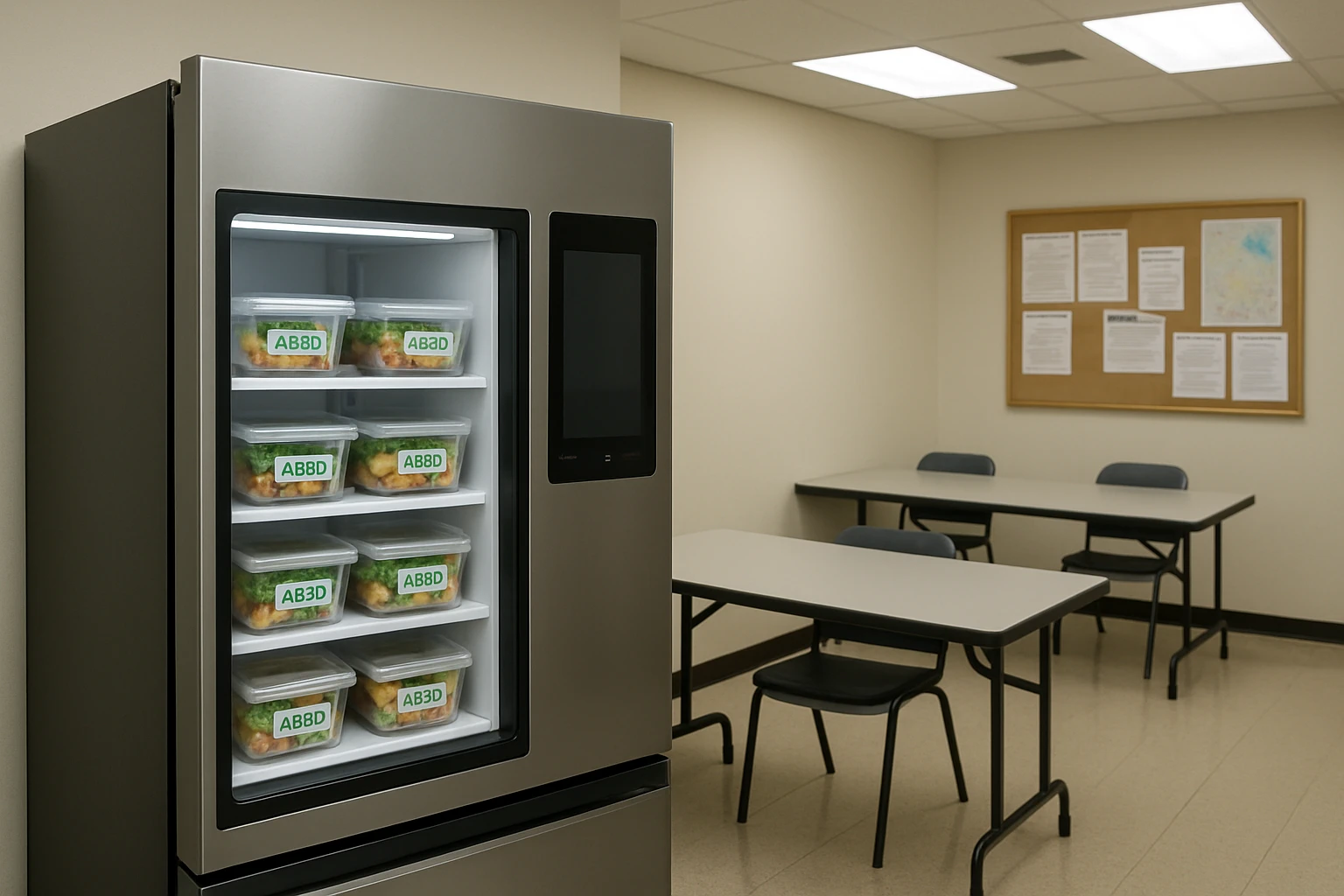
Government and municipal employers across Southern California face a specific version of the workplace food challenge, one that is shaped by budget discipline, procurement processes, workforce diversity, and the operational realities of public service. Smart fridges fit this environment well, but understanding why requires looking at the particular constraints and values that define how government employers make decisions about employee benefits.
This post covers the government and municipal context in detail: who these employers are, what their food access challenges look like, why a smart fridge fits their procurement model better than catering, and how employee wellness investment translates into long-term value in the public sector.
When we talk about government and municipal employers, we mean a broad range of organizations: city and county offices, water and utility districts, public works departments, superior and municipal courts, social services agencies, code enforcement, building and planning departments, and regional transportation authorities. In the Inland Empire and greater Southern California, these entities collectively employ hundreds of thousands of workers across dozens of locations.
San Bernardino County alone is one of the largest employers in the region, with staff spread across county offices in San Bernardino, Fontana, Victorville, Ontario, and Rancho Cucamonga among others. Riverside County has a similar footprint. The cities of Los Angeles, Long Beach, Anaheim, Riverside, and San Bernardino each maintain large municipal workforces across multiple facilities.
What these employers have in common is a workforce that serves the public and in doing so, operates on schedules that do not always align with convenient food access. A social services office may have staff doing site visits across the county between 8am and 5pm with no predictable break window. A public works crew may be deployed to a remote maintenance location for a 10-hour shift. A utilities operations center runs 24 hours to monitor infrastructure. Courts have rigid scheduling that makes a long off-site lunch impossible during session days.
Government employers are budget-conscious by mandate. Every expenditure goes through some level of fiscal review, and programs that carry high upfront costs or unclear ROI face scrutiny that private-sector benefits programs may not. This is actually good news for the smart fridge, because the financial model is structurally favorable for government procurement.
A full catering program requires regular service delivery, significant advance coordination, a predictable headcount, and typically a contract with minimum spend commitments. For a government agency with fluctuating staff attendance, driven by field deployments, court dates, public hearings, and seasonal service demands, a fixed catering contract is hard to right-size and easy to overpay for.
The smart fridge model inverts this: the cost is consumption-based. The employer pays for meals that are actually taken. If a week has low attendance because several staff are at a conference, the fridge usage is low and the billing reflects that. There is no minimum order, no waste from food that was prepared but not served, and no coordination overhead on the employer side. For a government budget manager trying to justify a food benefit to a department director or a county auditor, the consumption-based model is much easier to defend than a flat-fee catering contract.
Public service workers often have schedules that make it difficult to plan their own food access. Field staff, building inspectors, social workers, environmental health officers, public works crews, may start their day at a central office and spend most of it at locations across the jurisdiction. Their break window does not arrive at noon; it arrives when they finish one site visit and before they start the next, which might be at 2pm or 4pm depending on the day.
For those workers returning to a central facility at some point during their shift, a stocked smart fridge in the break room solves the problem. They can eat a real meal during whatever window they have, regardless of when that window falls. For workers who do not return to a central facility during their shift, the answer may be a combination of weekly meal delivery and smart fridge access at their home base for the start and end of the day.
Court staff have a different version of the same problem. During active court sessions, the window for leaving the building is extremely limited. Clerks, bailiffs, court reporters, and judicial assistants often have 30 minutes or less. A smart fridge in the courthouse break room turns that 30 minutes into an actual meal break rather than a scramble to find food off-site.
Government employers compete for talent in a market where private-sector employers offer higher salaries and more flexible benefits packages. The public sector's advantages, job stability, pension benefits, predictable schedule structures, are meaningful, but they do not fully offset the compensation differential in some markets, especially as the labor market for skilled workers tightens.
Employee wellness programs are one tool that government employers use to narrow this gap. Investing in wellness demonstrates organizational care in a way that is visible and tangible to employees. Research on government workforce retention consistently identifies workplace culture and perceived organizational support as significant factors in retention decisions, particularly for mid-career workers who have enough experience to find private-sector positions if they choose to look.
A smart fridge stocked with fresh, nutritious meals is a daily wellness touchpoint that is visible to every employee who walks through the break room. It signals that the employer has invested specifically in their health and daily experience at work. Over the course of a year, that signal has cumulative weight. It is a recurring reminder that the organization takes care of its people in a concrete, practical way.
The long-term math also favors this investment. Healthcare costs in the public sector are significant and employer-borne. Employees with better daily nutrition have lower rates of chronic conditions, reduced absenteeism, and lower overall healthcare utilization over time. The connection is not linear and not immediate, but agencies that invest consistently in employee wellness infrastructure do see lower long-term healthcare spending per employee. The smart fridge is a small but persistent contributor to that picture.
Government facilities have specific requirements around vendor access, security, and facility modification that can make some food program formats logistically complex. The smart fridge is straightforward in this context: it requires a 120V outlet, a small floor footprint, and a WiFi connection. No permanent fixture modification, no plumbing, no dedicated staff to manage it. MHP handles restocking on a defined schedule. The facility's facilities management team does not need to be involved in day-to-day operation.
For government agencies that require vendor vetting or procurement through a formal process, MHP works through those channels. We have experience with the procurement requirements of county and city agencies in the Inland Empire and can provide the documentation typically required, insurance certificates, business licenses, references, and service specifications. The process takes longer than a quick call, but it is manageable and we have navigated it before.
See our Smart Fridge program page for the full program overview. Our government and municipal industry page covers the sector in more detail. For installation specifics, our smart fridge setup guide explains exactly what the installation process involves. We have also written about the government lunch program context in San Bernardino, which covers some of the same workforce dynamics from the daily lunch perspective.
The most common comparison employers run when evaluating a smart fridge is against vending. The math is simple and worth running. A vending machine sells shelf-stable snacks, sugary drinks, and packaged candy at a markup of roughly 70 to 120 percent over wholesale cost. The food is engineered for shelf life, not nutrition. It produces a short blood-sugar spike followed by an energy crash, which is the opposite of what an employer wants from an afternoon shift.
A smart fridge replaces that with fresh chef-prepared meals at a comparable or lower per-unit cost when subsidized correctly. Workers actually eat the food because it tastes like real food. Employers measure adoption rates of 60 to 85 percent on a fresh smart fridge versus 15 to 30 percent on a comparable vending machine. The wellness, retention, and productivity arguments that justify the smart fridge investment do not exist for a vending machine.
If the existing vending contract is up for renewal, the timing to replace it with a smart fridge is straightforward. The footprint is similar, the labor on the employer side is zero in both cases, and the cost structure swaps a low per-unit margin for a meaningful nutrition and engagement outcome.
Yes. MHP can provide the documentation typically required by city and county procurement offices, including vendor registration materials, insurance certificates, service level specifications, and references from comparable public-sector accounts. The procurement timeline depends on the agency, but we have worked with government employers on procurement processes before and can advise on what to expect and what documentation to request from our end.
MHP provides itemized invoices on a regular billing cycle, typically monthly or bi-weekly depending on volume. For agencies that require purchase order processing, we can accommodate that workflow. The consumption-based billing model means the invoice reflects actual usage rather than a fixed service fee, which simplifies budget justification and audit documentation.
The smart fridge has minimal infrastructure requirements: a 120V outlet, floor space, and WiFi. Most government break rooms have all three. If the break room is very small, MHP can assess the space during the pre-installation visit and recommend whether a standard or compact unit is more appropriate. Government facilities with older electrical infrastructure may need an outlet assessment before installation, which we can coordinate.
Yes. MHP services facilities with varying levels of physical security requirements. Restocking visits can be coordinated with the facility security office to ensure compliance with visitor access protocols. We do not require unrestricted access, all restocking can be done during approved windows with badged escort if required by the facility. We discuss security requirements as part of the onboarding process for each new account.
MHP's menu rotation includes vegetarian options, halal-compatible preparations, and items labeled with full allergen information. Government workforces in Southern California tend to be highly diverse, and MHP's menu is designed to serve workers with a range of dietary requirements, religious observances, and health conditions. Every item is labeled with ingredients and allergen callouts, so workers can make informed choices without having to ask HR about what is in the fridge.
Tell us about your team and we will recommend the right program and a worksite-specific quote. No high-pressure sales.