Smart Fridge
Smart fridge setup: what the installation process actually looks like
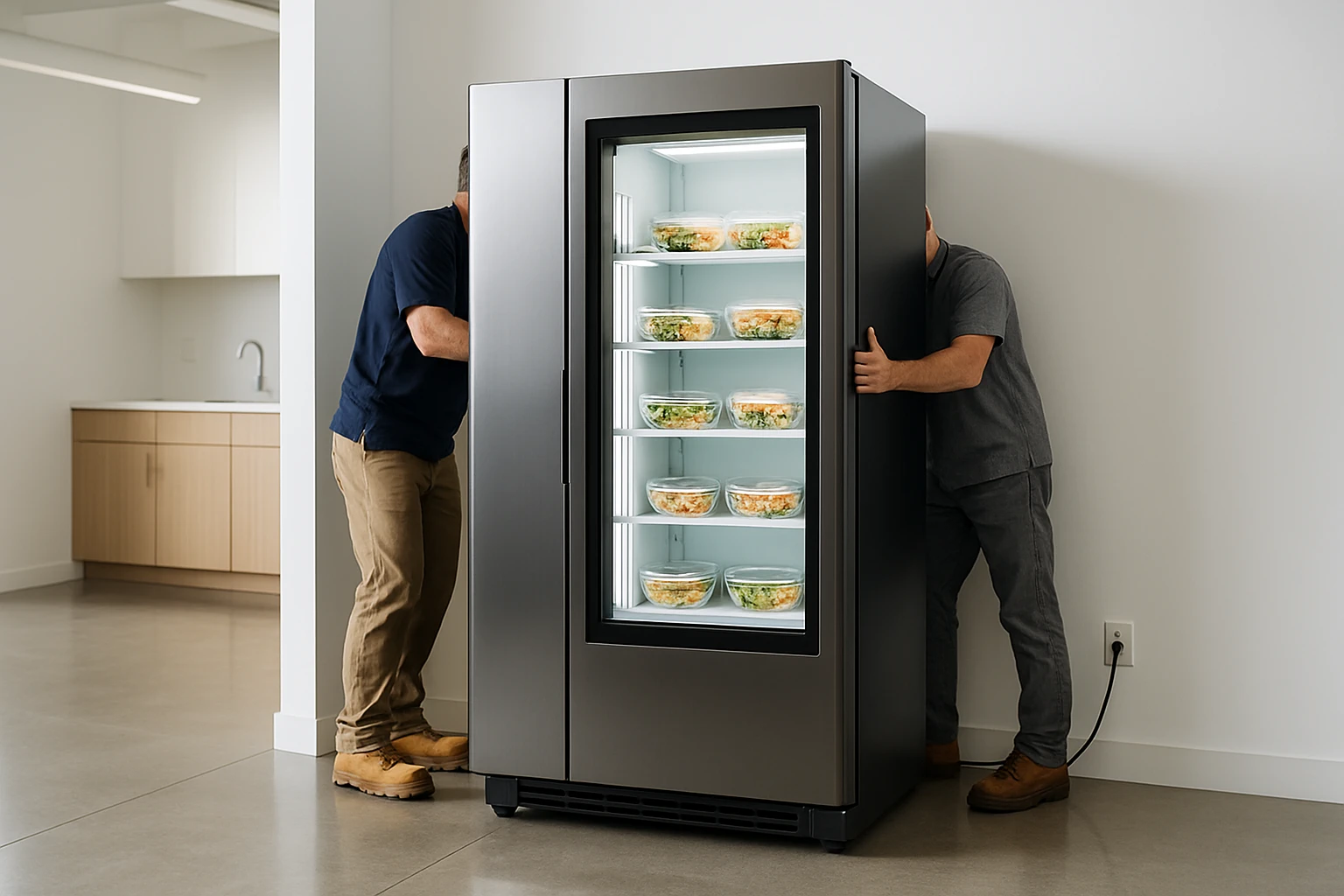
When facilities managers and HR teams first inquire about adding a workplace smart fridge, the conversation usually arrives at the same set of concerns: how much space does it need, what power does it require, how long does setup take, and, most importantly, is this going to create ongoing work for our team? These are the right questions to ask, and the answers are simpler than most people expect.
This post walks through exactly what happens from the moment you contact MHP to the first day your team can access a stocked fridge. It covers every step in plain language, without glossing over the parts that require action from your side. The honest answer to the biggest concern is: it is not a lot of work, and once it is running, it is essentially zero work for your team.
The process starts with a short conversation, typically a 20-minute call or an email exchange, covering your team size, your shift structure, the location of your break room or intended placement area, and your goals for the program (fully subsidized benefit, partially subsidized, or employee-paid). This conversation shapes everything that follows.
After that initial conversation, MHP does a site assessment. For most locations in Southern California, this is either a virtual assessment using photos you send, or a brief in-person visit by the MHP team. We are looking at four things: available floor space, access to a standard 110-volt outlet, security of the placement area (is this a room that can be secured after hours?), and proximity to the break area your team actually uses during their shifts. The site assessment takes under an hour and requires almost nothing from your facilities team beyond letting us see the space.
The physical footprint of a smart fridge is small. The unit is roughly the size of a college dorm refrigerator standing on end, typically about two square feet of floor space, with the door opening clearance adding another two feet in front. Most break rooms have more than enough space. The fridge needs to be level and within reach of a standard 110-volt, 20-amp outlet, the same outlet type used by a standard commercial kitchen appliance. No special electrical work is required in the vast majority of installations.
The placement decision matters for adoption. A fridge tucked in a back hallway gets used less than one placed in the main break room with natural foot traffic. MHP will make a specific placement recommendation based on the site layout. In most cases, the optimal spot is immediately obvious, near the existing microwave, along the main wall of the break room, or in the lounge area where employees already congregate during breaks.
Access to the fridge is configured before delivery. The most common options are:
Access configuration is handled by MHP before the unit arrives. Your IT team does not need to integrate anything unless you are using badge access, and even that integration is typically a brief configuration on our side using your existing access control format.
The unit is delivered and positioned by the MHP team. Installation takes under two hours for a single unit, typically closer to 45 minutes once the path to the break room is clear. The MHP team positions the unit, confirms level placement, plugs into the outlet, runs a temperature verification cycle, and loads the initial stock. No construction, no drilling, no permitting. When the team leaves, the fridge is running and full.
Your facilities team's only role during installation is to ensure clear access to the break room and the route from the building entrance to the placement location. That is it.
This is the point that matters most to HR and facilities teams evaluating the program: once the fridge is installed, your team has no ongoing responsibility. MHP manages all restocking on a schedule calibrated to your site's usage patterns.
For most office and corporate sites, restocking happens two to three times per week. For high-usage industrial sites or 24/7 operations, restocking may happen daily. The schedule is set based on the consumption data from the fridge, if the unit is selling down faster than expected, MHP adjusts the restock frequency. You do not need to track inventory, place orders, or coordinate with anyone. If there is a food safety issue, an item approaching its sell-by date, MHP removes it during the next restock visit without any action required from your side.
The practical experience for facilities is that the fridge exists, it is always stocked, and nothing ever lands on their desk because of it.
For most Southern California sites, the timeline from initial conversation to first stocked fridge is one to two weeks. This includes the site assessment, access configuration, delivery scheduling, and initial stocking. Sites with straightforward setups (clear break room, standard outlet, no unusual access requirements) are typically live within five to seven business days. The main variable is scheduling, if your facilities team needs to prep the space or your HR team needs internal approval, that adds time, but it is time on your side of the process, not ours.
One of the most consistent observations from HR teams who have added smart fridges is how surprised they are by how non-events the setup process turns out to be. The anticipation of complexity does not match the reality. A program that delivers daily, tangible health and nutrition benefits to every employee who uses it runs essentially autonomously once installed.
There is a principle worth naming here: the infrastructure that enables employee wellness does not have to be complicated to be effective. A smart fridge is not a wellness program with onboarding materials, participation tracking, and quarterly reviews. It is a piece of equipment that holds real food. The simplicity of the infrastructure is part of what makes it work, employees do not need to enroll, schedule, or opt in. The food is simply there when they need it.
See our Smart Fridge program page for the full program overview. Our corporate offices industry page covers how the program fits office environments specifically. And our Orange County office smart fridge post covers the buyer's guide version of this question for OC employers.
The most common comparison employers run when evaluating a smart fridge is against vending. The math is simple and worth running. A vending machine sells shelf-stable snacks, sugary drinks, and packaged candy at a markup of roughly 70 to 120 percent over wholesale cost. The food is engineered for shelf life, not nutrition. It produces a short blood-sugar spike followed by an energy crash, which is the opposite of what an employer wants from an afternoon shift.
A smart fridge replaces that with fresh chef-prepared meals at a comparable or lower per-unit cost when subsidized correctly. Workers actually eat the food because it tastes like real food. Employers measure adoption rates of 60 to 85 percent on a fresh smart fridge versus 15 to 30 percent on a comparable vending machine. The wellness, retention, and productivity arguments that justify the smart fridge investment do not exist for a vending machine.
If the existing vending contract is up for renewal, the timing to replace it with a smart fridge is straightforward. The footprint is similar, the labor on the employer side is zero in both cases, and the cost structure swaps a low per-unit margin for a meaningful nutrition and engagement outcome.
No. The fridge runs on a standard 110-volt, 20-amp outlet, the same type found in virtually every commercial break room and kitchen. No dedicated circuit, no electrician, no permitting. If your break room has a microwave, it almost certainly has the outlet the fridge needs.
The unit footprint is roughly two square feet, similar to a standard free-standing refrigerator. You need an additional two feet in front for door clearance. For a standard break room or lounge, this is minimal. We will confirm exact dimensions during the site assessment and make a specific placement recommendation based on your layout.
Nothing ongoing. MHP handles all restocking, food safety rotation, and maintenance. Your facilities team's only involvement after installation is basic: keep the area around the fridge clear of obstructions and ensure MHP's restock team has building access. If there is ever a service issue with the unit, you contact MHP and we handle it.
Employees tap a credit or debit card directly on the fridge reader, or use a badge or employer-issued credential for subsidized programs. There is no app to download, no account to create, and no subscription. The transaction happens at the fridge in the same way it would at a modern point-of-sale terminal. Employees see itemized charges on their card statement just like any other food purchase.
Yes. Many MHP clients choose to fully or partially subsidize fridge meals as an employee benefit. The employer receives consolidated billing on a regular cycle. For partial subsidy programs, the employer sets a per-meal contribution and employees pay the remainder. This is straightforward to configure and to adjust over time as the program evolves.
Tell us about your team and we will recommend the right program and a worksite-specific quote. No high-pressure sales.