Wholesale
Macro-counted wholesale meals for sports nutrition retail
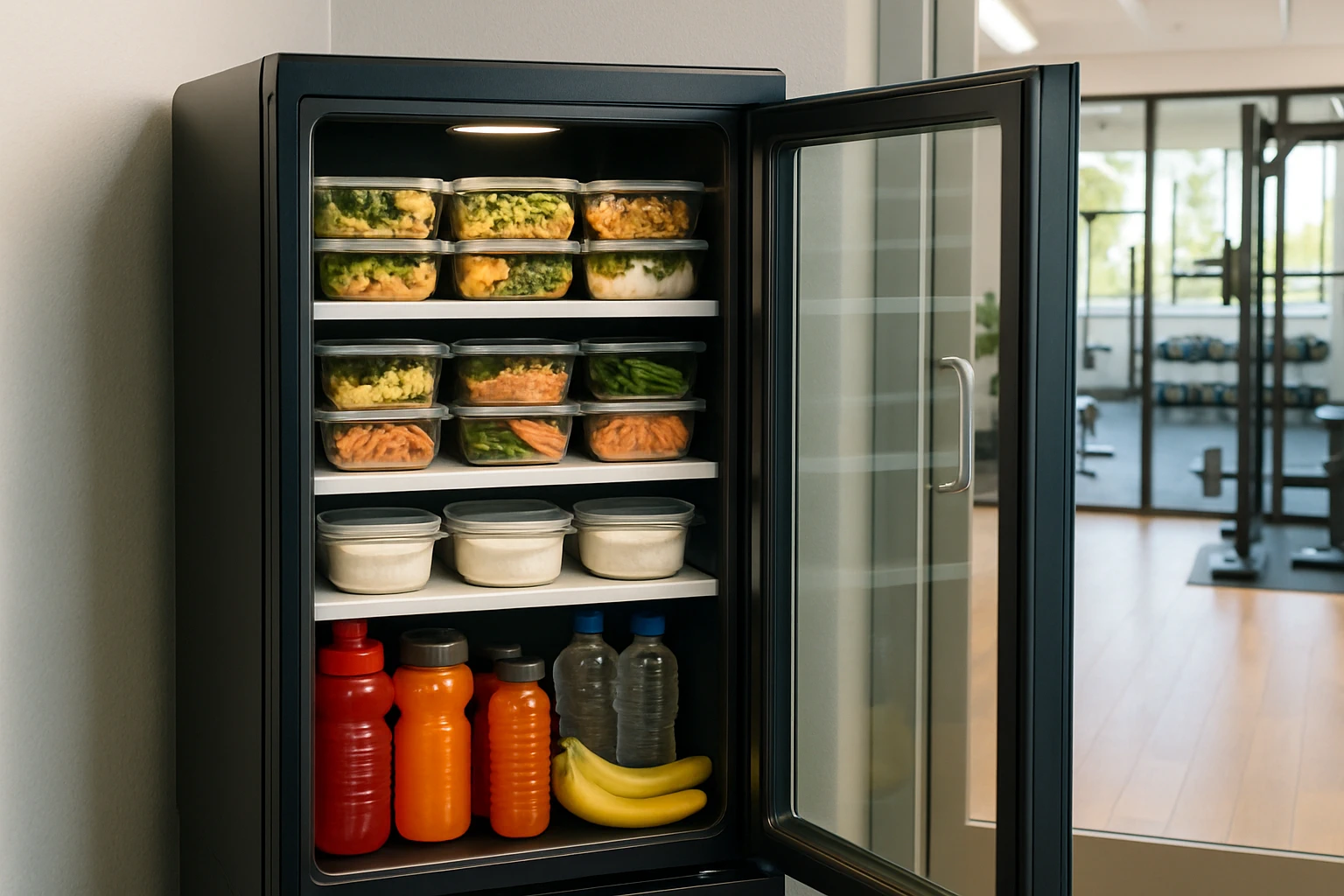
Sports nutrition retailers in Southern California serve a customer base that reads nutrition labels at a level the general retail customer does not. The wholesale meals stocked at sports nutrition retail have to meet a higher standard for macro accuracy, protein content, and ingredient transparency than meals stocked at a general workplace fridge. This guide is for the sports nutrition retailer building a fresh-meal supply chain that fits the customer.
The customer profile at a sports nutrition retailer (Nutrishop, Vitamin Shoppe, supplement specialty stores, fitness-adjacent retail) is goal-directed about nutrition in a way the general workplace customer is not. They walked in already thinking about macros, training nutrition, recovery, and body composition. The supplement they came to buy reflects that mindset. The meal they would buy on the same trip has to reflect it too.
The dominant macro profile across the sports nutrition customer base sits in the 450 to 650 calorie range, with 35 to 50 grams of protein, moderate complex carbohydrates (40 to 70 grams), and controlled fat (10 to 22 grams). This profile fits the majority of cutting, maintenance, and moderate-bulking goals. A meal at this profile is a usable nutrition input for the customer's existing plan.
Meals outside this profile have a place too. Higher-calorie meals (700+) work for bulking customers. Lower-calorie meals (under 400) work for aggressive cutting. The breadth of the SKU range determines whether the retailer captures the full customer base or only the middle of it.
Protein content is the variable that matters most. A sports nutrition customer will reject a 25-gram-protein meal at any calorie count. The same customer will choose a 45-gram-protein meal even if the calorie count is higher than ideal. Protein-forward formulation is the table stakes for this customer.
The macro label on a wholesale meal sold through sports nutrition retail has to be readable in three seconds at the case. The customer is scanning multiple SKUs to pick the one that fits their daily plan. A label that buries the protein number or makes the customer do mental math loses the sale.
The information that has to be visible in the primary label position:
Calories. Total for the container, not per serving with multiple servings.
Protein grams. The first macro the customer looks for. Bold or visually emphasized.
Carbohydrate grams. Often broken down by complex carbs and net carbs depending on customer base. The Vitamin Shoppe / Nutrishop customer cares about net carbs more than a general workplace customer.
Fat grams. Including saturated fat for the cardiovascular-aware customer.
Fiber grams. Increasingly important to the modern fitness customer.
Ingredient list. Complete, in descending order by weight. The sports nutrition customer reads this.
Allergen declarations. Standard FDA major allergens plus any specialty exclusions the supplier offers (gluten-free, dairy-free, soy-free).
A label that puts protein in the secondary position behind brand storytelling loses to a label that leads with protein. The customer is making a nutritional decision, not a brand decision.
A sports nutrition customer who finds meals they like will buy multiple per week. A retail program that runs a static menu loses these customers in two to three weeks because they hit the rotation ceiling. A program that adds one or two new SKUs weekly keeps the customer engaged.
The structure that works for most sports nutrition retail programs is a base rotation of 12 to 16 SKUs that runs across a 4-week cycle, with 2 to 3 weekly featured SKUs that change every week. The customer sees familiar favorites alongside new options, which is the right pattern for sustained engagement.
The wholesale supplier has to design the rotation explicitly for this customer pattern. A supplier whose rotation strategy is built for monthly customer turnover (like a workplace micromarket where employees rotate through accounts) will not deliver enough variety for the sports nutrition retail customer.
MHP cooks every wholesale meal in our Rancho Cucamonga kitchen and can format the wholesale meal program for sports nutrition retail customers across SoCal. The base menu is engineered with protein-forward macros calibrated for the fitness-focused customer.
The standard SKU range includes meals at 450 to 650 calories with 35 to 50 grams of protein, with options at the lighter and heavier ends of the range for cutting and bulking customers. The macro label leads with calories and protein in a layout designed for case scanning. Ingredient lists are complete and human-readable.
The menu rotates with new featured SKUs weekly layered on a stable 4-week base rotation, so the customer who buys daily sees variety without losing the favorites.
For retailers with specific customer base requirements (a Nutrishop store with a high competitive-bodybuilding clientele will have different SKU preferences than a Vitamin Shoppe with a general fitness clientele), MHP works with the retailer to tune the SKU mix to the customer base. The starting point is the standard protein-forward range, and the customization conversation happens once the retailer's customer base is mapped.
A sports nutrition retailer's cold case operates similarly to a workplace smart fridge or micromarket case. Weekly stocking, code-date management, FIFO rotation, shrinkage tracking at 4 to 8 percent of stocked units.
The labor lift is small. A weekly restock and case maintenance takes 30 to 45 minutes per case. The retailer's existing staff handles the case alongside the existing supplement category. The wholesale supplier handles delivery, menu rotation, and labeling.
The case is a low-complexity addition to a supplement retail operation. The operational requirements are well below those of running a kitchen or even a coffee program. The economics work because the customer base is already in the store and predisposed to buy meals as a category.
Wholesale costs for protein-forward chef-prepared meals run $6.50 to $8.50 per unit, with the variance reflecting protein cost (poultry vs beef vs seafood) and per-location minimums.
Sports nutrition retailers usually price meals at 1.7 to 2.0 times wholesale. A $7.50 wholesale meal lands at $13 to $15 retail. This pricing is competitive with meal-prep delivery services, well below restaurant takeout, and reflects the convenience premium the customer pays for grab-and-go access alongside their supplement purchase.
The customer who walks in for a tub of protein and walks out with a meal generates a basket that captures more of their weekly nutrition spend than the supplement alone. The visit frequency lift compounds the meal margin over the lifetime of the customer relationship.
The conversation with MHP for sports nutrition retailers starts with a short call about your customer base, your store footprint, your case capacity, and your goals for adding meals. From there we send a SKU mix recommendation tuned to your customer profile, per-location-minimum pricing, and can have a delivery schedule in place within a week or two of agreement.
Sports nutrition retail customer behavior data is tracked by the Council for Responsible Nutrition (CRN), Natural Products Association, and NielsenIQ retail panels. Macro labeling best practices and FDA nutrition labeling requirements are documented at FDA.gov.
Some suppliers will run a custom macro-tuned SKU for retailers above a minimum weekly volume threshold. The economics work above 200 to 300 weekly units of the custom SKU because that volume justifies a separate production run. Below that volume, retailers usually choose from the supplier's standard SKU range and select the macros that match their customer base.
Tell us your locations and the volume you move, and we’ll come back within one business day with wholesale terms for your route.