Wholesale
Smart fridge operators: building a SoCal supply chain for fresh meals
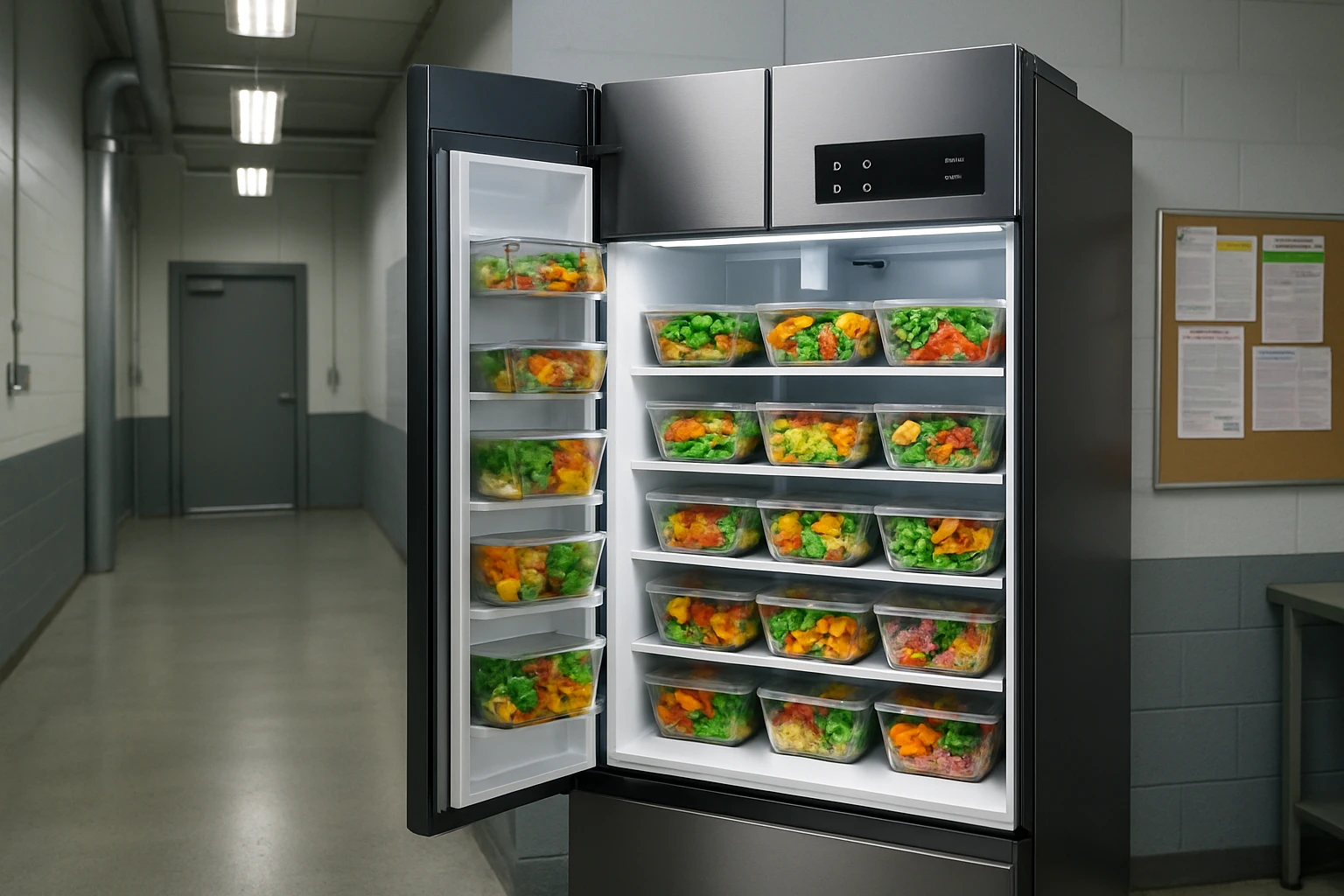
Smart fridge operators in Southern California have spent the last five years building businesses around a hardware category that requires a fresh wholesale meal supply chain to actually work. The hardware is the easy part. The fridge ships, gets installed, and runs. The hard part is the weekly logistics of getting fresh meals from a kitchen to the fridge on a predictable schedule. This guide is for the smart fridge operator building or refining their wholesale supply chain in SoCal.
A smart fridge installation is a recurring weekly logistics commitment. The operator signs an account, installs the fridge, programs access, and then has to deliver fresh meals to the location every week, restock the inventory, and pull anything past code date. The hardware is a one-time install. The supply chain is a permanent operational system.
The constraint that makes or breaks the business is the wholesale meal supply. If the supplier delivers late, short, or wrong, the fridge runs empty and the operator loses the account. If the food quality drops, customers stop buying and the operator loses the account. If the menu does not rotate, customers get bored and the operator loses the account.
The wholesale supplier is the single point of failure in a smart fridge operation. Operators who have been in the business for a few years know this and treat the supplier decision accordingly. New operators sometimes underestimate it and pay for that decision later.
The questions that matter when evaluating a wholesale meal supplier for a smart fridge operation:
The first is delivery reliability. The supplier has to hit a weekly window with high consistency. A delivery that runs three hours late on a Tuesday is a fridge that runs empty by Wednesday afternoon. The variance on delivery windows should be small, and the supplier should communicate proactively when something is going to change.
The second is labeling consistency. The fridge backend reads each unit either by barcode, NFC tag, or visual recognition. The wholesale supplier has to print labels that the backend can read every time without intervention. Inconsistent labeling produces transaction errors, customer frustration, and operator manual overhead.
The third is code-date management. Every container needs a clearly printed production date and a clearly printed code date. The operator's restocking process depends on knowing exactly when each unit expires. Suppliers who improvise on dates or print them inconsistently create operational headaches at scale.
The fourth is menu rotation. A fresh-meal fridge with a static menu loses customers in three to four weeks. The supplier should run a weekly menu rotation across a 4-week cycle minimum, and the operator should be able to publish the upcoming menu to the workplace contact so the buyer knows what is coming.
The fifth is per-location pricing. Smart fridge operators almost always run multiple locations with varied weekly velocity. A supplier that prices on per-location minimums lets the operator scale small and large locations into the same wholesale relationship. A supplier that prices on a single aggregate minimum forces the operator to consolidate locations or pay for stops they cannot fill.
MHP cooks every meal in our Rancho Cucamonga kitchen and delivers wholesale meals to smart fridge operators across SoCal. The format is engineered for the operational requirements of an unattended retail business: individually packaged, code-dated, allergen-tagged, in containers that hold up in a refrigerated case for 7 to 10 days.
The menu rotates on a 4-week cycle, and the rotation is published in advance so operators can communicate the upcoming menu to the workplace buyer. The labeling is consistent across every container, with the production date, code date, ingredient list, and allergen tags printed in a standard layout that fridge backends can parse.
Per-location minimums are set in conversation with the operator based on the actual weekly velocity at each site. Multi-location operators see consolidated weekly delivery and a single weekly invoice covering all stops.
Smart fridge operators running multiple locations in SoCal know that the Inland Empire, Orange County, and Los Angeles are three different delivery routes even though they are the same metro on a map. A wholesale supplier without route experience in SoCal will miss delivery windows in ways that hurt operations.
MHP's delivery schedule is built around the time-of-day logistics in these corridors. Inland Empire stops run on early-morning windows. OC and LA stops run on slightly later windows that match the route. Temecula and the I-15 South corridor have their own window. Operators see their confirmed delivery times weekly, and the variance is small enough to plan restocking labor around.
Operators running 5 or more locations across SoCal see structural advantages in wholesale pricing because route consolidation lowers the supplier's per-stop cost. A supplier dropping five operator locations on a single route gets efficiency that improves the per-meal price for the operator at every stop.
For operators scaling from 3 locations to 10 locations, the wholesale economics improve at each step. The fixed delivery cost gets absorbed across more stops, and the per-meal cost trends down even as the per-location minimums stay constant.
The other operator-side variable is restocking labor. A weekly restock at a single location takes 30 to 60 minutes of operator labor for inventory removal, cleaning, and restocking. Multi-location operators usually batch restocks geographically and run them on the day of delivery to consolidate driver labor.
A wholesale supplier whose delivery windows are predictable lets the operator schedule restocking labor reliably. A supplier whose windows vary by 3 to 4 hours forces the operator to staff for the variance, which is a real cost. The reliability of the delivery window is a labor cost variable, not just an inventory variable.
The conversation with MHP starts with a short call about your existing fridge locations, your weekly velocity at each site, your backend system, and your delivery preferences. From there we send per-location-minimum pricing and can have a delivery schedule running within a week or two of agreement.
Unattended retail logistics, smart fridge backend integration, and fresh-meal supply chain best practices are documented by NAMA (National Automatic Merchandising Association) and operator case studies from the Society for Foodservice Management.
The fridge backend usually tracks each unit by code date as it is stocked, then flags units approaching expiry for removal. The operator pulls flagged units, restocks with fresh inventory, and counts the pulled units as shrinkage. At calibrated velocity, code-date shrinkage runs 4 to 7 percent of stocked units.
Tell us your locations and the volume you move, and we’ll come back within one business day with wholesale terms for your route.