Wholesale
Wholesale meals for corporate cafeterias supplementing in-house programs
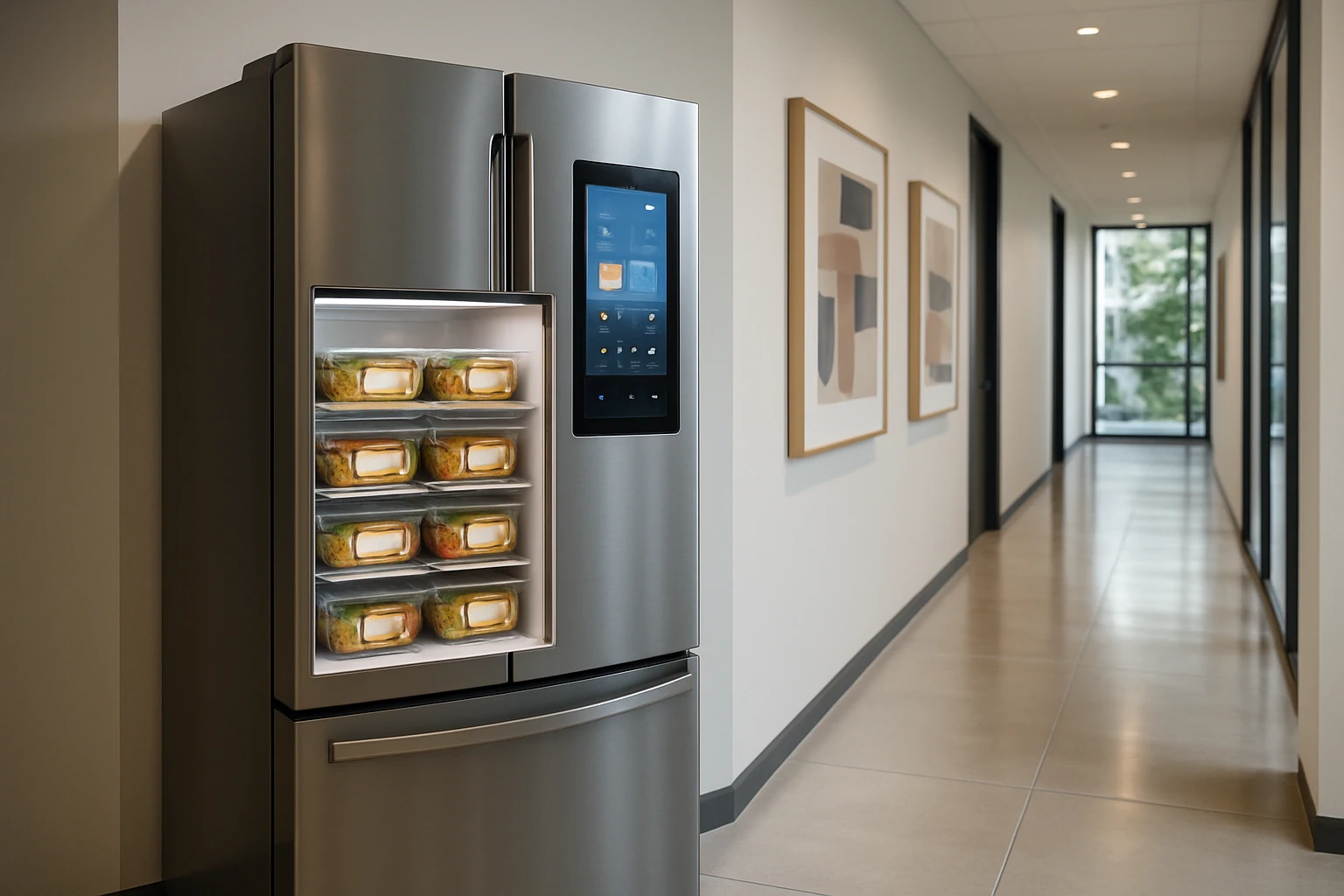
Corporate cafeteria operators in Southern California have always faced the same structural problem: the kitchen is sized for lunch, the staff is sized for lunch, and lunch is one to two hours of the workday. The rest of the day is underutilized capacity and unstaffed service. Wholesale fresh prepared meals are how cafeteria operators extend service hours without expanding kitchen capacity. This guide is for the cafeteria operator evaluating how to use wholesale meals as a complement to in-house production.
A corporate cafeteria kitchen is built around the lunch service. The equipment, the staffing, the prep capacity, and the supply chain are all sized for the lunchtime peak. Breakfast service is a smaller scale of the same operation. Off-peak service (mid-afternoon, evening shift, weekend coverage) is where the math breaks.
Running the kitchen for off-peak service requires labor that produces revenue inefficiently. A line cook making 10 grab-and-go meals at 3pm is not productive labor. The operator has two options: shut down off-peak service entirely and tell customers they have to find food elsewhere, or accept the underutilized labor cost as a service-level commitment.
Workplaces that run multi-shift operations or have evening teams need off-peak food access. Hospitals, manufacturing campuses, 24-hour distribution centers, and corporate offices with international teams all have evening and overnight needs that lunch service does not cover.
Wholesale prepared meals are the third option. The cafeteria stocks a grab-and-go case with wholesale meals during off-peak windows. Customers buy from the case. The kitchen is closed. The labor cost is zero. The food access continues across the operating window the workplace needs.
Cafeteria operators usually model wholesale meal supplementation on a blended-cost basis. The cafeteria's overall cost-to-serve includes:
In-house produced meal cost (food + labor + overhead) for the lunch peak. This is the operator's traditional cost-of-goods calculation.
Wholesale meal cost for off-peak grab-and-go inventory. This is the per-unit wholesale price plus a small allocation for cold-case storage.
Shrinkage on both production tracks. In-house excess gets shrunk to staff meals or food waste. Wholesale excess gets pulled at code date.
When the blended-cost model is run accurately, wholesale meals are usually cheaper than in-house production for off-peak service because the labor savings exceed the wholesale price premium. The cafeteria operator who insists on producing everything in-house is paying labor cost for capacity they do not need.
The cafeteria operator who treats wholesale meals as a labor-replacement input gets the off-peak service hours their workplace needs without the cost penalty. The math works at scale.
A second reason cafeteria operators buy wholesale is menu variety. A cafeteria kitchen has finite prep capacity per service. The chef can run a limited number of menu options per day without overwhelming the line. Wholesale meals let the operator extend the menu without expanding kitchen complexity.
For corporate workplaces with diverse dietary needs (vegetarian, vegan, halal, gluten-free, dairy-free), the in-house kitchen often cannot economically run all categories at scale. Wholesale meals from a supplier specializing in dietary categories let the cafeteria offer the full range without the kitchen having to specialize.
The customer sees a menu with the cafeteria's signature dishes plus a broader variety from the wholesale supply. The operator does not have to staff for the variety. The supplier does the specialization at scale, and the cafeteria captures the variety benefit.
MHP cooks every meal in our Rancho Cucamonga kitchen and delivers wholesale meals to corporate cafeterias across SoCal. The format fits cafeteria operations: individually packaged, code-dated, allergen-tagged, in containers that hold up in a grab-and-go case for 7 to 10 days.
The menu rotates on a 4-week cycle, so the cafeteria can publish an upcoming wholesale menu to the customer base. The rotation includes a mix of categories the cafeteria might not produce in-house (specialty diets, regional cuisines, lighter options) so the grab-and-go case offers variety the kitchen does not have to staff for.
Per-location pricing scales with weekly volume per stop. Single-site cafeterias and multi-site corporate operations can both work within the wholesale relationship at appropriate per-location minimums.
The patterns we see most often from corporate cafeteria operators using wholesale meals:
Off-peak grab-and-go stocking. The kitchen closes after lunch. The grab-and-go case stays open through the evening with wholesale-stocked meals. Customers get food access. The labor cost stays at zero past close.
Multi-shift coverage. The cafeteria operates during day-shift hours. Evening, overnight, and weekend customers buy from the grab-and-go case stocked with wholesale meals. The operator covers the full operating window the workplace needs.
Menu variety extension. The kitchen runs its core menu. The wholesale supply adds vegan, vegetarian, gluten-free, halal, or regional categories the kitchen does not produce. The customer sees a broader menu without the kitchen having to expand.
Catering overflow. The cafeteria handles standing catering orders in-house. When demand exceeds kitchen capacity (a large meeting, a recruiting event, multiple simultaneous catering orders), wholesale meals fill the overflow without compromising the in-house meal service.
The conversation with MHP starts with a short call about your cafeteria operation, your off-peak service hours, your customer demographics, and your menu variety goals. From there we send per-location-minimum pricing and a sample menu rotation that you can model against your current production.
Corporate cafeteria operational benchmarks are documented by SFM (Society for Foodservice Management) and IFMA (International Foodservice Manufacturers Association). Labor cost-to-serve modeling for off-peak cafeteria service is documented in industry case studies from major contract foodservice operators including Aramark, Sodexo, and Compass Group.
Wholesale meals typically cost more per unit than the same meal produced in-house, but the labor savings usually offset the wholesale cost on off-peak service. Cafeteria operators model this on a blended cost basis, treating wholesale meals as a labor-replacement input rather than a food-cost input. The right wholesale meal mix improves the operation's overall cost-to-serve ratio.
Tell us your locations and the volume you move, and we’ll come back within one business day with wholesale terms for your route.