Wholesale
Wholesale prepared meals for micromarket operators in Southern California
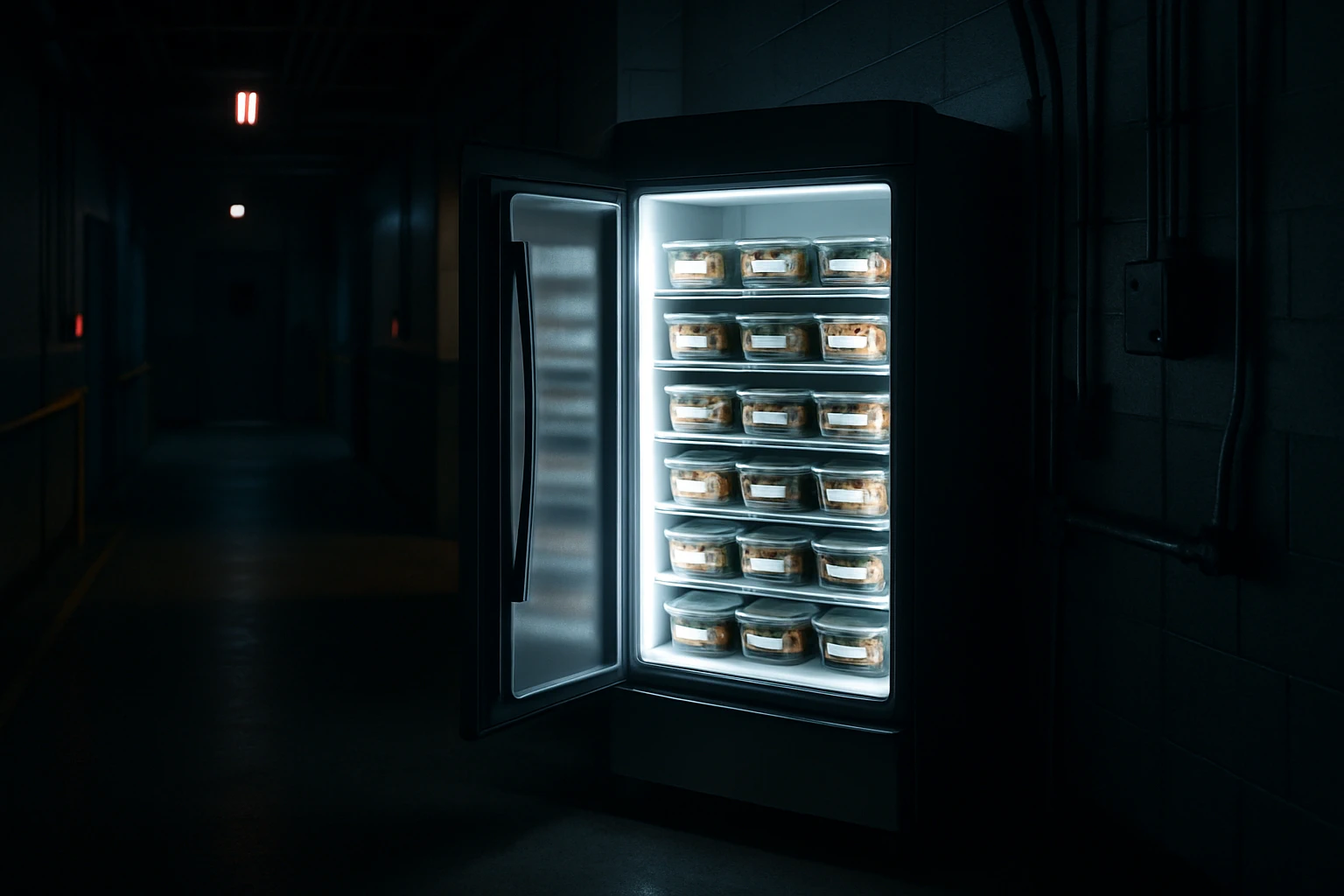
Micromarket operators in Southern California have spent the last five years trying to source a reliable wholesale supply of fresh prepared meals. The category has grown faster than the supply has kept up. Most operators end up assembling a patchwork of suppliers, prepping meals in-house, or accepting a higher waste percentage than they would like. This guide is for the operator who wants to stop assembling and start working with a single wholesale partner.
Micromarkets used to be a snack and beverage category. Five years ago, the typical unattended workplace market sold chips, candy, sodas, packaged sandwiches, and the occasional yogurt cup. Fresh meals were a small share of revenue and a large share of headaches.
That changed when workplace buyers started asking for real food. Office managers, HR teams, and facilities leads who used to be satisfied with a vending machine started pushing for prepared meals their teams would actually choose over a delivery app. Operators who could provide fresh meals took those accounts. Operators who could not, lost them. The category shifted, and the wholesale supply chain is still catching up.
The supply problem in this category is specific. Operators need meals that arrive fresh on a predictable weekly schedule, are individually packaged for grab-and-go, are clearly labeled with ingredients and allergens, hold up in a refrigerated case for 7 to 10 days, and rotate through a menu that does not bore the customer base in three weeks.
National wholesale meal-prep companies often miss on logistics. Their delivery windows do not match a SoCal route. Their pricing assumes a high enough volume that small and mid-size operators cannot meet the minimum. Their labeling is inconsistent. The result is a wholesale relationship that looks fine on paper and breaks in practice.
Local suppliers tend to miss on consistency. The chef-prepped quality is there. The volume is there. But the menu does not rotate often enough, the labeling is improvised, or the cold-chain logistics are not industrialized enough to support a multi-location operator at scale.
The right wholesale partner sits in the middle. Local cooking, industrialized packaging and labeling, a real route schedule, a menu that rotates weekly without operator effort, and pricing structured around per-location minimums rather than aggregate volume.
MHP cooks every meal in our Rancho Cucamonga kitchen and delivers wholesale meals to micromarket operators across the Inland Empire, Orange County, Los Angeles, and Temecula Valley. The format is fresh chef-prepared meals in individually labeled containers, code-dated, allergen-tagged, on a weekly delivery schedule.
The menu rotates on a 4-week cycle. A typical week includes a mix of grain bowls, grilled proteins with starch and vegetable sides, salads with substantial protein, and hot entrees like baked pasta or braises. The rotation is designed so a daily user in a micromarket sees something different every workday across a four-week stretch. The repeat customer does not get bored.
Pricing runs on a per-location minimum model. Operators choose a per-location minimum that fits their actual weekly velocity at each site, and the per-unit cost adjusts to match. A 50-meal weekly minimum location prices differently than a 200-meal weekly minimum location, and both are priced clearly so the operator can model unit economics before signing.
The questions worth asking any wholesale meal supplier before signing:
A wholesale supplier worth signing answers these specifically. A reseller hedges or routes through a partner. The operator who asks these questions on the first call usually knows by the end of the call whether to keep talking.
The Inland Empire, Orange County, and Los Angeles are technically the same metro for wholesale food logistics. Practically, they are three distinct delivery routes with different timing realities. The 60, 91, and 405 freeways do not behave the same way at 9am and 11am. A wholesale partner that does not understand the time-of-day logistics in SoCal will miss delivery windows in ways that hurt the operator.
MHP runs a SoCal-specific delivery schedule built around the realities of these corridors. Inland Empire deliveries run on early-morning windows. OC and LA deliveries run on slightly later windows that match the route. Temecula and the I-15 South corridor have their own window. Operators see their delivery time confirmed weekly, and the variance is small.
The operators who fit best are running unattended workplace micromarkets, smart-fridge programs, or hybrid operations that combine the two. Account sizes range from single-location operators serving one corporate site through multi-location operators serving 20 or more locations across SoCal.
The common thread is operators who care about the fresh-meal portion of their offering and want a wholesale partner who treats it as a priority category rather than a side category. A wholesale supplier whose primary business is dry goods or beverages will not put the same operational rigor into fresh meal logistics. The right partner is built around fresh meals from the start.
The fastest way to evaluate whether MHP wholesale meals fit your micromarket operation is a short call. We discuss your route, your locations, your current supplier mix, and your weekly volume targets. From there we can quote per-location minimums and pricing, send a sample order if it helps the conversation, and have a delivery schedule set up within a week or two of agreement.
Fresh meal-prep retail trends across unattended workplace markets are tracked by NAMA (National Automatic Merchandising Association) and the Society for Foodservice Management.
For most fresh-meal suppliers in Southern California, the working minimum is roughly 25 to 50 meals per delivery per location. Below that the per-unit cost of delivery overwhelms the meal margin. Above that, the math works for both the operator and the supplier. Multi-location operators can sometimes negotiate lower per-location minimums by consolidating into a single delivery run.
Tell us your locations and the volume you move, and we’ll come back within one business day with wholesale terms for your route.