Workplace Lunch
Public safety lunch programs: feeding police and fire in the IE
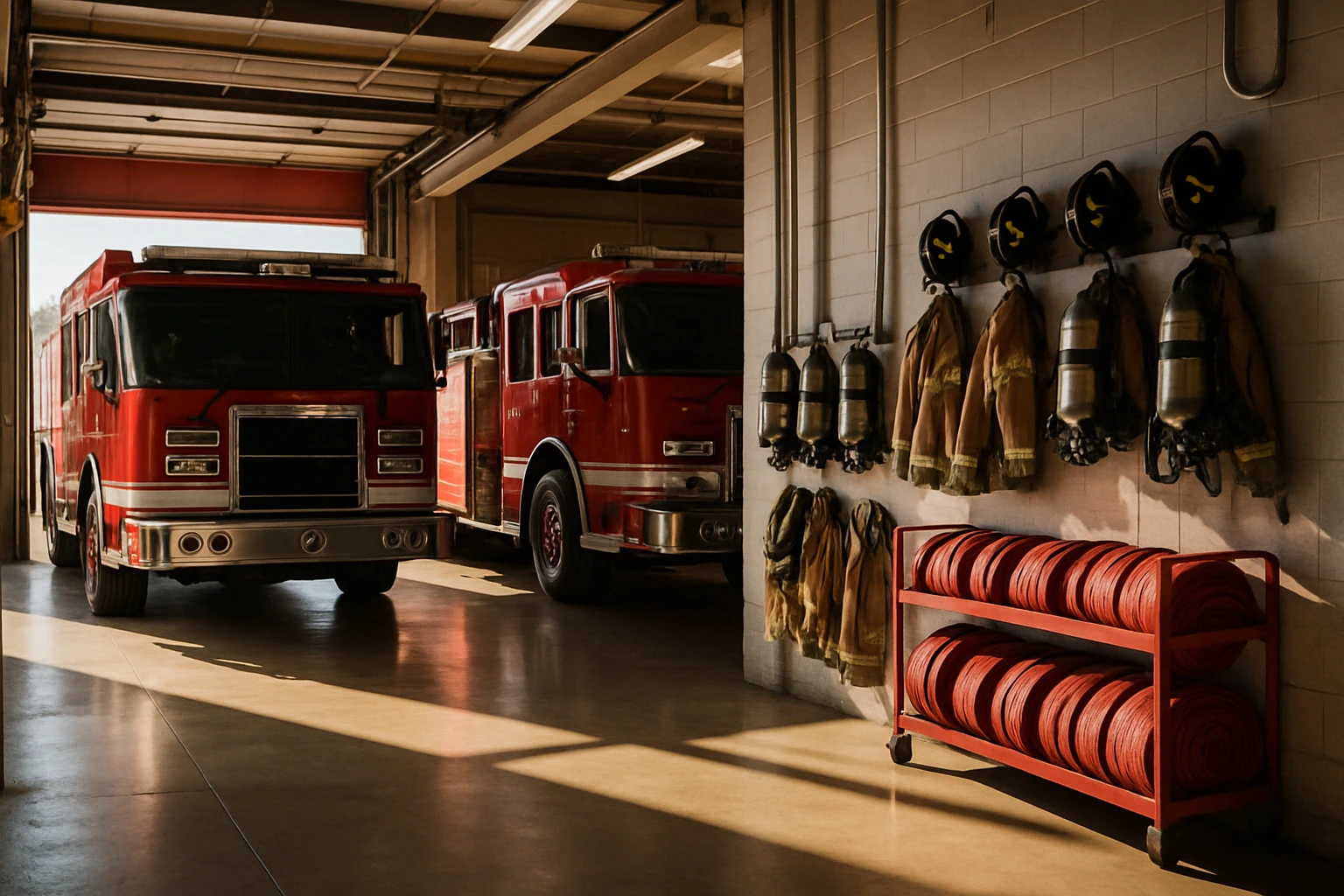
This post is for chiefs, department administrators, union reps, and HR managers at fire departments, police departments, and other public safety agencies in San Bernardino and Riverside counties who have been trying to solve the same problem for years: how do you reliably feed a team that works 24-hour shifts, 48-hour rotations, and every hour in between, without burdening personnel with daily food logistics or expecting someone to cook in the station kitchen after a response call? The answer exists, and it does not require a capital project or a new kitchen. Here is how it works.
Feeding first responders is not the same as feeding a corporate office. The unique constraints of public safety work make standard workplace food programs a poor fit in several ways:
Research is unambiguous on the stakes here. The Fire Rescue 1 health and wellness resource center documents consistent findings that firefighter cardiovascular disease, which accounts for more line-of-duty deaths than fire itself, is tied in part to poor dietary patterns driven by shift work and limited food access. The same principles apply to law enforcement. Poor nutrition during a 24-hour shift is not just a morale issue; it is a safety and longevity issue.
For most fire stations and police substations in the Inland Empire, the smart fridge is the right answer. Here is why it fits the public safety context:
A typical smart fridge at a fire station might be stocked with 30–50 meals, refreshed twice a week. Each meal is chef-prepared from MHP's Rancho Cucamonga kitchen and kept at proper temperature through the smart fridge's refrigeration system. The menus rotate across proteins, grains, and vegetables, the kind of food that supports sustained physical and cognitive performance, not just calorie volume.
For larger public safety facilities, a central police headquarters, a large county fire station, or a dispatch center with significant day-shift density, the drop-off lunch buffet is worth considering alongside or in place of a smart fridge. If your facility has 40 or more personnel who reliably take a lunch break within a set window (this is more common at headquarters or admin facilities than at station houses), a buffet provides a communal meal that builds team cohesion in addition to feeding people well.
The two formats can also stack: a buffet for the day shift at a larger facility, and a smart fridge at the same facility to cover overnight and weekend shifts. The same provider, one invoice.
Beyond the operational convenience argument, there is a compelling health case for structured meal programs in public safety. Studies tracked by the CDC's National Institute for Occupational Safety and Health (NIOSH) have documented the outsized cardiovascular risk profile of firefighters and the role of diet in that risk. For police officers, chronic stress from shift work, particularly overnight shifts, is associated with metabolic disruption that is made significantly worse by poor eating patterns.
A structured meal program that provides real food, lean proteins, complex carbohydrates, and vegetables, does not eliminate these risks, but it removes a major contributor. When officers and firefighters have access to nutritious meals without effort or decision fatigue at the end of a demanding shift, they eat better. When they eat better, they sustain better energy and alertness. For a workforce where acute alertness is a safety variable, this matters.
This is increasingly framed by progressive fire and police administrators as a wellness investment rather than a food perk. The math is not complicated: a program that costs $12–$15 per meal per day is a small expense against the long-term health costs of cardiovascular disease, early retirement on disability, and the recruitment cost of replacing a 10-year officer or firefighter.
The process is straightforward. You share the facility address (MHP serves across San Bernardino and Riverside counties, including Riverside, San Bernardino, Ontario, Rancho Cucamonga, Fontana, Corona, and surrounding areas), your headcount and shift structure, and any dietary priorities. MHP assesses whether a smart fridge, a buffet, or a combination is the right fit, confirms logistics, and has equipment in place typically within two weeks of the first call.
For public agencies that require formal vendor qualification, MHP can work through city or county procurement processes. Many programs start as a department-level pilot funded out of discretionary wellness budgets, union welfare funds, or a combination of agency subsidy and payroll deduction. The public safety page has additional context on how we work with fire and police agencies, and the guide to feeding a 24/7 workforce covers the smart fridge model in depth.
Personnel who run into burning buildings and respond to emergencies at 3 a.m. deserve better than a vending machine or a microwave burrito. A structured, nutritious meal program is not a luxury in a public safety context. It is part of taking care of the people who take care of everyone else. The Inland Empire has tens of thousands of fire and law enforcement personnel working across dozens of agencies, and the food access problem for those personnel is almost uniformly poor at the station level. It does not have to be.
Yes. Smart fridges require only a standard electrical outlet and about two square feet of floor space. They are well-suited to fire stations, police substations, dispatch centers, and EOC facilities where personnel are present around the clock but on unpredictable schedules.
For rotating-shift public safety sites, the smart fridge format works best. Meals are restocked on a regular schedule and available whenever a shift begins or ends. For sites with predictable day-shift concentrations, a periodic buffet program is also an option.
MHP works with both public agencies and private organizations. For formal procurement, we can work through your city or county's vendor registration process. Many public safety programs start as a department-level pilot and scale from there. Contact us and we will walk through the options.
MHP menus are built around lean proteins, complex carbohydrates, and fresh vegetables, the kind of food that supports sustained physical and cognitive performance. There are no deep-fried staples or ultra-processed items.
MHP delivers across San Bernardino and Riverside counties, including cities like Riverside, San Bernardino, Ontario, Rancho Cucamonga, Fontana, Corona, and surrounding communities. Contact us to confirm coverage for a specific address.
Ready to bring real food to your team? Book a call and we will put together a worksite-specific quote.
Tell us about your team and we will recommend the right program and a worksite-specific quote. No high-pressure sales.