Employee Benefits
Employee wellness and food: what the research actually says
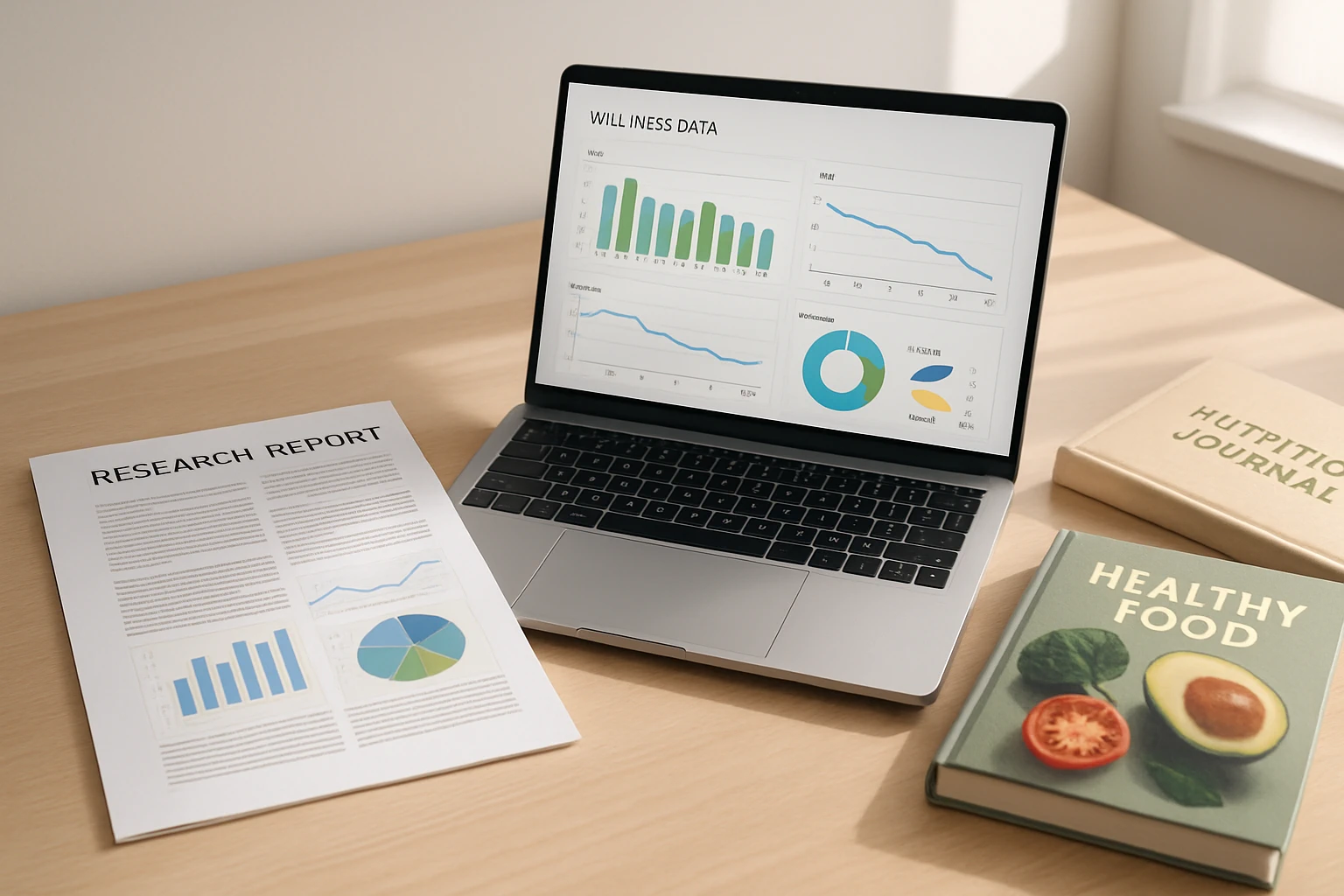
The phrase "employee wellness" has been stretched to cover everything from yoga Tuesdays to app-based mindfulness stipends, much of it with thin evidence behind it. Food, by contrast, has a genuine and reasonably well-established evidence base. This post does not oversell it, no meal program "cures" anything, and no study should be read as a guarantee. But the body of research on workplace nutrition, employee health, and business outcomes is consistent enough to support evidence-based benefit design. Here is what it actually says.
The Centers for Disease Control and Prevention's Workplace Health Model identifies nutrition as a core component of a comprehensive workplace wellness strategy. The CDC's own research links worksite nutrition programs to reductions in obesity-related risk factors, lower rates of chronic disease development, and measurable decreases in absenteeism. Their worksite health promotion guidance specifically recommends improving food environments as a high-use, relatively low-cost employer investment.
Critically, the CDC's framing is about environment and access, not individual behavior. The research shows that workers who have reliable access to nutritious food at or near work make better nutritional choices than workers who do not, even controlling for individual motivation. This is an important distinction for benefit design: you are not trying to change employee values or habits. You are changing the environment so that healthy choices are the easy default, which works even for people who are not particularly focused on nutrition.
Research published in the International Journal of Workplace Health Management examined the relationship between lunch quality and afternoon productivity among knowledge workers. The findings were consistent with what most people know intuitively but rarely have data to support: employees who ate nutritious, balanced lunches reported significantly better energy levels, concentration, and mood in the two to four hours after lunch compared with those who skipped lunch or ate high-glycemic, low-protein meals.
The mechanism is straightforward: sustained cognitive performance requires stable blood glucose, adequate protein for neurotransmitter synthesis, and sufficient hydration. A meal that provides these supports sustained afternoon performance. A vending machine lunch of chips and a soda does not, and neither does a skipped meal. The research does not find that workplace meals make employees dramatically smarter or more creative. It finds that they prevent the afternoon performance degradation that inadequate nutrition causes. That is a meaningful effect in a knowledge economy where the quality of afternoon work matters.
The National Institute for Occupational Safety and Health identifies shift worker nutrition as a priority occupational health issue. Workers on overnight, rotating, or irregular schedules face specific nutritional challenges: their circadian rhythms affect digestion and metabolism, their break schedules are often unpredictable, and off-hours food options at or near the worksite are typically limited to vending machines or fast food.
NIOSH research links poor nutritional access for shift workers to elevated rates of metabolic syndrome, type 2 diabetes risk, cardiovascular risk factors, and fatigue-related safety incidents. These are not minor quality-of-life issues. They are measurable occupational health outcomes with real costs to employers in healthcare utilization, workers' compensation, and accident rates. Access to fresh, nutritious food on-site is identified as one of the most effective protective interventions for shift workers, which is the precise use case for a workplace smart fridge.
SHRM and Gallup research on employee engagement consistently links food benefits to engagement scores. The mechanism here is indirect but real: employees who feel that their employer invests in their daily wellbeing, a category that explicitly includes food, score higher on engagement measures and lower on job-seeking intent. Food is one of the few employer investments that is tangible, daily, and personally experienced in a way that maps directly onto feelings of being valued.
Gallup's employee engagement research identifies "my employer cares about my wellbeing" as one of the strongest predictors of engagement and retention. Food is a concrete, daily expression of that care that is harder to fake or dismiss than a perks portal or a wellness day. The research does not claim that food is the primary driver of engagement. But it is a consistent contributing factor that HR can control with a relatively simple program decision.
Responsible reporting on this topic requires being clear about what the evidence does not support. No study has found that any specific workplace food program prevents, treats, or cures any health condition. No research supports making healthcare claims about meals from a specific vendor. The correlations between nutritious workplace food and better health outcomes are real, but they are correlations across populations. They do not guarantee outcomes for any individual.
The research also does not say that food alone is sufficient for a meaningful wellness strategy. It is one component of a broader approach that should include access to healthcare, mental health support, reasonable workloads, and safe working conditions. Framing a food program as a substitute for any of these would be both inaccurate and misleading. Framing it as a genuine, evidence-supported contribution to employee health, one that happens to also drive engagement, retention, and productivity, is accurate and defensible.
What the evidence supports is this: consistent access to nutritious food at work is correlated with better health outcomes, lower absenteeism, higher energy self-reports, and greater job satisfaction. These correlations are consistent across study populations, research methodologies, and industrial sectors. The effect size is meaningful but not dramatic, providing good food at work will not transform your workforce health metrics in a quarter. But it will, over time, contribute to a healthier, more energized, more present workforce.
For HR, this means a workplace food program is not wellness theater. It is evidence-based benefit design, spending money on something with consistent positive associations across a solid body of research, as opposed to spending it on a gym membership app that 80% of employees never open. The ROI is not always easy to isolate in a spreadsheet, but the directional evidence is strong enough to justify the investment with confidence.
The research points to a few design principles. First, access matters more than quality at the margin, an employee who can eat a decent meal at work is better off than one who cannot eat at all, even if the meal is not exceptional. Second, shift workers benefit more from on-site food access than office workers do, because their alternatives are worse. Third, regularity and reliability matter, a food program that is there every day builds different nutritional habits than one that shows up once a month for a catered event.
MHP Food Service is designed around these principles: fresh, balanced meals, delivered on a reliable schedule, accessible to every shift. See our ROI guide for the financial framing, and our cost of not feeding your team post for the flip side of the equation.
CDC Workplace Health Model: cdc.gov. NIOSH shift worker health: cdc.gov/niosh. IJWHM lunch and performance research: International Journal of Workplace Health Management, Vol. 9, 2016. SHRM engagement data: shrm.org.
The CDC's workplace health model identifies nutrition as one of the core components of a healthy workforce strategy. Their research links access to nutritious food at work with lower rates of chronic disease risk factors, reduced absenteeism, and improved self-reported health among workers. They recommend workplace food environments as a high-use intervention for employer wellness programs.
Research published in the International Journal of Workplace Health Management found that employees who ate nutritious lunches reported better energy, concentration, and mood in the afternoon compared with those who skipped lunch or ate low-quality meals. The effect was most pronounced for knowledge workers doing complex cognitive tasks.
The National Institute for Occupational Safety and Health identifies shift worker nutrition as a priority safety and health issue. Workers on irregular or overnight schedules who lack access to nutritious food at work show higher rates of metabolic disruption, fatigue-related safety incidents, and long-term cardiovascular risk. Access to on-site fresh food is identified as a key protective factor.
The research supports a correlation between consistent access to nutritious workplace food and better health outcomes, but no employer should claim a specific program "cures" or "prevents" any health condition. What the evidence does support: employees who eat regular, nutritious meals at work have better self-reported health, lower absenteeism, and higher energy levels compared with those who skip meals or rely on vending.
SHRM and Gallup data consistently links food benefits to employee engagement scores. Employees who feel their employer invests in their daily wellbeing, including through food, score higher on engagement metrics and are less likely to report job-seeking behavior. Food is one of the few daily, tangible employer investments that directly affects engagement rather than merely correlating with it.
Tell us about your team and we will recommend the right program and a worksite-specific quote. No high-pressure sales.