Employee Benefits
Meal benefits for healthcare teams in the Inland Empire
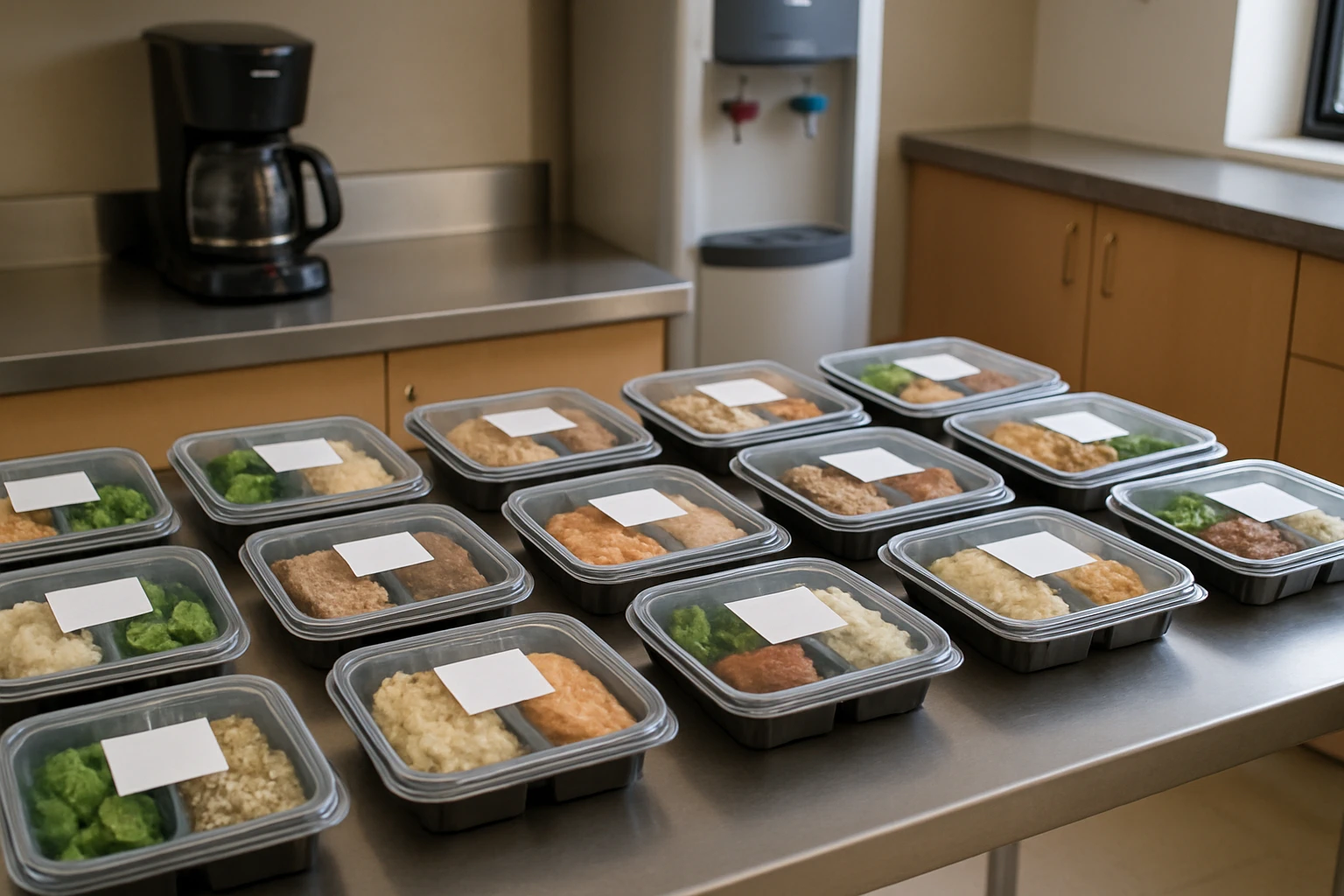
Healthcare staffing in the Inland Empire is under pressure. Nurses, CNAs, medical techs, and other clinical staff are leaving, for higher wages in LA and OC health systems, for travel nursing contracts that pay more, and for facilities where the day-to-day working conditions are better. IE healthcare employers are fighting a retention battle on multiple fronts, and the traditional tools, signing bonuses, incremental wage adjustments, are expensive and only go so far. The employers who are pulling ahead on retention are addressing something more fundamental: the daily quality of working life for clinical staff. Food is a significant part of that.
The Inland Empire is one of the most medically underserved regions in California relative to its population size. Riverside and San Bernardino counties have fewer physicians and nurses per capita than LA and OC, and the deficit has been growing as the region's population expands faster than its healthcare infrastructure. That population growth creates demand for healthcare services, which creates demand for staff, which tightens the labor market for every clinical employer in the region.
The competition for nurses and allied health workers is not just between IE facilities. It is between IE facilities and every health system in Southern California that can offer slightly better pay, a shorter commute from a given neighborhood, or a reputation for better working conditions. IE facilities have real advantages, housing costs are lower than LA and OC, which affects quality of life. But they need to be more intentional about the working conditions they offer if they are going to compete for the clinical staff they need.
The American Association of Critical-Care Nurses and the broader nursing literature have been documenting the relationship between working conditions and burnout for years. One finding that is consistently replicated: skipped meals on shift are strongly associated with higher burnout scores, greater reported fatigue, and reduced clinical performance. This is not surprising from a physiological standpoint, but its consistency and magnitude are important for hospital HR and administration to understand.
A 12-hour clinical shift is physically and cognitively demanding. It requires sustained attention, rapid decision-making, physical endurance, and emotional regulation, all of which are degraded by inadequate nutrition. A nurse who has eaten nothing since breakfast at 5:30am by the time of a 3pm patient situation is not performing at the level they would with a proper lunch. The research does not suggest that feeding nurses makes them dramatically better clinicians; it suggests that not feeding them makes them measurably worse, more fatigued, and more likely to leave the profession.
For IE healthcare administrators thinking about turnover cost and the cost of replacing a registered nurse is $40,000–$60,000 by most estimates, any intervention that reduces burnout and extends tenure has significant financial value. A meal program that provides reliable access to nutritious food during shifts is one of the most direct, least bureaucratic, and least expensive interventions available.
The structure of a 12-hour nursing shift is what makes most generic workplace food programs fail for clinical staff. Nurses and other clinical workers on 12-hour shifts typically have one 30-minute break in a 12-hour window, and that break is not scheduled. It happens when the floor allows it, which could be anywhere between 11am and 4pm depending on patient volume and acuity. A hot buffet with a serving window of 11am–1pm will be missed by the majority of nurses on a given unit, not because they are not hungry, but because they cannot leave at that time.
This is the central reason why a smart fridge is the right format for most healthcare settings. A smart fridge is accessible at any moment, day or night, for any shift. The nurse who gets a break at 2:30pm can access a fresh, chef-prepared meal. The night-shift CNA who gets a break at 2am can access the same. There is no serving window, no coordination required, and no "the food is all gone by the time I get there" problem that plagues buffets in high-turnover clinical environments.
Some healthcare environments, outpatient clinics, medical office buildings, administrative and support departments within hospitals, do have more predictable meal breaks. For these settings, a hot buffet drop-off at a set time can work well. It provides a warm, communal meal that supports the social recovery that clinical staff need as much as caloric recovery, and it is appropriate for departments with 50 or more staff on predictable schedules.
The right format depends on the specific unit, department, and facility. Large clinical floors with unpredictable 12-hour schedules need the smart fridge. Medical office buildings and administrative departments with predictable noon breaks can benefit from a daily buffet. Many healthcare campuses use both, a smart fridge for clinical areas and a buffet for administrative or support areas, managed by a single program and a single invoice.
In a sector where nurses are routinely asked to work overtime, skip breaks, and absorb patient care volume that exceeds safe ratios, the employer that reliably provides nutritious food for every shift sends a clear and appreciated signal: we see you, we know the work is hard, and we are investing in your daily wellbeing. That is not a grand gesture. It is a consistent, daily one. And consistent daily gestures build the kind of loyalty that is resistant to the recruiting calls and travel nursing contracts that pull clinical staff away from stable employment.
IE healthcare administrators who have introduced staff meal programs consistently report positive feedback in surveys and in informal staff conversations. The program is mentioned specifically in retention interviews by staff who say it made them feel more valued. It appears on Glassdoor reviews. It gets mentioned in nursing school career days when facilities are trying to recruit new graduates. These are not dramatic effects, but they accumulate over time into a retention advantage that is measurable and real.
MHP Food Service serves hospitals, skilled nursing facilities, outpatient clinics, and medical office buildings across the Inland Empire, including Riverside, San Bernardino, Rancho Cucamonga, Ontario, Fontana, and surrounding areas. We work with facilities to identify the right mix of smart fridge placement and buffet service based on unit size, shift structure, and budget. See our healthcare and hospital service page and our related posts on smart fridges for healthcare workers and healthcare lunch programs in Riverside. Contact us for a healthcare-specific quote.
IE healthcare employers compete with larger, better-resourced systems in Los Angeles and Orange County that can offer higher base wages. IE facilities often have to offer more in the category of working conditions and benefits to attract and retain clinical staff who have the option of working for larger LA or OC health systems. Meal benefits are one of the most practical and appreciated differentiators available.
The nursing and occupational health literature consistently finds that skipped meals on shift are associated with higher burnout scores, greater fatigue, and reduced patient safety indicators. The mechanism is physiological: inadequate nutrition during a high-demand 12-hour shift degrades cognitive function, emotional regulation, and physical stamina, all of which are directly relevant to clinical care quality.
Clinical staff on 12-hour shifts cannot predict when their break will fall. A hot buffet with a fixed serving window will be missed by nurses who are in the middle of a patient situation at that time. A smart fridge is accessible at any moment of any break, day or night, for any shift. That unpredictable-break reality makes the 24/7 fridge the right tool for most clinical environments.
Hospital cafeterias typically operate limited hours, often closing at 7pm, which means night shift staff have no cafeteria access for the majority of their shift. A smart fridge placed in a clinical break room fills that gap. It is not a replacement for the cafeteria; it is an extension of food access for the hours and staff the cafeteria does not cover.
MHP serves hospitals, long-term care facilities, outpatient clinics, and medical office buildings across the Inland Empire. We deliver fresh meals on a fixed stocking schedule, handle all equipment maintenance and rotation, and invoice monthly. Contact us for a healthcare-specific program recommendation based on your facility size and shift structure.
Tell us about your team and we will recommend the right program and a worksite-specific quote. No high-pressure sales.