Smart Fridge
Smart fridge for healthcare workers: 24/7 access to real food
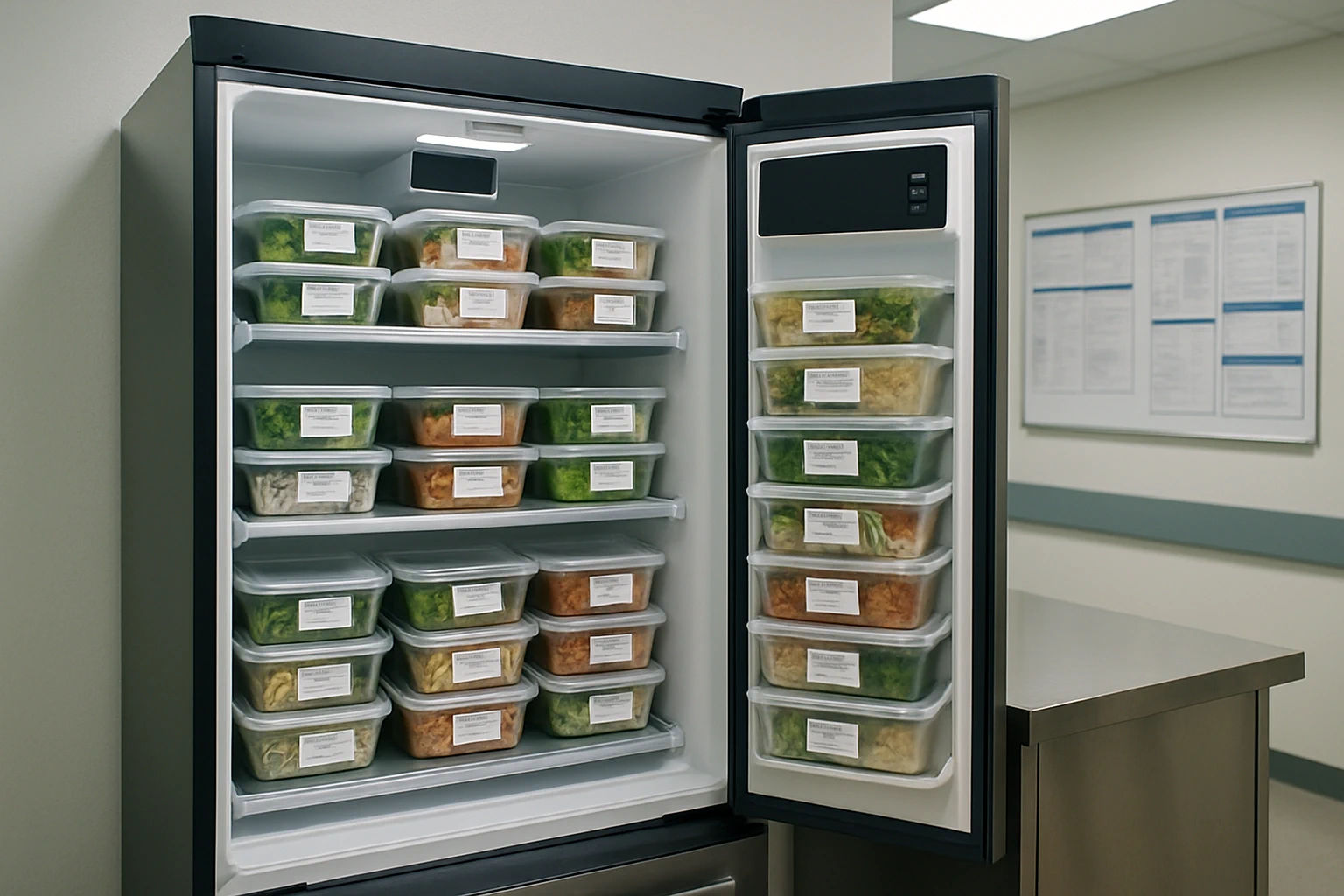
There is a particular irony in the food situation most healthcare workers navigate every shift. They spend their working hours advising patients on nutrition, counseling diabetics on blood sugar management, educating families on the connection between diet and health outcomes and then they go to the staff break room and eat from a vending machine because the cafeteria closed at 8pm and there was no time to order anything before their break.
This is not a minor inconsistency. It is a structural problem with serious consequences for nurse burnout, clinical staff health, and ultimately patient care. Healthcare facilities that take staff wellness seriously are increasingly turning to smart fridges as the practical solution. Here is why the problem is as bad as it is, and why the smart fridge fits the healthcare environment better than any other food solution.
Healthcare workers face a set of food access conditions that combine in ways not found in most other industries:
Twelve-hour shifts with unpredictable breaks. Most nurses and many other clinical staff work 12-hour shifts, 7am to 7pm or 7pm to 7am. These are long shifts under high cognitive and physical demand. Breaks are legally required but rarely run on schedule. A nurse who is managing an unstable patient or handling an emergency at the time their break is scheduled may take that break thirty to ninety minutes late, or may take a shorter break than planned. Any food system that requires advance ordering or a scheduled delivery window does not work in this environment.
Cafeterias that close at night. Hospital cafeterias typically operate during daytime and early evening hours. By 9 or 10pm, the cafeteria is closed. This means the night shift, a significant portion of hospital staffing, has no food service from the facility itself. The options that remain are vending machines, whatever the worker brought from home, or food ordered through a delivery app if one is available and if there is time to wait for it during a break.
No time for ordering apps. Using a delivery app requires ordering in advance, monitoring the status of the order, and being available to receive the delivery. A nurse managing a full assignment on an overnight shift does not have a reliable 30-minute window to monitor a DoorDash order. Even when delivery apps are technically available, they are practically inaccessible for most clinical staff on overnight shifts.
The proximity of food to rest. During a break, clinical staff need to actually rest, to sit down, decompress briefly, and eat. A break spent managing a food delivery, walking to a vending machine at the other end of the building, or trying to heat something in a shared microwave is not a restorative break. Anything that extends the friction of getting food extends the time the worker is not resting.
Nurse burnout has become a significant public health and workforce issue. The American Nurses Association has documented burnout rates that accelerated through the pandemic and have not fully recovered. Research published in nursing and occupational health journals identifies missed meals and poor nutrition during shifts as contributing factors to both physical fatigue and emotional burnout.
The mechanism is not complicated: nurses doing physically and cognitively demanding work over a 12-hour shift need adequate caloric intake to sustain performance. When breaks are missed or inadequate, and food access is limited to vending machine snacks, caloric deficit compounds over the shift. By hour eight or nine, a nurse who has eaten only a bag of pretzels and a candy bar since arriving is operating at a measurable cognitive and physical deficit. NIOSH documentation on occupational fatigue in healthcare explicitly identifies nutrition as a modifiable factor in clinical performance and error rates.
The Joint Commission, which accredits hospitals across the United States, has included staff wellness and fatigue management in its hospital accreditation standards. Providing adequate nutrition access for all shifts is increasingly recognized not just as a retention benefit but as a patient safety measure. Fatigued and poorly nourished clinical staff make more errors. The healthcare facilities that take this seriously invest in removing barriers to eating well on shift.
There is something genuinely uncomfortable about the gap between what healthcare workers know and what they have access to eat. A nurse who spends her shift explaining glycemic index to a diabetic patient goes to break and eats a vending machine pastry because it is the only option. A dietitian who counsels hospital patients on nutrition goes home to order fast food because they could not eat a real meal during a 12-hour shift.
This is not a matter of individual failure or poor personal choices. It is a systemic failure of food infrastructure in healthcare facilities. The workers who most understand the consequences of poor nutrition are the same workers who have the least access to good food during working hours. A smart fridge addresses this directly by making real food available in the same building where those workers are already trying to take their breaks.
A smart fridge in a hospital staff break room or clinical lounge provides what no other food solution does: real food, accessible in sixty seconds, at any time of day or night, with no ordering, no waiting, and no scheduling required.
The experience from the worker's perspective: break time begins, the nurse walks to the break room, taps her badge or a card on the fridge, grabs the meal she wants, and sits down to eat. The total time between arriving at the break room and having food in hand is under a minute. The rest of the break is actual rest. This is not a small thing, in a 30-minute break, the difference between a 5-minute food acquisition process and a 1-minute one is meaningful.
The food in an MHP smart fridge is designed for sustained energy rather than convenience-store calories. Clinical staff working 12-hour shifts benefit from:
The variety across the menu rotation means that a nurse working three overnight shifts a week is not eating the same meal each time. This seems like a small detail but it matters for the consistency of participation, workers who have genuinely appealing options eat from the fridge regularly rather than reverting to vending machines.
A smart fridge in a staff break room sends a signal beyond the food itself. It communicates that the hospital or clinic values the physical health of its workers, not just in the abstract language of wellness program communications, but in concrete, daily terms. The food is here. It is real. It was provided by your employer. Your health during this shift matters.
This is not insignificant in an industry where burnout is epidemic and nursing shortages are severe. Healthcare workers who feel genuinely cared for by their employer stay longer, experience less burnout, and engage more with broader wellness programs. A smart fridge is not a solution to burnout on its own, but it is a visible, daily demonstration of investment in staff wellbeing that compounds with other retention strategies.
The Joint Commission's emphasis on staff wellness frameworks and fatigue management gives healthcare facilities a concrete justification for this investment. A smart fridge stocked with real food for all shifts is a measurable intervention in staff nutrition that belongs in any serious staff wellness initiative.
The most common placement is a staff break room or lounge adjacent to the nursing unit, a space where clinical staff can take a 30-minute break without leaving their floor. In larger hospitals, multiple units may be placed in different departments: one in the ICU staff lounge, one in the ED break room, one in the surgical services area. This ensures that nurses and techs in units that are physically far from the main cafeteria still have quick access to real food.
Clinics, urgent care centers, and outpatient facilities face a slightly different version of the problem, staff often work long daytime shifts without access to a cafeteria at all. A smart fridge in the staff break area serves the same function: food that is always available, always fresh, requiring no coordination from office management.
MHP serves healthcare facilities across Southern California. See our healthcare page and our post on healthcare worker food programs in Riverside for more on how we serve this industry. Our 24/7 workforce guide covers the operational details of smart fridge programs for round-the-clock operations.
Installing a smart fridge at a hospital or clinic requires a standard 120V outlet and space for the unit in a staff break area. The installation takes under two hours and requires no construction or permitting. MHP handles all restocking, food safety, and payment processing, the facility's facilities team or HR department has no ongoing operational responsibility.
For a 24-hour hospital, MHP typically restocks during off-peak morning hours to ensure the fridge is fully stocked before the overnight shift begins its breaks. For clinics with standard daytime operations, restocking is scheduled to ensure fresh items are available throughout the business day.
Many hospital administrators choose to subsidize fridge meals as a shift benefit, fully or partially. When the employer covers the cost and employees eat free, participation rates are high and the program functions as a genuine staff benefit rather than just a convenience. For facilities interested in piloting the program before committing to full subsidy, a hybrid model allows employees to pay a reduced price while the facility evaluates usage and feedback.
A combination of factors: 12-hour shifts with unpredictable break timing, cafeterias that close in the evening, no practical way to use delivery apps during short or interrupted breaks, and vending machines as the only always-available option. The result is that clinical staff frequently miss meals or eat nutritionally inadequate food during long, demanding shifts.
A smart fridge is stocked with fresh meals and accessible at any time, including 2am when the cafeteria is closed and delivery apps have minimal options. Workers tap to access, grab a meal, and are back at their post within minutes. No advance ordering, no delivery wait, no vendor presence required overnight.
NIOSH research on occupational fatigue in healthcare links poor nutrition during shifts to elevated fatigue and higher error rates. The Joint Commission's staff wellness frameworks recognize fatigue management, which includes adequate nutrition access, as a component of patient safety. Facilities that invest in removing barriers to eating well on shift see measurable improvements in staff satisfaction and retention.
Yes. Many healthcare employers choose to fully subsidize smart fridge meals, particularly for overnight clinical staff. The cost per meal is modest relative to the retention value, nursing turnover is expensive, and visible benefits that make the overnight shift more sustainable reduce the rate at which experienced nurses leave for other facilities or leave the profession entirely.
Yes. Larger hospitals commonly deploy multiple units, one per nursing unit or one per clinical department, so that staff do not have to leave their floor during a short break. MHP manages all units under a single service arrangement, with restocking coordinated to the facility's schedule. This is standard practice for large healthcare clients.
Tell us about your team and we will recommend the right program and a worksite-specific quote. No high-pressure sales.