Employee Benefits
Meal benefits for hybrid teams: how to feed in-office and remote workers
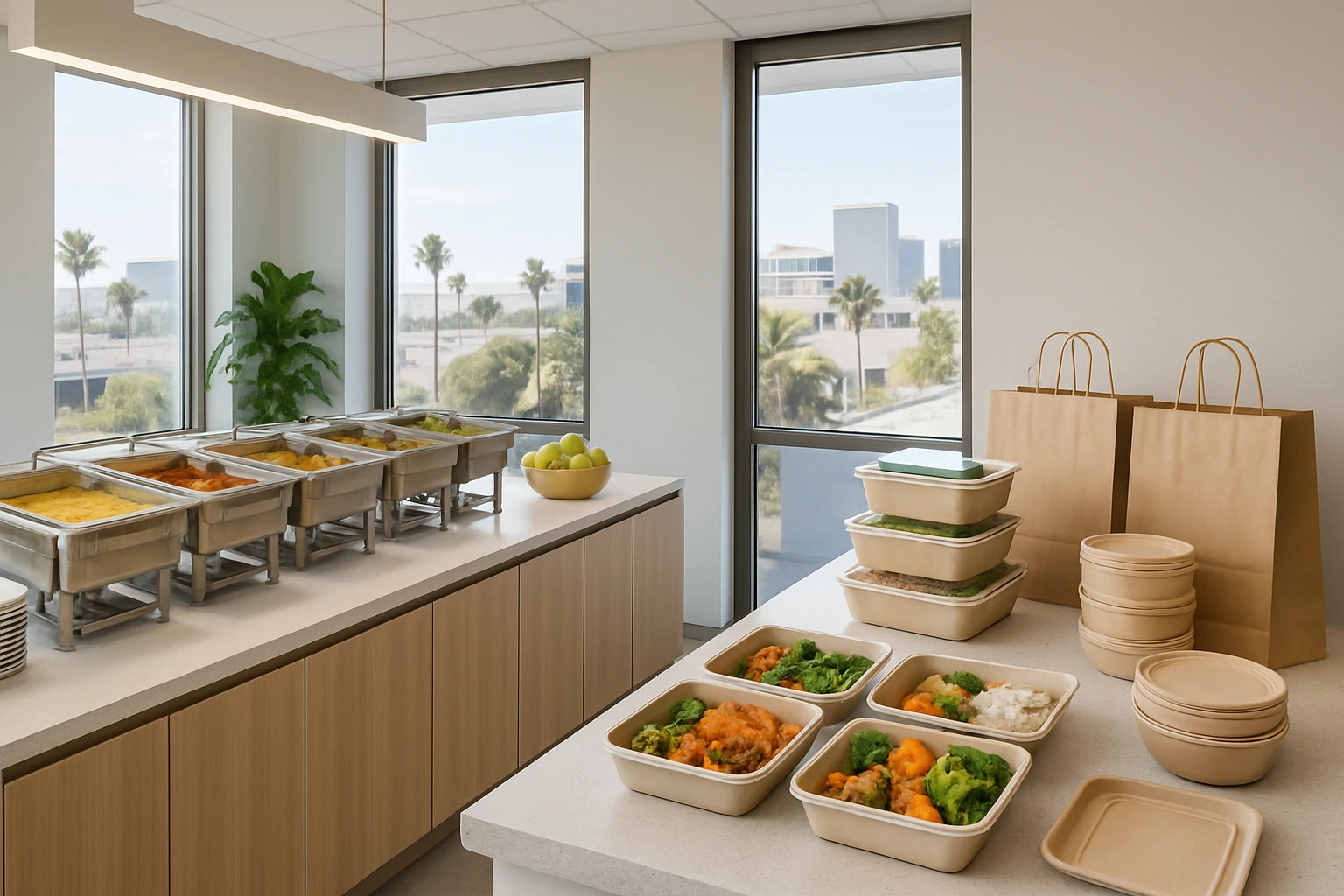
Hybrid work has made many HR challenges more complex, but the food benefit challenge is one that does not get discussed often enough. Most companies that provide meals for their on-site teams have not figured out what to do for the days those same employees work from home, or for teammates who are fully remote. The result is a two-tier benefit that sends the wrong message and it is a problem that is entirely solvable.
Here is the scenario that most hybrid teams are living with right now: on Tuesday and Thursday, when employees come into the office, there is a buffet or a stocked smart fridge. On Monday, Wednesday, and Friday, when those same employees work from home, there is nothing from the company. They are on their own for lunch. And the fully remote employee on the same team? Nothing, ever.
This asymmetry creates a low-level resentment that is real even when it is not spoken aloud. Employees who come in more often get more benefit. Employees who work remotely feel like second-class members of the team when it comes to perks. In exit interviews, this kind of inequity surfaces as "I felt like the company valued in-office employees more." That is a retention problem that has a straightforward fix.
Fully remote workers eat at home every day. They can at least build a routine around that. Fully on-site workers have the structure of the break room, the schedule of a lunch program, and the social pressure of colleagues eating together. Hybrid workers have neither consistently. On office days they eat at work. On home days they often forget to eat, eat while still on a call, or grab whatever is easy. The constant environment-switching destroys the routine that supports regular, nutritious meals.
Research on hybrid worker health consistently finds higher rates of irregular eating, more frequent meal skipping, and greater reliance on snacks over proper meals. This is not a discipline problem. It is a design problem. The work environment does not support consistent eating behavior, and neither does the home environment on days when the hybrid worker has more meetings than usual and no external structure to enforce a break. A food benefit that reaches employees at both locations solves the design problem directly.
The on-site component of a hybrid food benefit follows the same logic as any workplace food program. For larger teams with predictable schedules, a daily lunch buffet on anchor days gives employees a reason to come in and a structured break when they do. For teams where not everyone is in every day, a smart fridge makes more sense. It is accessible to whoever is there on a given day without requiring a headcount-based catering order.
The key for hybrid programs is to tie the on-site benefit specifically to the days when employees are expected or encouraged to be in. If your anchor days are Tuesday and Thursday, make sure the food program is active on those days. The food reinforces the behavior you want, and the behavior reinforces the habit of using the food.
For the days employees are working from home, remote employee meal delivery sends fresh, chef-prepared meals to their home address on a weekly schedule. The meals are the same quality as what their colleagues receive at the office, same kitchen, same menu rotation. Employees receive their weekly delivery, heat a meal during their lunch break, and experience the benefit consistently regardless of where they are working.
This is not a food delivery app stipend. App stipends require employees to manage an account, remember to use credits before they expire, and navigate a platform that is full of options that do not align with the nutritional goals of a workplace meal program. A direct delivery program removes all of that friction and replaces it with a fresh meal that shows up reliably, with nothing for the employee to manage.
The operational advantage of working with a single provider for both on-site and remote delivery is significant. MHP Food Service handles both from the same Rancho Cucamonga kitchen. Employers receive one invoice that covers the on-site program and the remote deliveries. HR manages one contact, one schedule, and one account. There is no need to coordinate between a catering company for the office and a meal kit service for remote employees.
From an employee perspective, the experience is coherent. On the days they come in, the food is there. On the days they work from home, the delivery arrives. The menu rotates consistently across both, so there is no sense that the home version is a lesser substitute. That consistency is what makes the benefit feel equitable rather than compensatory.
Two common approaches fail consistently. The first is ignoring the home-day food problem entirely, reasoning that employees choose their hybrid schedule and the company's obligation extends only to the office. This is legally defensible but strategically shortsighted. The second is trying to solve both with a food delivery app stipend, a single monthly or quarterly credit that employees can spend on whatever delivery app they prefer. Stipends sound flexible but have abysmal utilization rates, generate no loyalty, and provide no visibility into whether the benefit is actually being used to support nutrition.
The most common failure mode for hybrid food programs is to treat the remote component as an afterthought. A company that announces a food benefit and then implements it only for on-site days has not addressed the hybrid equity problem. It has just highlighted it by making the on-site benefit visible while leaving remote days unaddressed.
The rollout communication matters. When you launch a hybrid food program, be explicit: "We provide meals for you whether you are in the office or working from home." That framing, location-agnostic, employee-first, is what makes the benefit land as a genuine signal of care rather than a facility amenity. Announce it in writing, reference both the on-site and home delivery components, and make sure managers understand the program well enough to mention it in team conversations and recruiting calls.
For hybrid-specific scheduling, a brief explanation of how both components work, office days covered by the on-site program, home days covered by weekly delivery, removes any ambiguity and ensures employees know they are included regardless of schedule.
The starting point is a headcount breakdown: how many employees are on-site how many days per week, and how many are remote or hybrid with home days that should be covered. From that information, MHP can recommend the right on-site format and remote delivery schedule, and provide a combined quote. Most hybrid programs launch within three to four weeks of initial inquiry.
See also our guide to choosing the right on-site food program and our overview of remote employee meal delivery.
If you provide a food benefit to on-site employees but not to remote or hybrid employees, you have created a two-tier benefit. Remote workers on the same team receive less, which communicates unequal valuation, even if that is not the intent. The fix is to extend a comparable food benefit to employees regardless of where they work on a given day.
MHP Food Service provides on-site programs (buffet or smart fridge) for the in-office component, and remote meal delivery for employees at home. Both run from the same kitchen on the same menu rotation. Employers receive one invoice covering both. The hybrid employee benefit is genuinely equivalent regardless of which days someone comes in.
Hybrid employees can receive the on-site benefit on their office days and home delivery on their remote days. Both programs can run simultaneously from a single employer account. Participation is managed by HR through a simple address list, employees do not need to manage anything themselves.
Hybrid workers switch environments frequently, which disrupts the routines that support regular meals. Office days have the structure of a break room and scheduled lunch; home days often lack that structure. A consistent food benefit, same menu, same schedule, regardless of location, provides the environmental stability that hybrid workers are missing.
The additional cost depends on how many employees are remote and how many meals they receive per week. For most teams, adding remote delivery for a portion of the workforce adds a manageable increment to the per-employee cost. Contact MHP Food Service for a quote that reflects your actual headcount split.
Tell us about your team and we will recommend the right program and a worksite-specific quote. No high-pressure sales.