Employee Benefits
Remote employee meal delivery in the Inland Empire
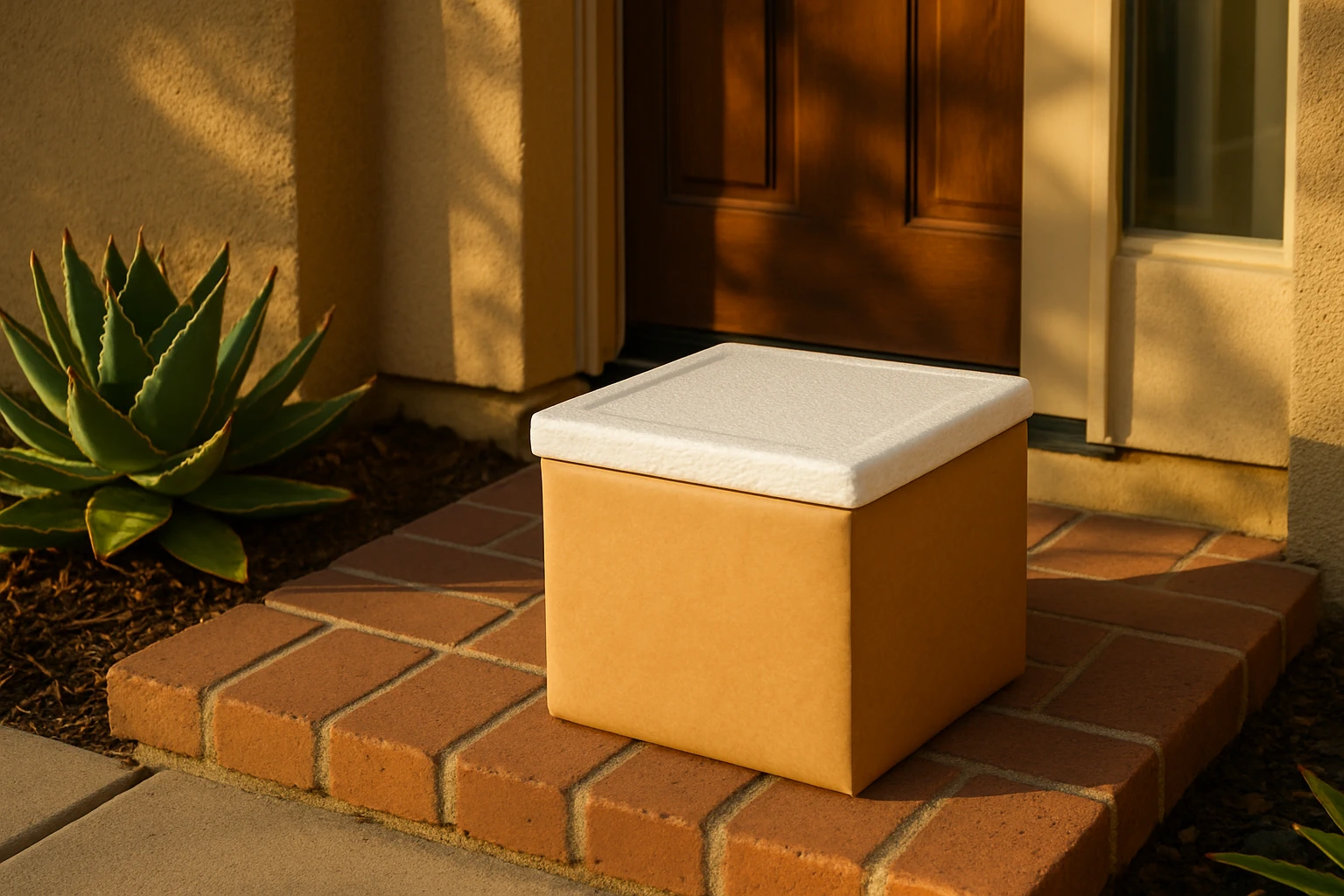
The shift to remote and hybrid work created a problem that most companies never fully solved: how do you extend a workplace food benefit to employees who are not at the workplace? For Inland Empire companies that had invested in on-site meals for their in-office teams, fully remote and hybrid employees were left out, getting a lesser benefit not because they were valued less, but simply because the logistics were harder. That gap is now closable.
Remote work and nutrition are not natural allies. When people work from home, their lunch habits often deteriorate in ways that are underappreciated. Without the social pressure of a break room or the logistics of a meal program, remote workers frequently skip lunch entirely, eat while still at their desk, or grab whatever is easy, which is rarely what supports sustained afternoon focus.
Studies on remote work consistently find that home-based workers eat less consistently, consume more snacks and processed foods in place of real meals, and experience more food-related decision fatigue throughout the day. The lack of a meal break also collapses the only natural pause in the workday, which contributes to higher burnout rates among fully remote employees. None of this is because remote workers are less disciplined. It is because they are missing the environmental and social scaffolding that makes regular meals happen.
MHP Food Service's remote employee meal delivery program is simple: fresh, chef-prepared meals are cooked in our Rancho Cucamonga kitchen and delivered weekly to employee home addresses within our delivery zone. Each delivery contains portioned meals ready to heat and eat, labeled with heating instructions and nutritional content. The employer manages a participant list and receives one consolidated invoice. Employees receive their meals on a fixed weekly schedule, with no app to install and no account to create.
This is not a meal kit or a subscription box service. These are the same meals we prepare for the on-site programs at warehouses, healthcare facilities, and corporate offices across Southern California, fully prepared, not ingredients to assemble. The difference for remote employees is that the delivery goes to their home rather than to a break room.
Remote meal delivery works best for three groups. First, fully remote employees who are based in the IE delivery zone and currently receive no food benefit at all. Second, hybrid employees who come into the office two or three days per week. They can benefit from the on-site program on their office days and receive home delivery on their work-from-home days, making the benefit genuinely equivalent regardless of where they work. Third, satellite staff who work from a small remote location without a full food program, the delivery logistics treat them the same as any other employee address.
It is less appropriate for employees who already have good lunch options at home and do not want the service, or for employees who live significantly outside the delivery zone. For those cases, a food stipend or a partial substitution may make more sense.
One of the most important arguments for remote meal delivery is fairness. If a company provides a hot buffet for its 150 on-site employees and nothing for its 40 fully remote employees, it has created a two-tier benefit structure and the employees in the second tier know it. This is not a theoretical concern. Remote workers who feel they receive lesser benefits are significantly more likely to describe their employer as one that does not value them equally, which is a direct driver of disengagement and voluntary attrition.
Addressing this with a remote delivery program does not require matching the exact dollar value of the on-site benefit. It requires making a visible effort to include people who are not physically present. The gesture matters as much as the logistics. An employer who says "we figured out how to get you the same fresh meals whether you are at the office or at home" sends a clear signal about how it views its workforce.
A regular, employer-provided meal is one of the most effective interventions for improving remote worker nutrition. When a meal shows up at the door on a predictable schedule, it removes the decision fatigue of figuring out lunch, provides a structured break in the workday, and ensures that at least one meal per workday is nutritionally solid. For remote workers who would otherwise eat chips at their desk at 2pm because they forgot to take a break, this is a meaningful improvement in actual daily health.
The downstream effects matter for employers too. Employees who eat real, nutritious lunches have more consistent afternoon energy, fewer 3pm slumps, and better cognitive performance during the hours when most creative and analytical work happens. For knowledge workers doing complex tasks from home, this translates directly into output quality, not in a dramatic way, but consistently and cumulatively over time.
For HR, the operational overhead is minimal. You provide a list of participating remote employees with their addresses. MHP handles route planning, cooking, packaging, and delivery. You receive one weekly or monthly invoice. There is no software platform to administer, no employee account management, and no order entry required from employees on your team.
This is deliberately different from food delivery app stipends, which require employees to use a specific platform, which expire if unused, and which give employers no visibility into whether employees are actually eating lunch or spending credits on something unrelated. A direct delivery program removes all of that friction and replaces it with a reliable, employer-controlled benefit that behaves exactly the same way every week.
One of the advantages of working with a single provider for both on-site and remote meals is that everything flows from one kitchen, one account, and one invoice. IE employers with both an on-site team and a remote workforce can run both through MHP, a buffet or smart fridge at the facility, and weekly home delivery for remote employees. The menu rotates consistently across both, so the in-office and at-home experience is comparable. That is the foundation of a genuinely equitable food benefit.
To learn more about how on-site and remote meal programs work together, see our overview of employee meal benefits or reach out directly to discuss your team's specific mix of on-site and remote staff.
The simplest way to start is to identify the remote employees in your team who live within the delivery zone, confirm headcount, and request a quote. MHP Food Service can typically begin a remote delivery program within two to three weeks of confirmation. There is no minimum headcount for remote delivery, though the per-meal cost is most favorable at 15 or more participating employees.
It works best for fully remote employees who live within the delivery zone, hybrid employees who want the benefit on their home-office days, and satellite staff who work from a location that does not have an on-site food program. It is most appreciated by employees who do not have easy access to good lunch options from home.
MHP Food Service prepares fresh, portioned meals in our Rancho Cucamonga kitchen and delivers them weekly to employee addresses within our delivery zone. Meals are packaged in insulated containers for safe transport and are ready to heat and eat. Employers manage participation through a simple list, no app installation required from employees.
MHP Food Service delivers across the Inland Empire including Rancho Cucamonga, Ontario, Fontana, Rialto, San Bernardino, Riverside, Moreno Valley, Corona, and surrounding cities. Contact us to confirm coverage for specific employee addresses.
App stipends expire, go unused, or get spent on fast food that does not support actual nutrition goals. A direct meal delivery program sends fresh, chef-prepared food to the door, no app to manage, no expired credits, and a consistent quality signal that reflects well on the employer.
MHP provides a rotating weekly menu so meals vary by week. We accommodate dietary preferences and common restrictions, reach out to discuss specific dietary needs for your team when getting a quote.
Tell us about your team and we will recommend the right program and a worksite-specific quote. No high-pressure sales.
Hot buffet lunches, a 24/7 smart fridge, or weekly meal drops — cooked in our Rancho Cucamonga kitchen and run as one simple program.