Guides
How to pilot a workplace meal program without full commitment
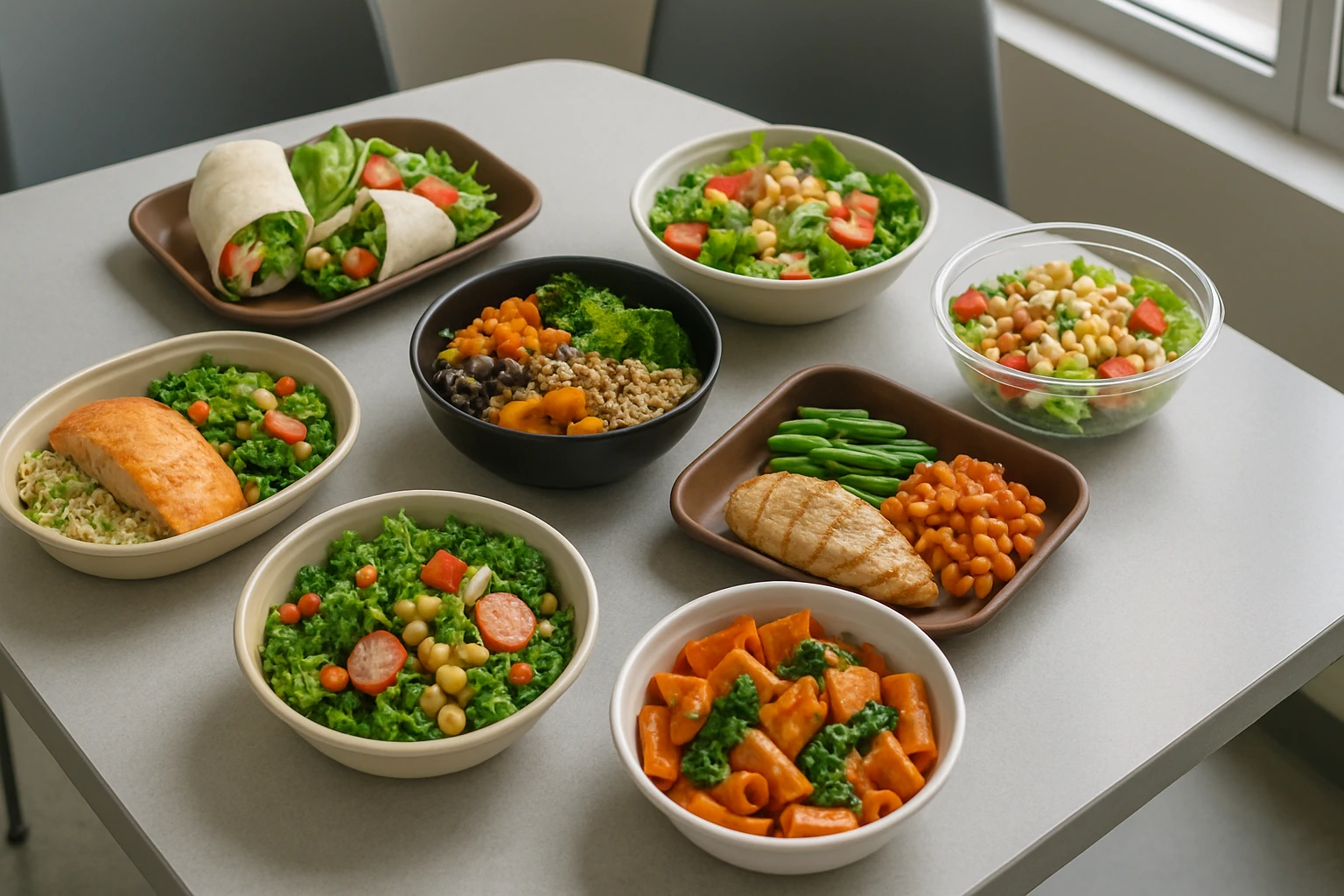
The number-one reason Southern California employers do not start a workplace food program is not cost. It is uncertainty. What if participation is low? What if the team does not like the food? What if we commit and then the company grows or shrinks? These are reasonable concerns, and the answer to all of them is the same: pilot first. A well-structured pilot gives you real participation data, real employee feedback, and a clear picture of what a full program would look like, before you commit to anything long-term. This guide walks you through how to design and run one that tells you what you need to know.
A workplace food pilot is a short-run test of one specific format, daily buffet, smart fridge, or weekly drop-off, with a defined start and end date and a clear set of things you are trying to learn. It is not a "free lunch Fridays" experiment or a one-time catering order. The point is to run the program as it would actually operate, same format, same menu rotation, same delivery schedule, so the data reflects what ongoing participation would look like. A pilot that runs differently from the full program tells you nothing useful.
Four to six weeks is the right minimum. The first week, employees are trying it out for the first time. By weeks two and three, you start seeing real behavior, who is participating regularly, who is not, and why. By week four, patterns are clear enough to make decisions. Shorter than four weeks gives you novelty-effect data that does not represent steady-state participation. Longer than eight weeks is not a pilot. It is a program. Set a specific end date before you start so the evaluation has a clear moment.
Not every format makes sense for every site. Before you start, match the pilot format to how your team actually works:
If you are genuinely unsure which format is right, the program comparison guide walks through the decision by headcount, shift pattern, and space.
Define your success metrics before the pilot starts, not after. The ones that matter most:
Meals taken divided by meals available. For a weekly delivery pilot: if you order 60 meals per week and 48 are consistently taken, that is an 80% participation rate, a strong signal. Below 50% after week two is a flag worth investigating before continuing.
If your site tracks badge swipes or office occupancy, compare presence on days food is available versus days it is not. This is the most direct measure of whether food is influencing attendance, which matters a great deal to any employer managing a return-to-office initiative.
A simple three-question survey at the end of week two and week four: Did the food meet your needs? Is the variety working for you? Would you want this to continue? Keep it short, three questions with a comment field gets you more responses than a lengthy form.
Was there anything that made the program harder to use? Wrong delivery time? Not enough refrigerator space? Unclear labeling? These are fixable in a full program, but you need to surface them during the pilot so you can address them.
A workplace food pilot does not need a large internal team. You need one point of contact who handles communication with the vendor, one person who communicates the program to employees, and, if you are running a buffet, confirmation that a physical space is available during the delivery window. Everything else is on the vendor. If your vendor requires extensive internal coordination to run a pilot, that is a red flag about how much coordination the full program will require.
By the end of week four you should have enough data to make a decision. Scale up if participation is above 60%, employee feedback is positive, and there are no unresolved operational issues. Adjust the format if participation is lower than expected but feedback is otherwise good, lower participation with positive feedback usually means a format or timing issue, not a demand issue. Stop if participation is consistently below 40% and qualitative feedback does not point to a fixable cause, that usually means the format is genuinely not right for the site.
We see most well-structured pilots at Inland Empire, Orange County, and LA County employers convert to ongoing programs. The ones that do not usually had a format mismatch that was diagnosable early and in those cases we adjust the format rather than abandoning the program entirely.
If you want to run a pilot, book a 20-minute call and we will help you choose the right format for your team size and shifts, set up the pilot structure, and define the metrics before you start. We do not require a long-term contract to begin a pilot, and the goal of the call is to make sure the format is right before anything gets deployed. If you are still in research mode, the vendor selection guide is useful reading before you talk to anyone.
Four to six weeks is the right minimum. The first week employees are trying it out; by weeks three and four you see real participation patterns. Shorter than four weeks rarely gives you enough data to make a reliable decision.
Participation rate (meals taken vs. available), employee feedback on quality and variety, on-site presence on food days vs. non-food days, and operational friction like delivery timing or space issues.
Low participation in week one is normal. If participation is still low by week three, diagnose before quitting: is the food showing up at the right time? Is the format right for your shifts? Is pricing a barrier? Most low-participation issues have a specific fix.
Not with MHP. We structure pilots as short-term engagements so you can measure real demand before committing to a longer program.
Weekly meal delivery pilots can work for teams as small as 20–25 people. Daily hot buffet pilots are typically most cost-effective at 60 or more on-site. Smart fridge pilots work at most team sizes.
We will help you design a pilot for your specific site, team size, shifts, and format, with no long-term contract required.