Smart Fridge
How a smart fridge handles dietary variety for diverse teams
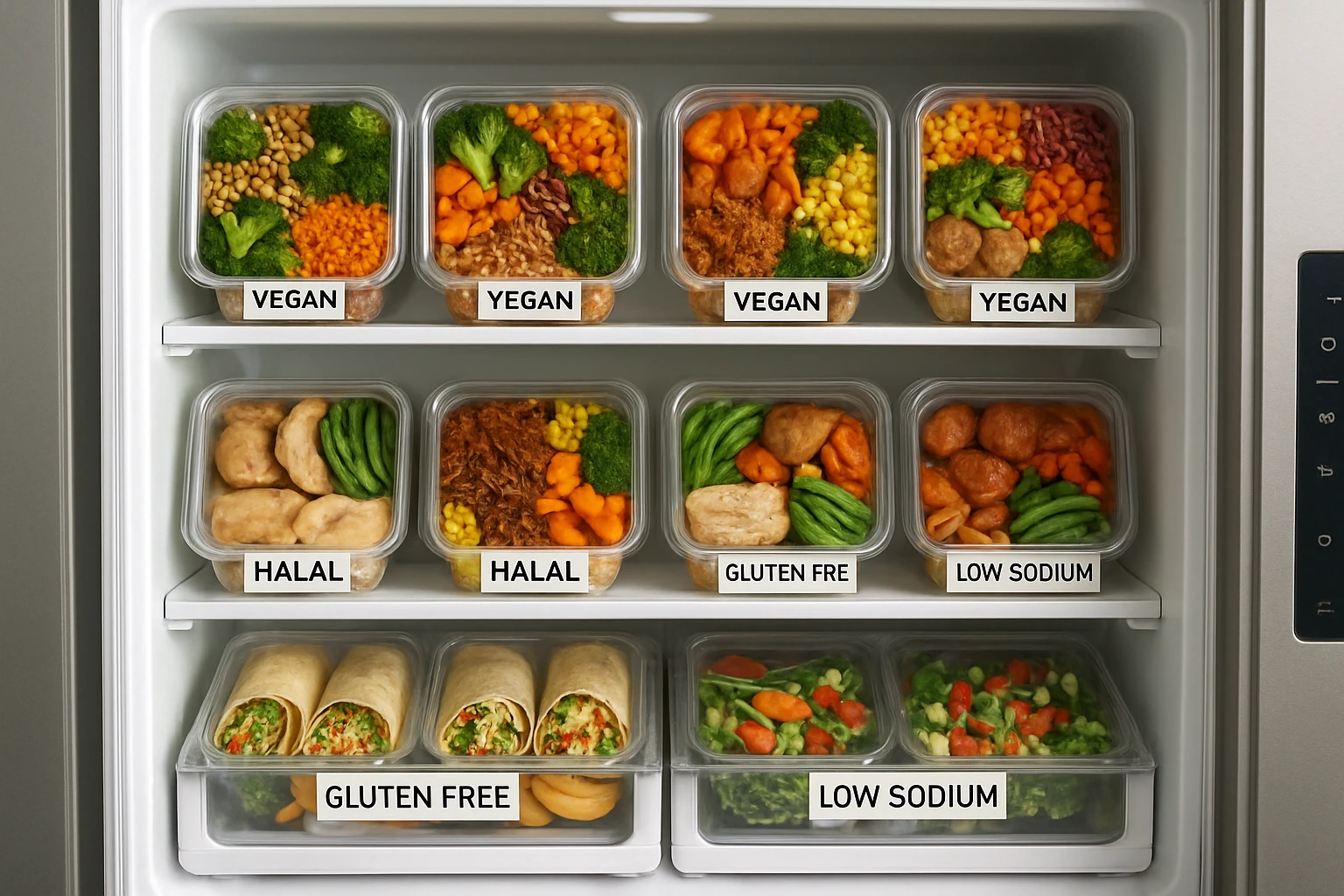
A smart fridge benefit only works if employees can actually eat from it. That sounds obvious, but it is the failure mode that HR and facilities teams overlook most often when evaluating workplace food programs. If 15 to 20 percent of your workforce has dietary requirements, halal, vegan, gluten-aware, low-sodium, high-protein for athletes and the fridge stocks nothing they can eat, you have built a benefit that actively excludes part of your team. In Southern California, where workforces are among the most ethnically, culturally, and lifestyle-diverse in the country, that exclusion gap is a real HR problem.
This post covers how MHP builds and manages smart fridge menus for diverse workforces: what dietary categories are addressed, how the rotation is calibrated to specific workforce demographics, and why dietary-inclusive food access is increasingly framed not just as a nice-to-have but as a health equity issue.
Southern California's workforce reflects some of the broadest cultural and dietary diversity of any labor market in the United States. In the Inland Empire alone, a major logistics and manufacturing corridor, significant proportions of the hourly workforce are from communities where halal certification is not a preference but a religious requirement. Southern California also has large populations of vegetarian and vegan workers, particularly in healthcare, tech, and corporate sectors. Gluten-awareness has become a mainstream dietary consideration, affecting both workers with celiac disease and those with non-celiac gluten sensitivity. And the fitness culture of SoCal means that high-protein, low-simple-carbohydrate preferences are widespread even among workers who do not have a medical or religious dietary requirement.
The demographic makeup of a specific workforce matters enormously in this analysis. A logistics warehouse in Fontana with a heavily Latino and Middle Eastern workforce has very different dietary distribution than a biotech office in Irvine with a heavily South and East Asian professional workforce. Both may have significant proportions of employees who need specific options that most mass-market food service providers do not accommodate. The failure of a food benefit to serve these employees is not a minor inconvenience. It is a daily signal that the employer did not consider them when designing the program.
MHP's smart fridge menus are built around four dietary categories that cover the vast majority of requirements in SoCal workforces:
Halal. MHP stocks halal-certified protein options in every fridge rotation. These are not adaptations or substitutions. They are purpose-built menu items with halal certification that allows Muslim employees to eat from the fridge with confidence. Chicken, beef, and lamb preparations are the primary halal protein formats. These items are labeled clearly on the container, and the certification source is identified.
Plant-based and vegan. Plant-based options have evolved significantly from the token vegetarian salad that used to pass for dietary accommodation. MHP's plant-based rotation includes substantial entrées: grain bowls with legume-based proteins, tofu and tempeh preparations, lentil and chickpea-based dishes, and high-protein vegan wraps with full nutritional labeling. These are designed to be filling and protein-adequate for workers doing physically demanding jobs, not the underpowered side dish that plant-based workers at other employers have learned to expect.
Gluten-aware. Gluten-aware options, items formulated without wheat, barley, or rye, and prepared with cross-contamination protocols, are a standard part of the MHP rotation. These include rice bowl bases, corn tortilla wrap formats, and entrées built on naturally gluten-free grains like quinoa. Full allergen labeling on each container allows gluten-aware employees to make informed choices without having to contact the employer or food service provider for information.
Low-sodium and high-protein. These are the two most common functional dietary preferences outside of religious and allergy-driven requirements. Low-sodium options serve workers with hypertension and cardiovascular health considerations, a population that is significant in healthcare, logistics, and manufacturing workforces, where physically demanding work and stress intersect with diet. High-protein options serve the fitness-oriented segment of the workforce as well as workers whose jobs require sustained physical energy and muscle recovery.
Here is the practical implication of dietary diversity for a workplace food program: if 15 percent of your team cannot eat from the smart fridge because nothing in the rotation meets their dietary requirements, you have not provided a 100-employee benefit. You have provided an 85-employee benefit that actively reminds the other 15 that they were an afterthought.
This matters for retention and for the perceived value of the benefit. An employee who stands in front of the smart fridge, scans the options, and finds nothing they can eat does not feel benefited. They feel excluded. And in a workforce with high turnover pressure, which describes most IE logistics and manufacturing operations, the marginal retention effect of a food benefit that 15 percent of the workforce cannot use is correspondingly reduced. The ROI case for the fridge depends on it working for the actual workforce, not just the majority demographic.
This is also where the dietary-inclusive framing connects to health equity. Access to nutritious food is a health outcome. If your smart fridge benefit delivers real nutrition to most of your workforce but not to your halal-observant, vegan, or gluten-aware employees, the health benefit is distributed unequally along lines that often correlate with demographic and cultural identity. That is a health equity issue that HR teams at larger employers are increasingly aware of and active about. Our broader guide on dietary-inclusive workplace menus covers the policy and practical dimensions in more detail.
The standard MHP smart fridge rotation covers all four of the categories above as baseline. But the rotation is not static. It is calibrated to the specific workforce composition of each site based on information gathered during program setup.
When an employer tells us that their workforce is predominantly halal-observant, we weight the rotation toward a higher proportion of halal-certified items. When an employer in the tech sector tells us their workforce skews plant-based and fitness-oriented, we adjust the rotation to emphasize plant-based proteins and high-protein formats. When a healthcare employer tells us their clinical staff has significant low-sodium requirements driven by a wellness initiative, we build that into the rotation.
This is not guesswork. It is a practical conversation at the start of the program that ensures the fridge actually serves the workforce it is intended to serve. No employer should be paying for a food benefit that a significant fraction of their team cannot use. MHP's menu design process starts with understanding who is eating before determining what to stock.
See our post on what goes inside a workplace smart fridge for a detailed look at the full menu rotation. The Smart Fridge program page covers the broader program structure and how to get started.
The most common comparison employers run when evaluating a smart fridge is against vending. The math is simple and worth running. A vending machine sells shelf-stable snacks, sugary drinks, and packaged candy at a markup of roughly 70 to 120 percent over wholesale cost. The food is engineered for shelf life, not nutrition. It produces a short blood-sugar spike followed by an energy crash, which is the opposite of what an employer wants from an afternoon shift.
A smart fridge replaces that with fresh chef-prepared meals at a comparable or lower per-unit cost when subsidized correctly. Workers actually eat the food because it tastes like real food. Employers measure adoption rates of 60 to 85 percent on a fresh smart fridge versus 15 to 30 percent on a comparable vending machine. The wellness, retention, and productivity arguments that justify the smart fridge investment do not exist for a vending machine.
If the existing vending contract is up for renewal, the timing to replace it with a smart fridge is straightforward. The footprint is similar, the labor on the employer side is zero in both cases, and the cost structure swaps a low per-unit margin for a meaningful nutrition and engagement outcome.
Every halal-certified item in the MHP rotation is labeled with the certification designation on the container, including the certifying organization. This allows Muslim employees to identify compliant options at a glance without needing to ask or investigate further. The label is placed prominently on the front of the container alongside the ingredient list and nutritional information.
Yes. MHP labels plant-based items by category: vegan (no animal products), vegetarian (no meat but may contain dairy or eggs), and specific items that are both vegan and halal. The labeling is explicit rather than relying on symbol systems that some employees may not be familiar with. Employees can read the ingredient list on every container to verify the contents.
During the program setup conversation, MHP asks about the workforce composition, size, shift structure, and known dietary distribution if the employer has that information. Even a rough estimate ("about a third of our team is halal-observant" or "we have a lot of vegan employees in our office") allows MHP to weight the rotation appropriately. Adjustments can also be made after the program is running based on consumption data, if halal items are selling out faster than others, that signals the rotation should be adjusted upward.
Not materially. MHP's per-meal pricing is consistent across dietary categories, a halal chicken bowl and a conventional chicken bowl are priced the same. The cost to the employer (whether subsidized or fully employee-paid) does not increase because the rotation includes halal or vegan options. The only variable is whether the rotation is well-matched to what the workforce wants to eat, which affects utilization, a well-matched rotation generates more usage and therefore more perceived value per dollar of subsidy.
MHP's containers include full ingredient lists and allergen disclosures covering the major allergens: wheat/gluten, dairy, eggs, nuts, soy, and shellfish. This allows employees with specific allergen requirements to make informed choices. MHP does not operate a dedicated allergen-free kitchen, and employees with severe allergies should review labeling carefully and use their own judgment about cross-contamination risk, consistent with how they evaluate any prepared food from a commercial kitchen.
Tell us about your team and we will recommend the right program and a worksite-specific quote. No high-pressure sales.