Smart Fridge
What goes inside a workplace smart fridge? A menu and stocking guide
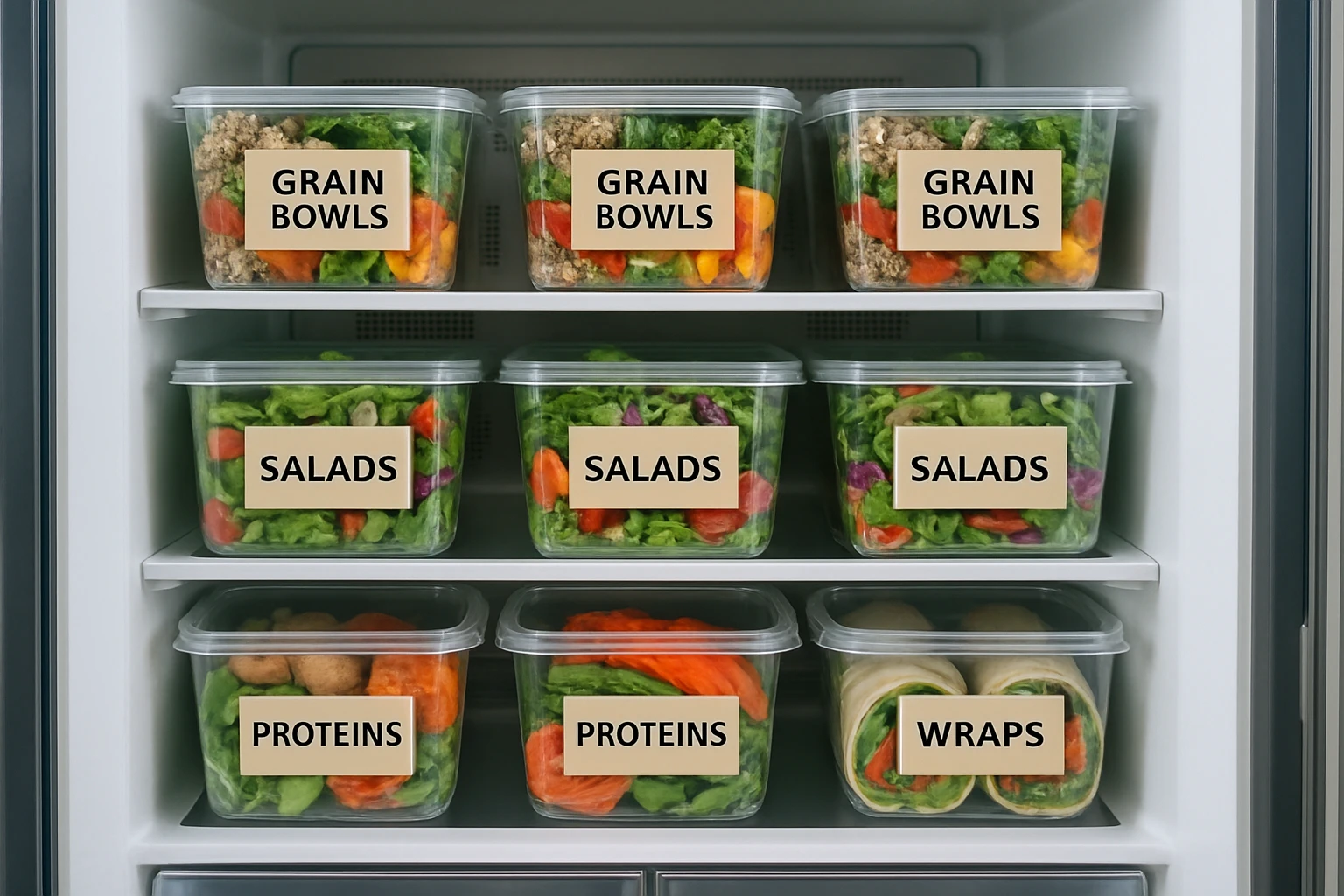
When HR and facilities teams research workplace smart fridges, the first practical question is almost always: what is actually in it? The technology angle, the app, the lock mechanism, the inventory tracking, gets a lot of attention in vendor marketing. But the thing that determines whether a smart fridge program succeeds or fails is the food. A smart fridge that stocks food workers do not want is a piece of refrigerated furniture taking up break room space.
This post is a complete guide to what goes inside an MHP workplace smart fridge, why the menu is designed the way it is, and how it gets calibrated for different workforce types.
MHP's smart fridge menu organizes into several core categories that rotate on a weekly basis. Understanding the categories helps explain the overall logic of the program.
Protein-forward entrées. The main course options are built around a primary protein, typically chicken, beef, salmon, shrimp, or a plant-based protein, paired with a grain or vegetable base. Examples include teriyaki chicken with brown rice and roasted broccoli, herb-marinated salmon with quinoa and seasonal vegetables, and beef and black bean bowls with roasted peppers and brown rice. These are complete meals designed to satisfy and sustain, not appetizers or snacks.
Grain bowls. A California-native format that travels well and appeals broadly. MHP's grain bowls use farro, quinoa, brown rice, or mixed grain bases with a combination of roasted vegetables, legumes, pickled elements, and a protein component. The grain bowl category typically includes both meat-based and vegetarian options in every rotation, making it one of the most inclusive formats on the menu.
Salads with substance. Not a side salad, a full meal-sized salad with a substantial protein, a complex base (greens plus a grain), and a dressing that is packed separately to maintain texture. MHP's salad category is designed for workers who want a lighter option that still provides real nutritional content. A salad that is 60% romaine with a few croutons does not qualify as a meal for an 8-hour shift worker.
Wraps and sandwiches. A practical format that is easy to eat on a short break. MHP's wraps use whole grain tortillas and contain a full protein, fresh vegetables, and a sauce or spread. Sandwiches use artisan-style bread with similar fillings. Both formats are portioned to be complete meals rather than snacks.
Sides and add-ons. Roasted vegetables, fresh fruit cups, and small protein additions, hard-boiled eggs, hummus with cut vegetables, round out the fridge. These are not the primary offering but give workers the ability to customize their meal or add volume if they need it.
This is the question that comes up in every employer conversation, and it has a direct answer: a smart fridge program from MHP is a wellness benefit, not a convenience store. The two things are fundamentally different.
A convenience store sells whatever maximizes revenue per transaction. Chips, candy, and sodas are high-margin, high-volume items that make financial sense in that context. But a workplace food program is not trying to maximize revenue from employee snack purchases. It is trying to contribute to employee health and performance. Stocking chips alongside grain bowls does not just add a less-healthy option; it changes what the program communicates to employees and what they are likely to choose, especially during stressful or tired moments.
Vending machines already fill the chips-and-soda role in most facilities. There is no nutritional gap being addressed by duplicating that offering in a smart fridge. What the smart fridge provides is access to real food that is not available from any other on-site source, fresh, cooked, nutritious, and prepared with care. That is the differentiator, and compromising it to add snack options defeats the purpose.
Worker engagement with a food program is directly tied to variety. A smart fridge that stocks the same five options every week will see usage decline sharply after the first month as the novelty wears off and workers decide they have already tried everything available. Variety is not just a nice-to-have. It is how the program maintains the consistent utilization that makes it worth running.
MHP's menu rotates on a weekly basis. That does not mean every single item changes every week, some high-usage items rotate less frequently. But the selection is meaningfully different from one week to the next. Over the course of a month, the variety is substantial. Workers with strong preferences can rely on items appearing cyclically, while workers who want to try something different each visit will always find new options.
The rotation also tracks seasonality in a general way. Lighter options and more fresh vegetable combinations tend to dominate in warmer months. Heartier, more warming grain bowl and protein combinations are more prevalent in cooler months. This is not a rigid seasonal menu, California's relatively mild climate and year-round produce access means the distinction is subtle. But it reflects an awareness that what workers find appealing changes with the season.
Not all workplaces have the same nutritional requirements, and MHP's menu reflects this. The core menu works across workforce types, but the stocking emphasis shifts based on who is eating from the fridge.
Physical workers, warehousing, logistics, manufacturing, construction. Workers in physically demanding jobs need more total calories, higher protein, and more complex carbohydrates than a sedentary office worker. The grain-and-protein combination format, a full serving of a whole grain plus a substantial protein portion, is the right format for this population. Entrées in the 550 to 750 calorie range with 35 to 45 grams of protein are typical for physical worker deployments.
Knowledge workers, offices, corporate, professional services. Office workers typically need a lighter meal that supports cognitive performance without causing the post-lunch energy drop associated with large, high-carbohydrate meals. MHP's lighter options, salads, smaller wraps, grain bowls with lighter grain bases, are calibrated for this population. Entrées in the 400 to 550 calorie range with a moderate protein and lower simple carbohydrate profile are typical.
Healthcare workers. Clinical staff face a unique combination: they need sustained energy for physically and mentally demanding work, often with unpredictable break windows. The smart fridge menu for healthcare deployments emphasizes quick-access formats, meals that can be eaten in 15 minutes or less, while maintaining the protein and calorie density appropriate for demanding physical and cognitive work.
Overnight and night shift workers. As covered in our night shift meals guide, overnight workers benefit from lower-glycemic options that avoid the blood sugar volatility that is more pronounced during circadian off-hours. The menu for overnight shift deployments emphasizes protein over simple carbohydrates and avoids high-sugar items that can contribute to mid-shift energy crashes.
Every item in an MHP smart fridge carries a label with the full ingredient list, macronutrient breakdown, and allergen callouts for the major allergens: tree nuts, peanuts, gluten, dairy, eggs, soy, shellfish, and fish. This is not optional. It is standard across every item in the rotation.
The dietary variety in the menu is intentional. Every rotation includes options that are vegetarian, options that are halal-compatible (no pork, no alcohol in preparation), and options that accommodate common restrictions like dairy-free and gluten-conscious preparation. Workers with dietary requirements do not need to flag their needs to HR or ask someone to check what is available. They can read the label themselves and make an informed choice.
For workforces with specific dietary composition, high proportion of workers observing halal guidelines, for example, MHP can discuss calibrating the menu rotation to weight the available options appropriately. This is a conversation we have during program setup and can revisit as the workforce composition changes.
MHP monitors consumption data from each smart fridge unit. Items that consistently sell out early in the restock cycle are clearly high-preference; items that consistently remain at the end of the cycle before the next restock are lower-preference. Over the first few months of a new deployment, this data shapes the stocking mix, popular items are stocked in higher quantities and appear in the rotation more frequently, while underperforming items are replaced with alternatives.
Employers can also relay direct feedback from employees. If a team is consistently requesting a specific type of meal, a particular protein, a format they miss from a previous employer's food program, a seasonal item they want to see, that input reaches MHP through the account manager and can be incorporated into the rotation. The menu is not fixed. It is a living program that adapts to what workers at a specific facility actually want to eat.
For the full program overview, see our Smart Fridge program page. For more on how dietary variety works in a diverse team context, our guide on dietary-inclusive workplace menus covers the topic in detail. If you are evaluating a smart fridge against a micro-market format, our comparison post on smart fridge vs. micro-market addresses the key differences in menu quality and format.
Yes. During the sales process, MHP provides a representative sample menu showing the types of items typically stocked across the categories. The actual menu for any given week will differ based on seasonality and rotation, but the sample gives a representative picture of the food quality, format variety, and portion sizes. We can also provide nutritional breakdowns for specific items if that is relevant to a wellness program review or dietary committee evaluation.
Consumption data tells us quickly if something is not moving. If an item is consistently left in the fridge at the end of the restock cycle, it is replaced in the next rotation. Employers can also flag feedback directly through the account manager. The program has a built-in feedback loop through usage data, poor performers cycle out without requiring the employer to track inventory or file complaints.
Most MHP items are designed to be eaten cold or at room temperature. This maximizes the grab-and-go usability of the format. Some items, particularly the grain bowl and protein entrée formats, reheat well in a microwave if the break room has one. Items are not designed to require heating, but workers who prefer their food warm can heat them if the facility has a microwave available.
All items are prepared fresh in MHP's Rancho Cucamonga kitchen and delivered within 24 to 48 hours of preparation. Every item carries a use-by date. During restocking, any items past their use-by date are removed from the fridge and disposed of. The goal is that every item a worker picks up is at peak freshness. If a restock is delayed for any reason, items that are approaching their use-by date are still available but are clearly labeled, and the restocking schedule is adjusted to prevent future gaps.
Yes. Employers running a formal wellness program, calorie tracking, macro goals, heart health focus, can request that MHP weight the menu rotation toward options that align with those goals. For example, if a company is running a 90-day wellness challenge focused on lower-calorie eating, MHP can prioritize lower-calorie options in the rotation for that period. This is a configuration conversation we have during onboarding or can revisit at any time during the program.
Tell us about your team and we will recommend the right program and a worksite-specific quote. No high-pressure sales.