Workplace Lunch
Lunch programs for auto dealerships in the Inland Empire
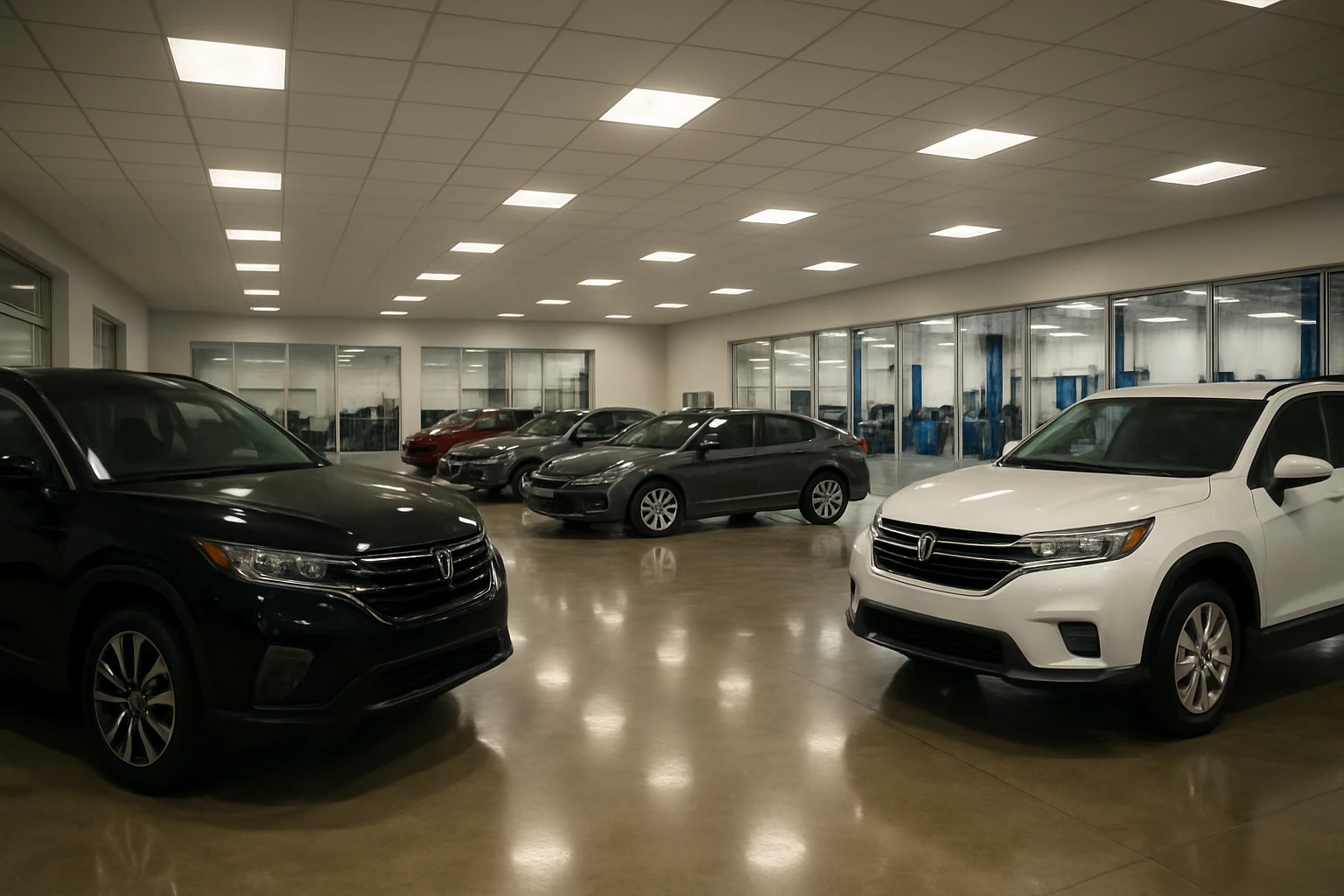
The Inland Empire has one of the densest concentrations of auto dealerships in California. The Riverside Auto Center on Auto Center Drive, the Ontario Auto Center, Crown Toyota in Ontario, Fairview Ford in San Bernardino, Moss Bros. along the Riverside corridor, and dozens of independent rooftops in Fontana, Corona, Temecula, and Murrieta collectively employ thousands of service advisors, technicians, sales staff, and support workers. What most of them share is a workday that runs 8am to 7pm, a lunch break that almost nobody takes in full, and a break room stocked with vending machines and a microwave.
The auto dealership food problem is quieter than the warehouse food problem but equally consistent. Nobody at a busy IE service drive is slipping out for a 45-minute sit-down lunch. Technicians are working flag hours. Service advisors are managing a queue. The break, when it happens, is 20 minutes in the back, and whatever they eat during that window is whatever was available.
Service advisor turnover at auto dealerships averages between 40% and 49% per year according to NADA industry workforce data, one of the highest voluntary turnover rates of any sector in the region. The cost to replace a service advisor, when you account for recruiting, onboarding, and lost CSI scores while a new hire ramps, runs $40,000 to $80,000 per departure at a full-line dealership. For a 15-advisor service drive that loses 6 advisors per year, that is $240,000 to $480,000 in turnover costs annually before anyone acknowledges it as a real problem.
Food programs are not a magic retention solution, but they appear consistently in retention surveys and exit interview data as a visible quality-of-work indicator. An advisor who stays for eight hours without a real meal option, eats from a vending machine three days a week, and watches the dealership catering a customer appreciation event while the service team gets a bag of chips, that pattern registers in engagement scores. Our post on employee meal benefits and retention covers the research behind why visible food benefits outperform stipends in satisfaction data.
Most IE dealerships are not large enough for a 200-person daily buffet. A typical full-line dealership in Riverside, Ontario, or Fontana runs 40 to 80 employees across all departments. That headcount profile fits two formats well:
For dealerships running a BDC operation with evening and overnight hours, a smart fridge is the natural complement, fresh meals available when the service drive has closed and the BDC team is still at their desks.
Service advisors occupy a peculiar role in a dealership's workforce. They are often the highest-earning hourly workers in the building, with some experienced advisors at busy IE stores earning $80,000 to $120,000 per year in commissions and pay. They are also among the most physically and emotionally demanding positions, managing a queue of frustrated customers from open to close, six days a week, often without a predictable break window.
A lunch program at a dealership carries a different signal than it does at an office. For a service drive team that works through lunch three days a week, a daily buffet is not just a benefit. It is an acknowledgment that management has thought about the actual experience of working the service drive. That acknowledgment shows up in retention, in reviews, and in the kind of informal dealer reputation that circulates through the IE automotive workforce community.
Automotive technicians in the IE face their own retention challenge. The skilled technician shortage is a national problem, the Technician Industry Action Group estimates the industry needs 80,000 new technicians per year, and current graduation rates from automotive programs cover less than half of that need. In a tight market, technicians choose dealers partly on pay and partly on working conditions. The break room, the quality of equipment, and the general experience of the workday all factor into the technician's decision to stay or move to the shop down the street.
A daily catered lunch is consistently mentioned in dealer staff surveys as a reason to stay, not the only reason, but a visible, daily one. It is also one of the few retention investments that serves both service advisors and technicians simultaneously, which matters for dealers looking to improve retention across all customer-facing departments at once.
MHP cooks in Rancho Cucamonga and serves auto dealerships throughout the Inland Empire. The conversation starts with staff count, shift coverage, and what you want the program to accomplish. Get in touch and we will come back with a worksite-specific proposal. No long-term contract required to start. You can also read more about how MHP serves automotive employers on our auto dealerships page.
Most IE dealerships rely on a break room vending bank or individual delivery orders. A recurring daily drop-off lunch changes the dynamic, a real meal option for service advisors and technicians without anyone from management coordinating it.
Service advisor turnover averages 40% to 49% per year per NADA data. Food programs appear consistently in retention surveys as a visible daily quality-of-work indicator, not the only retention lever, but one of the most consistently cited.
For a daily hot buffet, 50 or more staff is the practical starting point. For smaller rooftops of 20 to 50 employees, weekly meal delivery or a smart fridge is a better fit.
Yes. MHP cooks in Rancho Cucamonga and serves dealerships throughout the IE including the Riverside Auto Center, Ontario Auto Center, Corona, Murrieta, and surrounding areas.
No. MHP does not require a long-term contract. Most dealership clients pilot the program for 30 to 60 days before committing to a regular cadence.
Tell us about your team and we will recommend the right program and a worksite-specific quote. No high-pressure sales.