Workplace Lunch
Manufacturing teams in Rancho Cucamonga: how to feed the second shift
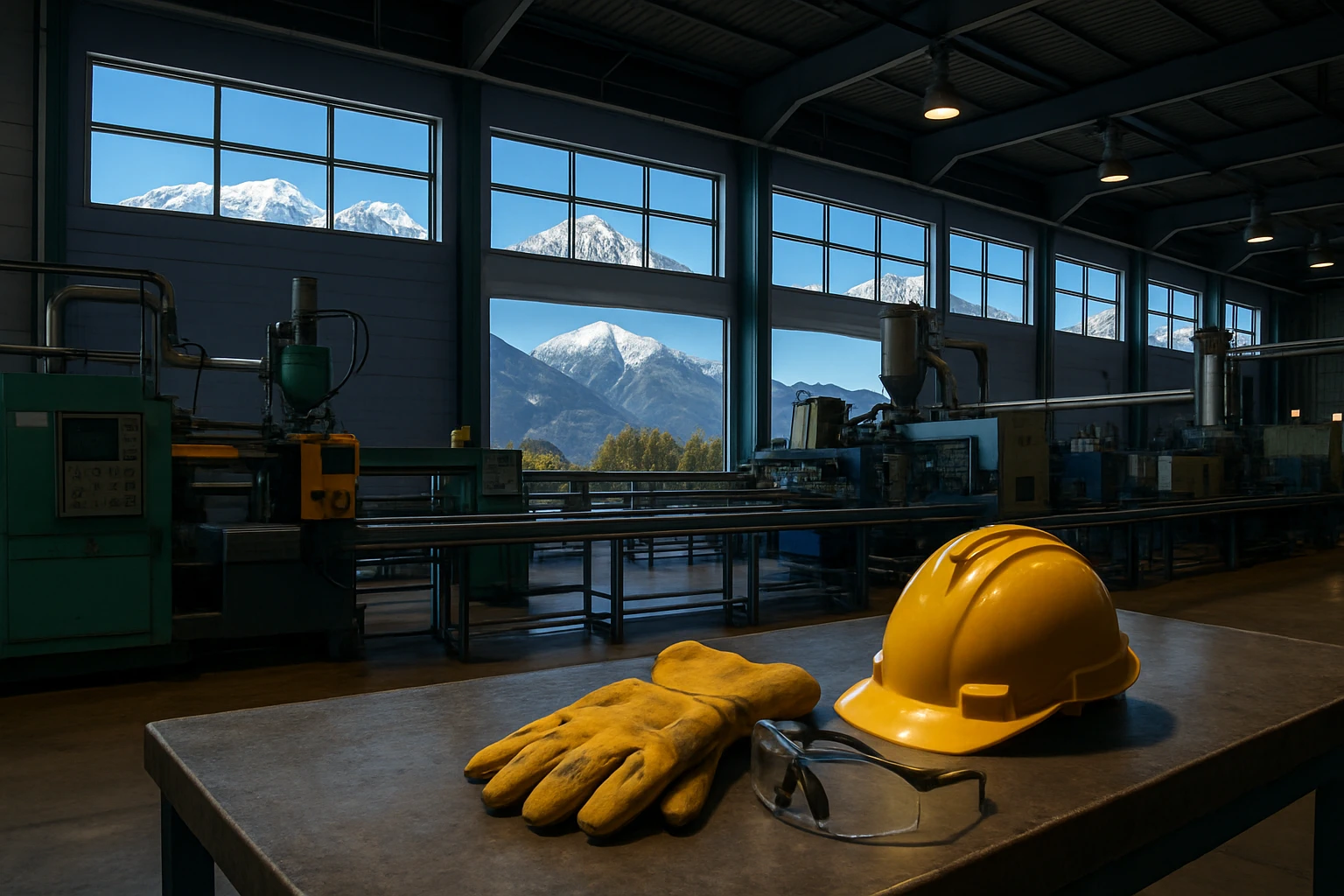
Rancho Cucamonga sits in the heart of the Inland Empire's manufacturing belt. The city's production base spans food and beverage plants, fabricated metals, plastics, medical device, and aerospace precision machining, facilities that collectively run tens of thousands of workers across two and three shifts every weekday. And virtually every one of those facilities has the same invisible problem: the cafeteria, if there is one, closes at 2pm, and the second shift comes on at 2:30.
Second-shift workers in Rancho Cucamonga manufacturing plants are not fed. They are managed. Vending machines get restocked, microwave counts are tracked, and HR occasionally fields a Glassdoor review about the break room. What does not happen is anyone actually solving the meal problem for the 80 to 300 workers who clock in every afternoon and do not get a real food option until they drive home at midnight.
In a standard IE manufacturing plant running first and second shifts, the pattern is consistent. First shift (usually 6am to 2pm) has access to a cafeteria or break room with warm food, a microwave that isn't yet monopolized, and a lunch window where the majority of workers eat together. Second shift (2pm to 10pm or 2pm to midnight) gets the closed cafeteria, a bank of vending machines, and whatever the microwave queue looks like when 80 people all break at 6:30pm.
Industry research confirms that in most mid-size plants, on-site cafeterias serve only first shift, leaving second and third shift workers with vending-only options, as documented by workforce food program operators serving the manufacturing sector. Workers who cannot or do not want to eat from a vending machine either pack food from home (which depends on adequate prep time the previous night, refrigerator space on-site, and microwave access at break), or they skip the meal and run on energy drinks and whatever they grabbed at a gas station on the drive in.
The result is documented. OSHA's worker fatigue data shows injury rates run 18% higher on evening shifts and 30% higher on night shifts versus day shifts. The mechanism is not mysterious: tired workers running on sugar and caffeine in a production environment are making more errors. For a Rancho Cucamonga plant that tracks recordable incident rates, second-shift nutrition is a safety metric, not just an HR perk.
There are three realistic options for Rancho Cucamonga manufacturing employers who want to close the second-shift food gap:
RC's manufacturing corridor runs along the I-10 and 4th Street corridor, Milliken Avenue, Rochester, Haven, and the industrial clusters in the western half of the city. Mission Foods' Rancho Cucamonga facility, one of the largest tortilla production plants in the world, and dozens of smaller fabrication, packaging, and precision manufacturing sites are all within a tight geographic band.
MHP cooks in Rancho Cucamonga. Our kitchen is in the city. Delivery to any RC industrial site is a 10 to 20-minute drive with no freeway complications. For a manufacturing plant comparing a local kitchen to a national food service vendor shipping from a central facility, the proximity matters for the everyday realities of a meal program: an evening delivery for second shift arrives on time, a same-day schedule change is a phone call, and the driver is not managing an unfamiliar gate on a tight delivery run.
Rancho Cucamonga's manufacturing workforce is majority Latino. The IE overall sits at roughly 42% Latino by regional workforce composition, and production occupations skew higher. UCLA's Latino Policy Institute reports that about 70% of California Latinos speak Spanish at home, and a significant share have limited English proficiency. In many RC production environments, Spanish is the dominant language on the floor.
A food program that serves a vending bank of English-only chips and energy drinks to this workforce is not a real benefit. MHP's programs run rotating menus built from a kitchen that has served the IE since 2015: carne asada, chile verde, pollo asado, rice and beans, rotating weekly. Spanish-language menus and Spanish-labeled meal items are standard. Allergen information is labeled per item. These are not add-ons. They are what makes a second-shift meal program something workers actually use.
California's meal break law gives non-exempt employees a 30-minute unpaid break for any shift over five hours. An employer who fails to provide a compliant break owes one additional hour of premium pay per missed break. In manufacturing, a pattern of shortened second-shift breaks is often invisible until it shows up in a PAGA claim. RTX (formerly Raytheon) settled a California meal break class case for $19.9 million in June 2025 covering roughly 1,755 production employees, a number that is not abstract once you do the per-employee math.
An on-site food program does not guarantee break compliance. But it removes the most commonly cited practical reason workers shorten breaks: there is nothing to eat on-site and not enough time to leave. When food is available in the break room, workers have a genuine reason to take the full 30 minutes. Our guide on California meal break compliance and on-site food covers the legal context in more detail.
If your RC facility runs a second or third shift with 80 or more workers sharing a predictable meal window, the conversation starts with three questions: shift schedule, break room layout, and whether you want a buffet, a smart fridge, or both. Get in touch and we will put together a site-specific proposal. No long-term contract required to start. You can also read more about how manufacturing plants across the IE are approaching this on our manufacturing industry page.
An evening drop-off buffet timed to the 6pm or 7pm meal window, a smart fridge with continuous access, or a combination of both. The right choice depends on headcount and whether your second-shift break window is predictable or variable.
Yes. MHP is based in Rancho Cucamonga and serves local manufacturing clients from the same kitchen. Delivery to any RC industrial site is a 10 to 20-minute drive with no freeway complications.
MHP's menus rotate weekly and reflect IE food preferences, carne asada, pollo asado, chile verde, rice and beans. Spanish-language menu signage is standard for all programs.
When there is no on-site food for second shift, workers shorten or skip breaks because there is nothing to eat and no time to leave the facility. An on-site program removes that barrier and supports full use of the 30-minute meal window.
Yes. MHP does not require a long-term contract. Most manufacturing clients pilot the program for 30 to 60 days before committing to a regular cadence.
Tell us about your team and we will recommend the right program and a worksite-specific quote. No high-pressure sales.