Blog › Workplace Lunch › Biotech & tech lunch in OC
Workplace Lunch
Workplace lunch for tech and biotech teams in Orange County
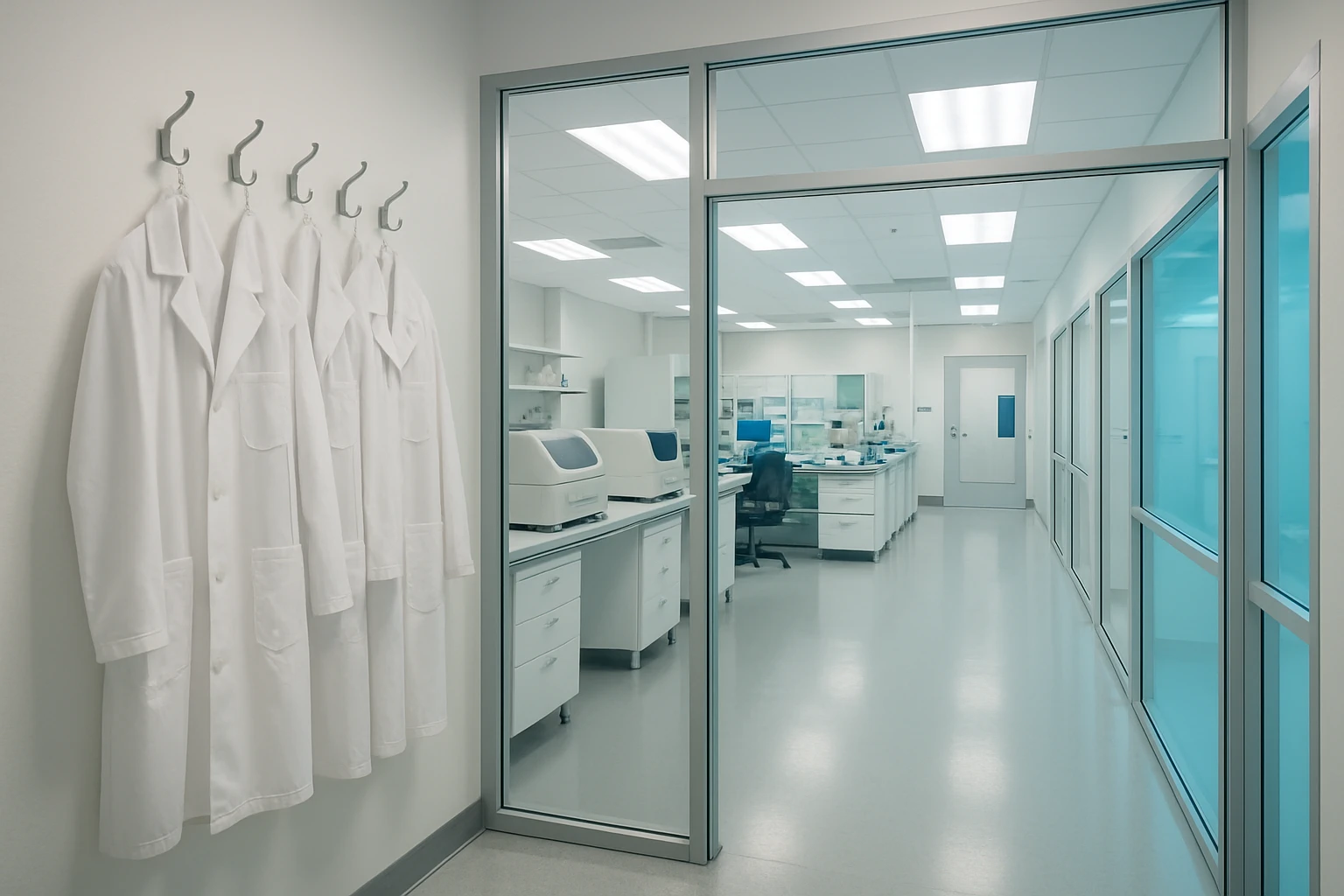
Orange County's technology and life sciences corridor runs from Irvine to Anaheim and west through Santa Ana, Tustin, and Costa Mesa. The Irvine Spectrum and Great Park Neighborhoods host dozens of biotech, medtech, and software companies. The corridors along the 5 and 405 freeways are dense with corporate campuses and multi-tenant office parks where HR and People teams manage the lunch problem the same way every day: do nothing, hand out delivery app stipends, or hope someone brings something.
This post is for HR Directors, People Operations leads, and Workplace Experience managers at OC tech and biotech companies who are ready to replace that improvised approach with a real program. We will cover what the delivery-app solution actually costs, why it does not solve the in-office problem, and what a managed lunch program looks like for a 50- to 400-person OC office in 2026.
Delivery stipends and reimbursement policies have become the default for Orange County tech offices, and it is easy to see why. They require no operational setup, no vendor contract, and no commitment. But the actual experience of running a 120-person office on DoorDash has specific failure modes that compound over time.
The cost problem is structural. DoorDash and Uber Eats charge restaurants commissions of 15 to 30 percent, plus payment processing fees, with effective costs to restaurants closer to 30 to 40 percent of order value. Those fees are passed through as menu markups, delivery fees, service fees, and tips. A basic $13 entree lands at $24 to $28 delivered. Multiply by 100 employees three days a week, and a company running a $15/person daily meal stipend is actually funding $24 to $28 in cost per person per day in practice, because workers apply the stipend to a more expensive order rather than absorbing the app fees.
The experience problem is equally real. On anchor days, Tuesday, Wednesday, Thursday, every office in the same building places lunch orders in the same 30-minute window. The nearest restaurants hit capacity. Drivers get queued. Food arrives between 12:15 and 1:00 pm, not noon. By then, meetings have started. Reception is jammed with drivers who need an ID check to access the floor. The food is lukewarm. A third of the orders have missing items or substitutions. After six months of this, the stipend becomes a source of frustration rather than a benefit.
The in-office problem is the most strategic one. Return-to-office mandates have pushed companies to require three or four in-office days per week, and workers are negotiating every step. Research by ezCater found 75 percent of hybrid employees would come to the office more often if their employer provided lunch. A delivery stipend that produces a cold, late, fragmented meal experience does not create that pull. A visible buffet set up in the break room when people arrive creates the kind of "the office has something my home doesn't" moment that actually shifts behavior.
Orange County's corporate campuses are distributed across office parks that were designed for cars, not pedestrians. Irvine Spectrum has walking-distance options for the buildings on its perimeter. The Great Park offices, the Jamboree Road corridors, the 55 freeway tech parks in Orange and Tustin, most of those are suburban campus settings with no walk-up food within 10 minutes. The realistic options at noon are drive (15 to 25 minutes round-trip), order delivery (chaotic on anchor days), or eat whatever is in the office kitchen.
For biotech and medtech companies specifically, the lunch problem has additional layers. Production and laboratory staff often cannot leave the building freely due to cleanroom protocols, scheduled batch processes, or sterile-environment requirements. A scientist on a critical cell culture timeline cannot simply leave for 45 minutes. QC teams running real-time assays are similarly constrained. These workers have the exact same 30-minute California meal break as everyone else, and they need the food to be right there when they walk out of the lab, not ordered 40 minutes in advance through an app.
The life sciences sector in Southern California is expanding. Biocom California's 2025 Economic Impact Report put California life sciences employment at over 452,000 workers in 2024, with the greater Los Angeles and Orange County region being the state's densest medtech hub. New facility openings and lab expansions are a consistent buying trigger, companies that open or expand OC sites need food infrastructure in place before their hiring plans are complete, not six months later.
A drop-and-go hot buffet from MHP removes the variable that makes delivery fail: the on-demand ordering step. Food is delivered to your break room or kitchen, set up in chafing pans, and ready for the full break window. No order to place, no driver to wait for, no fee structure to navigate. Employees walk in, serve themselves, and eat. The setup is done before the first person arrives from their 11:30 meeting. Breakdown happens after the window closes.
For an OC tech or biotech team, this produces several concrete outcomes:
For companies with mixed populations, lab staff who cannot leave plus office staff who could but prefer not to, a smart fridge provides 24-hour access for anyone who misses the buffet window or works non-standard hours. The two formats work together well. The Smart Fridge page covers how placement and stocking work for an OC office environment.
Orange County companies are managing RTO pressure from multiple directions. Worker resistance to full-time in-office mandates is well documented: a survey by TalentLMS found 64 percent of employees would consider job searching if forced full-time in the office, and that number rises to 74 percent among workers under 35. The companies winning at RTO compliance are the ones that make the office feel different from working from home, not by adding more requirements, but by adding visible benefits.
A catered lunch on Tuesday and Wednesday is the simplest, most observed benefit an OC People team can add. It costs roughly $12 to $18 per person per meal when partially subsidized. For a 120-person office with Tuesday and Wednesday lunch three weeks per month, that is approximately $8,640 to $12,960 per month, a predictable line item that is far cheaper than the turnover cost of even one mid-level OC tech employee. Gallup estimates the replacement cost of a technical professional at 80 percent of annual salary; for management and leadership roles it runs 200 percent. One retention win pays for a year of lunch.
Orange County's tech and biotech workforce is among the most dietary-diverse in Southern California. You will find significant vegetarian and vegan populations at software companies, halal preferences among engineers from specific cultural backgrounds, gluten-free requirements at biotech firms where employees are health-conscious by profession, and the growing population of GLP-1 medication users who need smaller, higher-protein, lower-carb meal options.
National delivery chains and generic catering menus miss most of these. MHP builds rotating menus that address the full range of dietary needs with labeled options and we do not charge extra for dietary variation. A well-run buffet at a biotech company in Irvine or Tustin looks like actual fresh food in rotation, not a sandwich tray from a national catering platform.
The guide to dietary-inclusive workplace menus goes deeper on how to structure a program that works for a diverse team.
The cleanest starting point is a weekly trial run: two lunch buffets per week for four weeks, piloted at your highest anchor-day on-site population. Track participation and employee feedback. After four weeks, you will have a clear read on whether to expand to three days, add a smart fridge for off-hours coverage, or adjust the menu based on what the team actually gravitated toward.
MHP serves all of Southern California, including Irvine, Anaheim, Santa Ana, Tustin, Costa Mesa, Brea, and the OC corridors along the 5 and 405 freeways. Our kitchen is in Rancho Cucamonga; the logistics are straightforward.
For a longer decision-making read, the on-site food program comparison guide walks through buffet vs. smart fridge vs. weekly delivery for different headcount and shift patterns. When you are ready to talk specifics, book a 20-minute call and we will come back with a program recommendation and a site-specific quote for your OC office.
For teams of 80 to 300, a recurring hot buffet 2 to 3 days per week drives the highest participation and becomes the anchor reason employees show up on those days. For smaller or more distributed teams, a weekly meal delivery or smart fridge covers the gap without the setup complexity of a daily buffet.
Yes. MHP serves all of Southern California, including Irvine, Anaheim, Santa Ana, Tustin, and the rest of the OC corridor. The kitchen is in Rancho Cucamonga; delivery covers the entire region.
Delivery stipends are popular but have structural problems: peak-time congestion, inconsistent quality, food arriving cold, and DoorDash or Uber Eats fees that inflate the real cost of each meal by 30 to 40 percent. A managed buffet costs the employer less per meal, produces a consistent experience, and creates a visible communal moment, something a delivery stipend cannot replicate.
Yes. Research by ezCater found 75 percent of hybrid employees would come to the office more often if their employer provided lunch. For companies managing a 3- or 4-day-per-week mandate, a free or subsidized lunch on anchor days is one of the most effective levers available.
A hot buffet typically works best at 80 people or more on-site during the delivery window. Smaller OC teams, 30 to 80 people, are a better fit for weekly meal drop-off or a smart fridge, both of which have lower minimums and lighter logistics.
Tell us about your team and we will recommend the right program and a worksite-specific quote. No high-pressure sales.