Employee Benefits
How Inland Empire employers use food to compete for talent
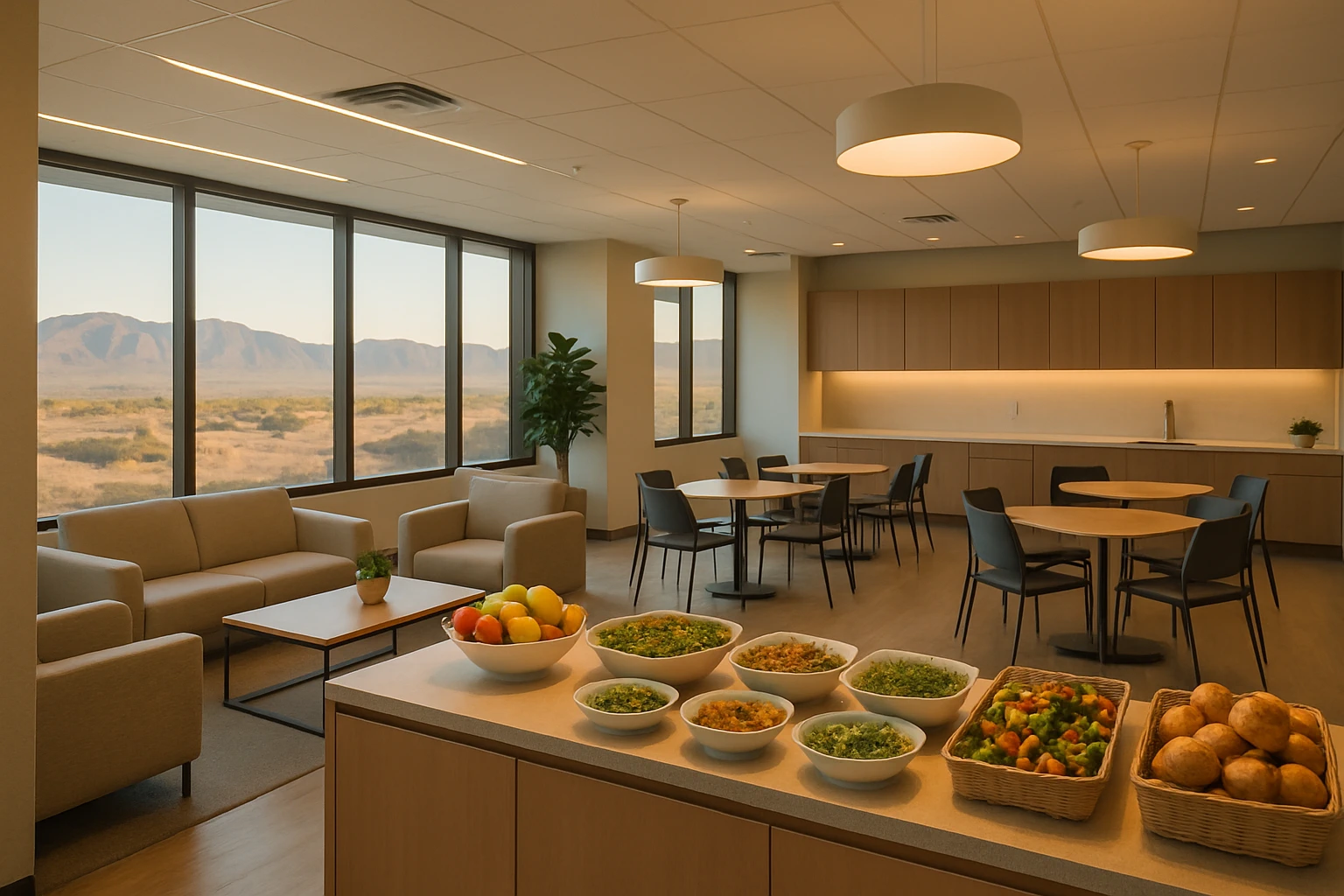
The Inland Empire is not a sleepy labor market. It is home to some of the largest distribution networks in the United States, a growing healthcare sector, and a manufacturing base that has expanded steadily over the last decade. All of that economic activity means competition for workers is real, sustained, and intensifying. If you are an HR or operations leader in Rancho Cucamonga, Ontario, Fontana, or Riverside, you already know the challenge: wages alone are not closing the gap.
The Inland Empire economy has added hundreds of thousands of jobs in logistics, healthcare, and production over the last several years. That growth has been good for workers and increasingly difficult for employers. Hourly employees in particular have more choices than they have had in a generation. A warehouse operator in Ontario is not just competing with other Ontario warehouses. They are competing with distribution centers in Los Angeles, healthcare systems in Riverside, and manufacturing plants in Chino that can offer marginally different schedules, commute tradeoffs, or perks.
What makes this especially challenging is that wages have compressed. When every employer in a sector is paying within a narrow range, you cannot simply outbid your competitors. You have to differentiate on something else. That is exactly where the smarter IE employers have started investing in visible, daily, tangible benefits and food is consistently at the top of that list.
Most employee benefits are invisible most of the time. A 401k match matters, but it is not something an employee thinks about on Tuesday at noon. Health insurance is important, but it is only salient when something goes wrong. These are table-stakes benefits now, workers expect them, but they rarely generate loyalty on their own.
Food is different because it shows up every single day. A hot buffet, a stocked smart fridge, or a fresh weekly meal delivery is experienced by every employee on every shift they work. It is visible to job candidates during facility tours. It gets mentioned in conversations at home. It shows up in Glassdoor reviews in a way that "standard health benefits" never does. The daily recurrence is precisely what makes food punch above its dollar value as a perk.
Survey research consistently finds that a meaningful share of job seekers weigh food benefits when evaluating employers. In Glassdoor's employer benefits surveys, workplace food and meals reliably appear in the top tier of appreciated perks, well above commuter benefits and on par with flexible scheduling. For hourly workers who cannot work from home, a food benefit is one of the few daily perks that can actually be extended to them. The signal it sends is not just "we feed you". It is "we see your time as valuable enough that we are not making you figure out lunch on your own."
That signal matters more in the IE than it does in sectors where remote work and flexible hours are standard. For a warehouse associate working a 6am–2:30pm shift in Rialto, knowing there is a hot meal available at break is a meaningful part of the job description and it is something that distinguishes one employer from another in a very concrete way.
The most common starting point for IE employers is a daily drop-off lunch buffet for large on-site teams. For a facility with 80 or more employees on day shift, a hot buffet is the most visible and most appreciated format. It creates a shared experience and gives people a genuine reason to stay on-site during their break. For facilities running mixed shifts, a smart fridge provides the same quality of fresh, chef-prepared meals but at any hour, without requiring a set serving window.
For smaller IE offices or satellite facilities, a weekly team meal delivery, drop-off of fresh portioned meals once or twice per week, gives teams the benefit without the infrastructure of a full buffet program. The cost is lower, the logistics are simpler, and the benefit is still experienced as a real, tangible perk.
When candidates tour a facility, they notice what is in the break room. A stocked smart fridge with fresh labels and real food reads differently than a vending machine full of chips. A buffet set up for the day shift communicates that the employer invests in its workforce in a visible way. These are not subliminal signals. They are explicit. HR leaders who have incorporated food into their recruiting pitch routinely report that candidates bring it up unprompted in offer discussions.
On job boards, "meals provided" or "lunch included" is a concrete differentiator in a job post that gets noticed. It is specific and credible in a way that vague benefit language is not. For the IE sectors where competition is tightest, skilled trades, logistics supervisors, healthcare support staff. This kind of specificity can move a candidate from considering your offer to accepting it.
Recruiting is expensive, but retention is where the real ROI lives. SHRM estimates the average cost of replacing an hourly employee at 50–200% of annual salary once you account for recruiting, onboarding, training, and productivity loss during the ramp period. A daily food benefit at $8–$12 per employee per day costs roughly $2,000–$3,000 per year per person. If it reduces the probability of that employee leaving by even a modest margin, the math is straightforward.
The mechanism is not complicated. When people feel that their employer takes care of them in small, consistent ways, they are more likely to reciprocate with loyalty. Daily meals are one of the clearest expressions of that care because they are experienced in the body, literally. They reduce the decision fatigue and expense of figuring out lunch every day, which is a real and recurring stress that many hourly workers carry. Removing that stress, reliably, every workday, builds the kind of appreciation that is hard to displace with a marginally higher wage offer from a competitor down the road.
The best framing is simple and honest: "We provide fresh, chef-prepared meals on-site so you do not have to worry about lunch." That is it. You do not need to over-engineer the messaging. Add it to your job posts. Mention it in recruiter screens. Make sure it is visible during facility tours. For existing employees, a short announcement at the launch of a new program and consistent delivery from day one, is all the communication you need.
One thing to avoid: making the benefit feel conditional or fragile. If employees sense that the food program will disappear at the next budget review, they will not attach loyalty to it. Positioning it as a committed part of the package, not a trial or a pilot, is what makes it land as a retention signal rather than a pleasant surprise that could end any week.
For operations with 100 or more employees on a predictable day shift, the hot buffet is the gold standard. The shared meal experience has cultural value beyond the nutrition. It brings people together, which matters for team cohesion in large facilities. For 24/7 or multi-shift operations, the smart fridge is more appropriate because it does not require a serving window and is accessible to every shift. For teams under 50 or for satellite sites, weekly meal delivery is the most cost-effective option and still delivers a benefit that employees genuinely appreciate.
The right format depends on your headcount, your shift structure, and your facility layout. MHP Food Service works with IE employers across all three formats, and the program recommendation process starts with a conversation about your specific operation, not a one-size-fits-all pitch.
One of the most common hesitations is the fear of launching a benefit that does not stick, or that requires too much ongoing management. A well-run food program should feel effortless once it is running. One invoice, one point of contact, consistent delivery on a fixed schedule. If the operational overhead is significant, the program is not designed correctly. Start with a short pilot, even four to six weeks, measure participation and employee feedback, and expand from there. The data will make the case for you.
For IE employers who are feeling the pressure of a competitive labor market, a food benefit is one of the few available levers that is both affordable and genuinely differentiating. It does not require a large capital investment, it can launch quickly, and its impact is visible to employees from day one. In a market where everyone is offering the same wages, the employer that takes better care of its people every single day is the one that wins the retention battle over time.
Benefits and hiring research: Glassdoor employer benefits research. Turnover cost data: SHRM.
The IE sits between two of the strongest labor markets in the country, Los Angeles and Orange County and its own economy has grown rapidly in logistics, healthcare, and advanced manufacturing. Workers have genuine choices, and wages in those adjacent markets have compressed what IE employers can offer on salary alone.
Candidates research benefits before interviews. A visible, concrete perk like daily meals or weekly meal delivery stands out in job postings and on Glassdoor in a way that a vague "competitive compensation" line does not. It gives recruiters something specific to mention in the first call.
Logistics and warehouse employers with large hourly workforces, healthcare facilities competing for nurses and CNAs, and mid-size manufacturers all see strong impact. These are sectors where the workforce has limited access to good food near the worksite and where the daily experience of the benefit is most appreciated.
Not always, but in specific scenarios it can be. A daily meal benefit costing $8–$12 per employee is experienced every single workday, while a $0.50/hr wage bump is noticed on payday and then becomes baseline. The visibility and daily recurrence of food make it punch above its dollar value.
The lowest-friction starting point is a weekly meal drop-off for smaller teams or a smart fridge for mixed-shift operations. Both require no kitchen investment, no HR administration, and can launch within weeks. Contact MHP Food Service for a site-specific recommendation.
Tell us about your team and we will recommend the right program and a worksite-specific quote. No high-pressure sales.