Guides
Workplace food trends for 2026: what SoCal employers are choosing
The workplace food landscape in Southern California looks meaningfully different in 2026 than it did three years ago. The post-pandemic scramble, delivery apps, stipends, rotating food trucks, whatever got employees through the day, is giving way to something more deliberate. HR and Operations leaders across the Inland Empire, Orange County, and Los Angeles are rethinking what a workplace food program is, what it is supposed to accomplish, and whether what they are currently doing is actually working. Here is what we are seeing on the ground.
The clearest shift in 2026 is the explicit use of food benefits as a return-to-office incentive. Founder Reports tracked 37% of companies enforcing in-office attendance in 2025, up from 17% in 2024, with required in-office days rising from an average of 2.6 to 3.9 per week. At the same time, CNBC reports that five days in the office is the least popular work arrangement among employees, and TalentLMS found 64% would consider searching for a new job if forced full-time in-office. Food has emerged as the high-yield lever that softens the mandate: ezCater's 2025 research found 75% of hybrid employees would work on-site more often if lunch was provided, and 88% of business leaders report that corporate meal programs boost in-office attendance.
What this means in practice: Inland Empire employers, particularly corporate offices in Rancho Cucamonga, Ontario, and Riverside, are adding managed food programs specifically because they want more butts in seats on anchor days (Tuesday, Wednesday, Thursday) without triggering the pushback that a direct mandate creates.
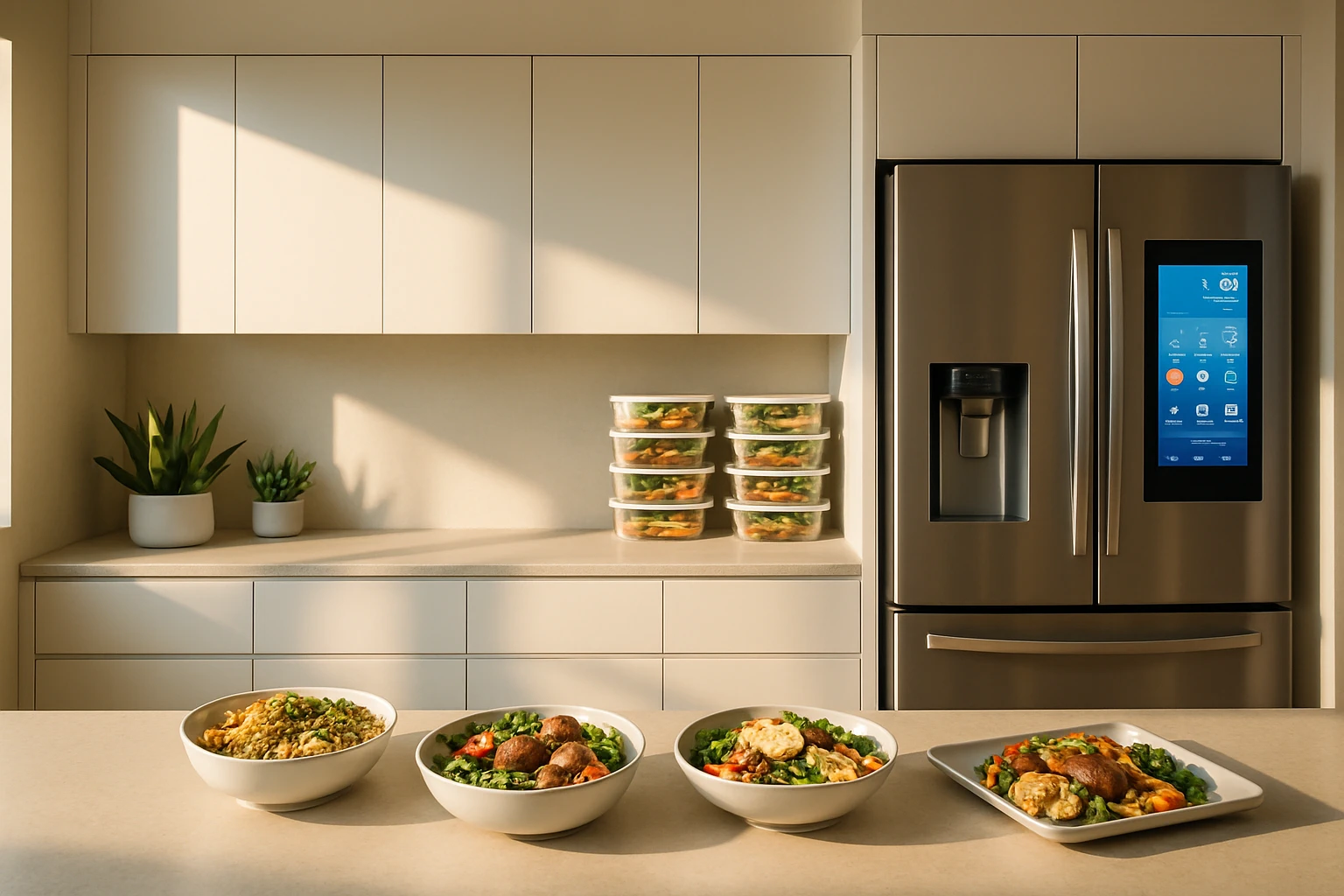
Vending machines have been a workplace fixture for decades, but the format has a ceiling: shelf-stable, processed, low-nutrition options at prices that feel punitive. Smart fridges offer a different proposition: fresh, chef-prepared meals in a tap-to-pay fridge that is managed and restocked by the vendor. No vending service contracts. No coin mechanism. No stale product from 2022.
In the Inland Empire, where a substantial share of the workforce runs non-standard hours in warehouses, manufacturing facilities, and logistics parks, smart fridges address a problem that vending cannot: the night crew and weekend workers need access to real food, not just a Snickers bar and a bag of chips. The Smart Fridge page covers how the program works. Our guide to feeding a 24/7 workforce goes deep on the shift-pattern use case.
The delivery-app stipend model, give employees a monthly Grubhub or DoorDash credit, peaked during remote work and has been declining since. The problems are well-documented: platform fees, markups, and tips push a $13 meal to $24 or more delivered. Third-party delivery fees can reach 30–40% of order value for restaurants, which get passed to the end user as higher menu prices. Finance teams are watching the numbers and asking whether a managed program at a fixed per-head cost would be cheaper and more consistent than reimbursing app chaos.
The answer, for most employers who have run the comparison, is yes. A managed program also eliminates the security desk congestion, cold food on arrival, and missing items that come standard with peak-hour delivery-app use.
Pre-2020, a workplace food program assumed everyone was in the building. In 2026, the employers designing programs thoughtfully are building for the hybrid reality: some employees in-office on any given day, some remote, with the mix varying by week and by role. The programs that earn the most goodwill are the ones that include remote workers instead of excluding them.
For many SoCal employers, this means pairing an in-office format (daily buffet or smart fridge) with a remote delivery program for the part of the team that is not on-site. The Remote Employee Meal Delivery page covers how that works. It is not universal. It depends on the ratio of remote to in-office and the size of the remote cohort. But the employers asking about it are asking precisely because they do not want food to become a source of perceived inequality between in-office and remote staff.
One-off catering for meetings and events is not going away, but the reliance on catering as the primary employee food solution is declining. The operational overhead, ordering each time, coordinating delivery windows, managing leftovers, is visible and real. HR leaders who have switched to a standing managed program consistently report the same thing: the administrative work drops to near zero, and employees stop noticing the food because it is simply always there.
For Temecula Valley employers who want the details on this specific shift, the guide to Temecula catering alternatives covers the comparison directly.
In 2020, offering a vegetarian option was notable. In 2026, a workplace food program that does not accommodate halal, vegetarian, vegan, allergen-aware, and GLP-1-friendly needs is not credible for most Southern California workforces. The UCLA Latino Policy and Politics Institute found Latinos accounted for 54% of the IE workforce in 2022, a diverse workforce that expects food that reflects its culinary range. A menu that works only for one dietary profile creates equity problems and generates complaints.
The trend is toward rotating menus with genuine variety baked in, not as an add-on, but as the default. This is particularly relevant for employers with large bilingual workforces in Ontario, Fontana, San Bernardino, and Anaheim.
A few things that were common in 2022 and 2023 are losing ground:
If you are evaluating what your workplace food setup should look like in 2026, the trends above point toward recurring, managed programs that work for your specific shift pattern and include dietary variety as a given. The format, daily buffet, smart fridge, weekly delivery, or a combination, depends on your headcount and how your team actually works. The program comparison guide is the right starting point. If you want to talk through your specific situation, book a call and we will help you choose the right fit.
Food as an RTO incentive, smart fridges replacing vending, shrinking delivery-app budgets, hybrid-aware programs that cover remote employees, and a move from one-off catering to recurring managed programs.
RTO mandates are colliding with a tight labor market. Food is a concrete, visible way to make the office worth coming to and one of the few perks employees consistently say they actually value and notice.
Many SoCal employers are making this switch. Delivery stipends are hard to budget, often misused, create security desk congestion, and deliver inconsistent food quality. Managed programs give HR cost predictability and a better employee experience.
Growth in 24/7 operations, especially in IE logistics and manufacturing, means a large share of the workforce works non-standard hours. Smart fridges serve every shift without requiring staffing or daily coordination, which no other format does as cleanly.
Yes, for the right team. Large sites with 100 or more on-site workers during a predictable midday window still see strong participation and ROI from a managed hot buffet. The format has not changed; what has changed is which employers qualify after post-pandemic headcount shifts.
Tell us about your team and we will recommend the right program for where workplace food is heading in 2026.