Workplace Lunch
Feeding a construction and trades workforce in the Inland Empire
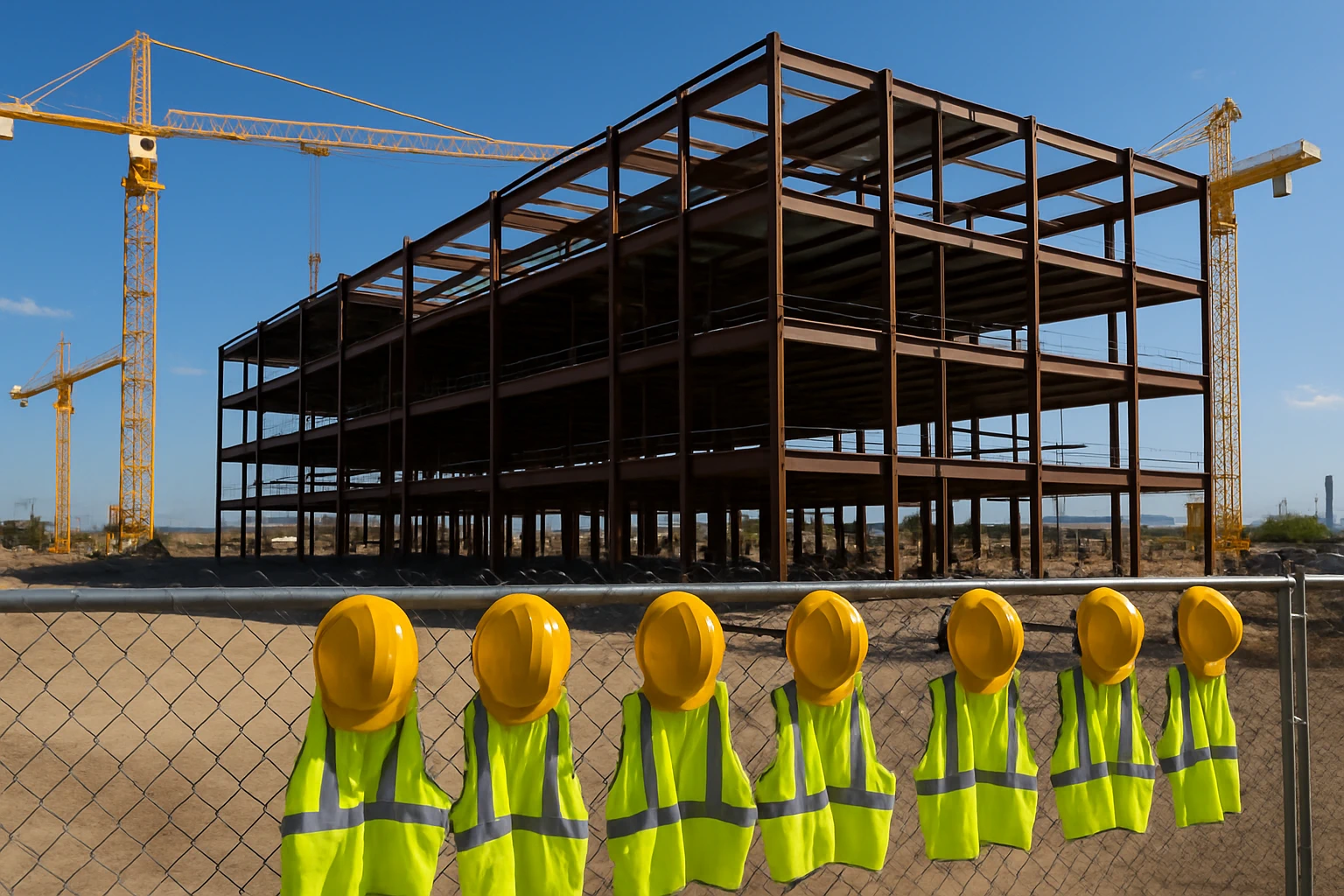
This post is for general contractors, project owners, and trades supervisors in the Inland Empire who are tired of watching their crews pile into personal vehicles and disappear for 45 minutes during lunch and tired of watching tired workers return with fast food and a caffeine crash as a substitute for an actual meal. Feeding a construction workforce is a different problem than feeding an office. Your team is physically active, often working in heat, and moving between sites. The options that work for a corporate campus do not automatically translate. Here is what actually works for construction and trades teams in San Bernardino and Riverside counties, and how to set it up without adding work to your plate.
Construction is physically demanding in a way few other industries match. A framer laying OSB in Perris in June is burning through calorie reserves faster than an office worker, and the downstream effects of poor nutrition hit fast: reaction time slows, concentration drops, and risk of injury increases. The OSHA heat safety guidelines emphasize that proper hydration and caloric intake are core parts of a heat illness prevention program, not an afterthought. When workers rely on gas station food, energy drinks, and vending-machine snacks, they are building on a nutritional deficit that compounds across a shift.
The effects are not subtle. Research published by the Society for Human Resource Management consistently shows that employees who have access to quality meals at work report higher energy levels and better focus than those who do not. For a trade workforce doing skilled work at elevation or operating heavy equipment, that difference is not just about morale. It is a safety variable.
There is also the retention angle. The Inland Empire construction labor market is tight. Perks that hold crews together, steady work, fair pay, and yes, a hot meal, matter more than most contractors acknowledge until they start losing people to competitors who figured it out first.
A construction site is not a break room. There is no permanent kitchen, no cafeteria, no loading dock. Your crew is split across phases of a project, break times can shift depending on inspections or material deliveries, and on some sites workers cannot easily leave for any reason without costing the schedule. The options available to most crews reflect these constraints poorly:
The gap is obvious once you name it: there is no consistent, nutrition-forward, logistics-light option for most construction crews. That is the gap MHP fills.
The drop-off lunch buffet is the right format for most Inland Empire construction sites with 50 or more workers. MHP delivers a hot buffet in chafing pans on a recurring schedule, typically a set day or days per week, or daily for larger projects. No permanent kitchen is needed. Our team brings the equipment, sets up in under ten minutes at a designated staging area, and breaks down when the window closes. Your crew serves themselves from a hot line of real food, proteins, grains, vegetables, without leaving the site.
Typical menu items on a construction-focused program include high-protein options like grilled chicken, carne asada, or braised pork; complex carbs like rice, beans, or roasted potatoes; and fresh salads and cooked vegetables that actually hold well in a chafing pan. This is not banquet-hall food, and it is not fast food. It is the kind of meal that keeps a worker energized through the back half of a shift in the heat of an Inland Empire summer.
Logistics that trip people up are usually not actually problems. No power on-site? The setup uses Sterno or insulated transport containers and does not require an outlet. Moving between phases of a project? Service can relocate. Crew count fluctuates? You give us a headcount estimate by the prior day and we adjust. The model is designed for the operational reality of construction, not the operational reality of a corporate campus.
For smaller crews, support staff at a permanent yard location, or sites with an office trailer that has power, a smart fridge is worth considering. A smart fridge arrives stocked with pre-portioned, chef-prepared meals that workers access by tapping a badge or card. It stays stocked on a restock schedule, and employees eat whenever their break falls, not just during a buffet window.
For a superintendent's office or a project management trailer in Fontana or Chino that has a few permanent staff, a smart fridge is a low-footprint way to keep food on-site without any daily coordination. It is also the right answer if your crew includes night-shift security, site monitors, or any staff working outside the typical 7-to-3:30 window.
One of the most common objections to a job-site meal program is cost. The counter-argument writes itself. A 30-minute lunch break where workers actually eat and return ready to work costs nothing compared to the productivity loss from an extended off-site lunch, a worker who skips lunch and hits an afternoon wall at 1:30, or an injury that traces back to fatigue and impaired judgment. Most general contractors who run the numbers find that a per-meal cost of $10–$15 is easily justified against the project risk profile.
There are also presentation options. Some contractors fully subsidize meals as a benefit that helps with labor retention and hiring. Others implement a split-cost model where the company covers a portion and workers pay the rest via a simple app or payroll deduction. Either way, MHP provides one invoice and handles all the logistics, you are not running a catering operation, you are approving a vendor.
If you need help building the business case internally, the guide to writing a workplace food program proposal for your CFO covers the ROI framing in detail, and it translates directly to a project-cost conversation with an owner or bonding partner.
San Bernardino and Riverside counties have seen sustained construction activity across logistics, residential, and infrastructure categories. From the warehouse corridors along the 60 and 15 in Ontario and Fontana to the residential expansion in Eastvale, Beaumont, and Murrieta, there are large crew concentrations that have few quality food options within reasonable driving distance during a workday. That is exactly the profile MHP is built for. Our kitchen is in Rancho Cucamonga, which puts us close to virtually every active job corridor in the IE. Delivery is fast and logistics do not require long lead times.
Construction customers who have run programs with MHP consistently mention two things: crew morale improves noticeably, and they get more afternoon output from a workforce that ate a real meal instead of fast food or nothing.
The process is simpler than most contractors expect. You share the site address, your crew count and typical headcount on a given day, how often you want service, and any dietary notes (halal proteins are available; we handle allergen requests with advance notice). We put together a quote within a day or two. Most programs start within a week of the first call.
There is no multi-year contract requirement. We have customers who run a program for a single project and customers who have carried MHP through a decade of projects across the IE. Both arrangements work, and the terms flex around the project lifecycle rather than forcing you to stay committed after the job wraps.
The warehouse and logistics and manufacturing and production pages give additional context on how MHP works with large on-site workforces, and much of that applies directly to construction. If you want to understand what a full buffet program looks like operationally before calling, the guide to feeding warehouse crews in Fontana and Rialto is a close analog.
Yes. MHP brings its own chafing dishes, serving tables, and everything needed to set up a buffet at an outdoor or temporary site. No permanent infrastructure required, just a flat staging area and a brief heads-up on access.
MHP adjusts headcount week by week. You give an updated crew estimate a day or two in advance, and the portion count changes with it. There is no penalty for scaling up or down on short notice.
Yes. MHP menus are built around whole proteins, complex carbs, and fresh vegetables, exactly what a physically demanding workforce needs. Halal-certified proteins are available, and dietary notes can be accommodated with advance notice.
MHP quotes on a per-meal basis based on crew size and frequency. Most contractors either subsidize fully as a benefit, split the cost with workers, or use a simple payroll-deduction model. We will walk through the options on a call.
We can follow a project to a new site or pause service without a long-term cancellation penalty. Most construction customers build MHP into their project budget from the start so the program moves with the crew.
Ready to bring real food to your team? Book a call and we will put together a worksite-specific quote.
Tell us about your team and we will recommend the right program and a worksite-specific quote. No high-pressure sales.