Workplace Lunch
Workplace lunch programs in Corona and Norco: a 2026 guide
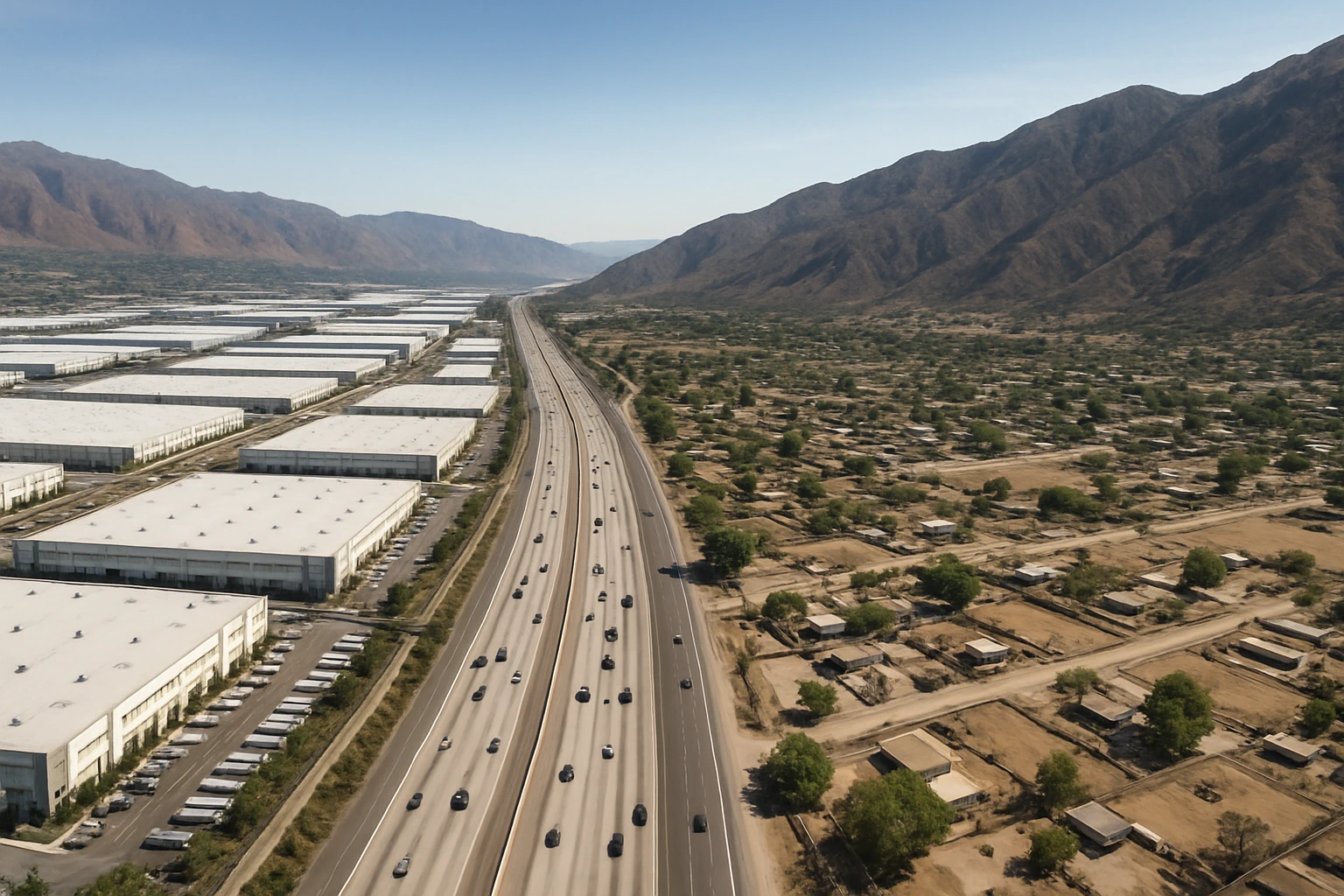
The stretch of the 15 freeway between Corona and Norco is one of the busiest commercial corridors in the Inland Empire. Distribution centers, manufacturing plants, logistics parks, and mid-size corporate offices line the roads off the interchange and most of them share one persistent problem: when lunchtime comes, there is almost nowhere nearby to eat, and driving off-site costs more time than a break actually allows. This guide is for the HR managers, operations leads, and facility directors at those worksites. Here is what is actually happening with workplace lunch in this part of the Inland Empire and how employers are solving it in 2026.
Corona sits at the junction of the 15 and 91 freeways, a location that has made it a magnet for regional distribution and logistics operations for the past two decades. Major fulfillment and distribution facilities operate near the Cajalco and Railroad Canyon corridors, with additional industrial parks concentrated along Hamner Avenue and Magnolia Avenue. Norco, directly north, has a different character, more agricultural and residential. But it hosts manufacturing operations, county facilities, and smaller industrial employers that share the same food access problem as their neighbors to the south.
The workforce in this corridor is notably physical. Warehouse associates, inventory management staff, forklift operators, line workers, and logistics coordinators make up the majority of employees at these sites. They are doing real work, lifting, moving, operating equipment, and staying on their feet for eight to ten hours at a stretch. The lunch challenge here is not just a convenience question. It is a performance and safety question.
The 15/91 corridor is highly car-dependent by design. Unlike urban commercial districts where restaurants are walkable from most offices, the industrial parks around Corona and Norco were built for truck access and logistics efficiency, not for lunchtime foot traffic. The nearest restaurants from most sites require a five-to-ten minute drive each way, leaving a 30-minute break with almost no time to actually eat. The predictable results: workers drive to fast food, eat in their cars, and return exhausted from the errand. Or they skip the meal entirely and get through the afternoon on vending machine snacks and caffeine. Neither outcome is good for anyone, the worker or the employer.
For facilities running multiple shifts, the problem compounds. A distribution center that operates a day shift and a swing shift has workers arriving for meals at noon and again at 8 or 9 pm. No restaurant delivery service reliably handles either window at a location off the 15 in Norco or in an industrial park in Corona. Workers on the evening shift often have no real food option available to them at all.
Nutrition for warehouse and logistics workers is not a wellness perk. It is an operational input. The CDC and OSHA both recognize that worker fatigue is one of the leading contributors to on-the-job injury, and fatigue is directly linked to inadequate nutrition. A worker operating a forklift, running a pick-and-pack line, or managing inventory in a 300,000-square-foot facility needs sustained energy across an eight-to-ten hour shift. That means real food: protein to support muscle recovery, complex carbohydrates for extended energy release, and enough calories to match the physical demands of the job.
The average active warehouse associate burns significantly more calories per shift than an office worker, estimates range from 1,400 to 2,000 calories for a full shift of moderate physical labor. Skipping a meal or replacing it with a bag of chips and a sports drink does not come close to meeting that demand. The result is an energy crash in the early afternoon (or early morning, for overnight workers) that is a direct precursor to the kind of slow reactions and poor judgment that cause accidents. This is not hypothetical. OSHA's guidance on fatigue consistently identifies nutritional support as part of a comprehensive worker safety program for physically demanding industries.
An employer running a serious lunch program at a Corona or Norco warehouse is not just doing something nice. They are managing risk.
For facilities with 100 or more employees coming through on a given shift, a recurring hot buffet is the most effective solution. MHP Food Service operates a drop-and-go buffet program in which hot meals are delivered in chafing pans, set up in the break room, and available for a defined service window, typically 30 to 45 minutes. There is no cafeteria to staff, no equipment to maintain, and no day-of coordination required from the employer. The operator simply shows up, sets up, and breaks down.
The menu rotates across proteins, grilled chicken, ground turkey, salmon, paired with vegetables, grain sides, and fruit. It is the kind of food a physical workforce actually needs: not light office fare, but real, hot, protein-forward meals that can sustain a person through a demanding afternoon. For the big distribution centers in Corona's logistics parks, this is typically the right fit. Volume is high enough to make the math work, and having a set lunch window creates a natural break-time routine that benefits the whole operation. You can read more about how this works on the Daily Drop-Off Lunch Buffet page.
Not every site has 200 people eating at noon. Many Corona and Norco facilities run two or three shifts with 50 to 80 employees per shift, spread across 24 hours. A buffet that sets up at noon serves the day shift and misses everyone else. For these operations, an on-site smart fridge is often the better answer.
A smart fridge is a temperature-controlled unit stocked with fresh, labeled meals, grain bowls, proteins, wraps, salads, that employees can access any time of day or night by tapping a badge or card. MHP restocks on a regular schedule. The fridge requires about two square feet of floor space and one outlet. Installation is non-disruptive. Once it is running, it requires nothing from the facilities team. For a warehouse with a day shift and a swing shift, or a logistics operation that runs overnight, the smart fridge ensures that every worker on every shift has access to a real meal, not just the people who happen to be on-site at noon. See the Smart Fridge page for full details on how the program works.
Corona also has a cluster of corporate offices, technology companies, financial services firms, and regional headquarters operations, that have different needs than the warehouse and logistics employers down the road. For smaller offices, typically 25 to 99 people, a recurring hot buffet is more than necessary, and a smart fridge may not feel like the right fit for an office environment. Weekly meal drop-off is the third option: pre-portioned individual meals delivered once or twice a week, ready to grab from the break-room fridge.
This format is gaining traction with hybrid offices along the 15 corridor, where headcount on any given day is unpredictable. A weekly delivery of portioned meals that employees grab when they are in provides a real food benefit without requiring everyone to be present at a specific time. It is the lowest-overhead format of the three, and it is a practical starting point for employers who are testing the idea of a food benefit before committing to a larger program.
A few things are worth checking before you commit to any provider in this area. First, confirm delivery reach, not every food service company that operates in the Inland Empire regularly services the 15 corridor as far south as Corona. MHP Food Service delivers throughout this area from its Rancho Cucamonga kitchen, so this is not a concern with our programs. Second, understand the minimum headcount requirements for each program type. A buffet for a 50-person site may not be cost-effective; that employer may be better served with weekly drop-off or a fridge. Third, ask about shift flexibility, does the program accommodate your actual shift schedule, or does it assume a standard eight-to-five operation?
For warehouse and logistics employers in particular, it is also worth asking about the nutritional profile of the menu. There is a meaningful difference between a provider that offers heavy, fried food and one that prioritizes protein-forward, balanced meals that support physical performance. Workers who eat well at lunch stay sharper through the afternoon. That is the standard a good workplace food program should be held to. See how MHP approaches warehouse and logistics food programs for more on what this looks like in practice.
A recurring hot buffet is typically the right fit at 100 or more on-site employees per shift. Smaller teams, typically 25 to 99, are better served by a weekly meal drop-off or a smart fridge, both of which MHP Food Service also operates in the Corona and Norco area.
Yes. MHP delivers across the Inland Empire including the distribution centers and logistics parks clustered near the 15/91 interchange in Corona and along McKinley Avenue, Cajalco Road, and the surrounding industrial corridors. Call or fill out the contact form to confirm your specific address.
MHP installs a temperature-controlled fridge in your break room stocked with labeled, fresh meals. Employees tap a card or badge to access and pay. The fridge is available 24/7, so day shift, swing shift, and overnight workers all get access to the same real food regardless of when their break falls. MHP handles restocking on a set schedule.
Pricing depends on headcount, meal type, and frequency. A hot buffet for a large team is priced per meal with a minimum headcount. Smart fridges are priced per meal consumed. Weekly drop-off is priced per person per delivery. Contact MHP for a worksite-specific quote, there is no long-term contract to start.
Yes. MHP Food Service operates on a schedule built around your team's workdays, not a standard Monday through Friday calendar. If your operation runs six or seven days, the program runs with it.
The lunch problem in this part of the Inland Empire is real and consistent: a physically demanding workforce, car-dependent surroundings, and limited options during a short break window. The employers doing the best job here are the ones who have stopped trying to patch it with vending machines and delivery app stipends and have instead put a real food program on-site. Whether that is a hot buffet for a large distribution center, a smart fridge for a 24/7 operation, or weekly drop-off for a smaller office, the answer is the same: bring the food to your people, make it good, and make it easy. That is what MHP Food Service is built to do.
If you are an HR director, operations manager, or facilities lead at a Corona or Norco worksite and want to talk through what the right program looks like for your team, reach out here. We will look at your headcount, shifts, and space, and put together a recommendation and a worksite-specific quote. No long-term contract required to start.
OSHA guidance on worker fatigue and safety: osha.gov/worker-fatigue. CDC resources on worksite health and nutrition: cdc.gov/niosh.
Tell us about your team and we will recommend the right program and a worksite-specific quote. No high-pressure sales.