Workplace Lunch
Workplace lunch programs in Ontario, CA: what warehouse and manufacturing teams use
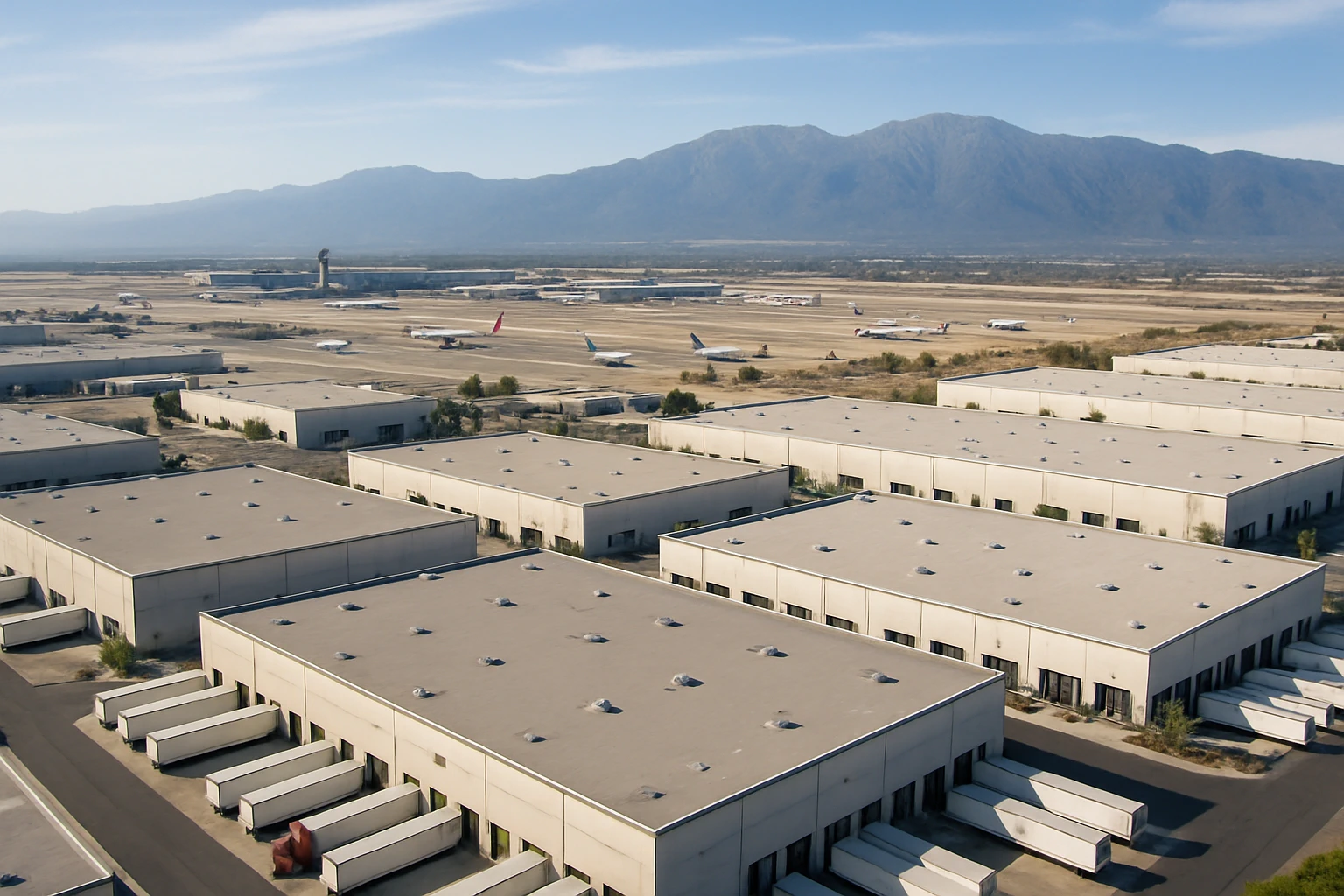
Ontario sits at the center of the Inland Empire's industrial backbone, the convergence of the I-10, I-15, and State Route 60 that has made the city the logistics and manufacturing hub of Southern California. The city's workforce includes tens of thousands of warehouse associates, distribution center operators, light manufacturers, Niagara Bottling employees, and office staff at the Ontario Airport corridor. What most of them have in common is a break room stocked with vending machines and a 30-minute meal window that isn't long enough to drive anywhere useful.
This guide covers how Ontario employers in warehousing, manufacturing, and corporate offices are running workplace food programs that actually get used and what format fits which worksite.
Ontario's industrial parks, along Airport Drive, Milliken, Vineyard, Philadelphia Street, and the Mira Loma cluster near I-15, are not food corridors. They're built for forklifts and semi-trucks, not for a 150-person crew to find lunch in 30 minutes. The fast food cluster along Holt Boulevard and Haven Avenue is a 10- to 15-minute round trip from most industrial sites, which leaves 0 to 10 minutes to actually eat. Workers who miss the drive-thru window eat from a vending machine or skip the meal entirely.
That pattern has consequences. According to OSHA's worker fatigue data, injury rates run 30% higher on night shifts compared to day shifts and fatigue compounded by skipped meals is a documented contributing factor. In the Inland Empire, the California Labor Commissioner secured a $1 million settlement in 2024 against IE warehouse operators for wage and hour violations including meal break failures. The connection between food access and break compliance isn't abstract; it shows up in settlements and citations.
Larger Ontario fulfillment centers, the distribution centers along Goodman Road in Eastvale, the facilities near Ontario International Airport, the 3PL hubs on Jurupa Street, tend to run one of two formats:
For the many mid-size Ontario operations, bottling, packaging, light manufacturing, printing, with 80 to 200 employees across two shifts, a combination often works best: daily drop-off for the day shift and a smart fridge for second shift and weekend crews. One kitchen, one invoice, two formats covering the whole clock.
Ontario's office market, the Gateway Corporate Center, the Airport Business Center along Haven, the commercial strip near Ontario Mills, has a different problem than the warehouse sector. Workers have cars and lunch options exist, but the 15-minute drive to anything worth eating leaves precious little time for a real break. Delivery apps fill the gap at high cost and inconsistent quality.
For Ontario corporate offices in the 50 to 300 range, a daily drop-off lunch buffet solves the desk-lunch-or-skip dynamic. Research from ezCater's 2025 Food for Work report found 75% of hybrid employees would come into the office more often if employers provided lunch, a direct argument for Ontario companies managing return-to-office with a workforce that commutes from Chino, Upland, Fontana, and further east.
Ontario's workforce is majority Latino. UCR's 2025 State of Workers in the Inland Empire found that nearly 62% of IE warehouse workers are Latino, with a significant share preferring Spanish as their primary language. Standard vending machines and national chain food apps fail this workforce twice: the food doesn't reflect what they actually want to eat, and the English-first ordering experience adds friction.
MHP's Ontario programs run menus that reflect the actual food preferences of the IE workforce, carne asada, pollo asado, chile verde, rice and beans, alongside more broadly familiar items. Menus rotate weekly. Ingredient and allergen information are labeled per item. That's not a marketing feature; it's what drives actual participation.
Ontario's warehouses operate under California's AB 701, which prohibits production quotas that prevent workers from taking meal breaks and creates a presumption of retaliation if discipline follows a break complaint within 90 days. The law doesn't mandate an on-site food program, but it does make the "I couldn't eat because there was nothing on-site" complaint a documented, auditable risk.
An on-site food program doesn't replace a break policy, but it removes the most common operational reason workers skip breaks. For Ontario operators who are already managing AB 701 documentation, eliminating the food-desert excuse from the break-compliance picture is a meaningful operational improvement. Read our full post on meal break compliance and on-site food in California for the full picture.
MHP cooks in Rancho Cucamonga, which shares a border with Ontario. The drive from our kitchen to any Ontario industrial site is 10 to 20 minutes. There's no I-405 traffic to navigate, no cross-county delivery problem. For employers comparing a local IE kitchen to a national vendor routing deliveries from a central warehouse in another state, that proximity matters: our driver is never more than a freeway exit away, and a same-day schedule change is a phone call, not an operations ticket.
If your Ontario worksite is a warehouse, distribution center, manufacturing plant, or corporate office with 50 or more people on a regular schedule, the conversation starts with three questions: How many people, what shifts, and how much coordination does HR want to handle? Book a short call and we'll cover those in 20 minutes and put together a real proposal. If you're not sure which format is right, start with our guide on choosing between lunch, fridge, and weekly drop-off. For the cost breakdown, the Inland Empire cost guide has the numbers.
Warehouse and fulfillment centers, manufacturing plants, corporate offices, and distribution hubs. Ontario is the heart of the IE's warehouse corridor, and the most common use case is feeding multi-shift teams where nearby fast food doesn't fit a 30-minute break window.
Yes. A smart fridge is a tap-to-pay refrigerator stocked with fresh meals employees can access at any hour. For Ontario warehouses running second and third shifts, a smart fridge means night-shift workers have a real meal option after 10pm when surrounding fast food closes.
Yes. Ontario's warehouse and manufacturing workforce is majority Latino, and MHP's programs include Spanish-language menu signage and menu items that reflect regional food preferences.
For a daily drop-off hot buffet, 100 or more on-site employees per lunch window is a practical starting point. For a smart fridge or weekly meal drop, there's no firm minimum, both work for smaller Ontario sites of 30 to 100 people.
Yes. Contact MHP Food Service and we'll build a worksite-specific proposal. Headcount, shift pattern, and delivery access are the main variables. No long-term contract required to start.
Tell us about your team and we will recommend the right program and a worksite-specific quote. No high-pressure sales.