Blog › Workplace Lunch › Distribution centers in Moreno Valley
Workplace Lunch
How distribution centers in Moreno Valley feed their teams
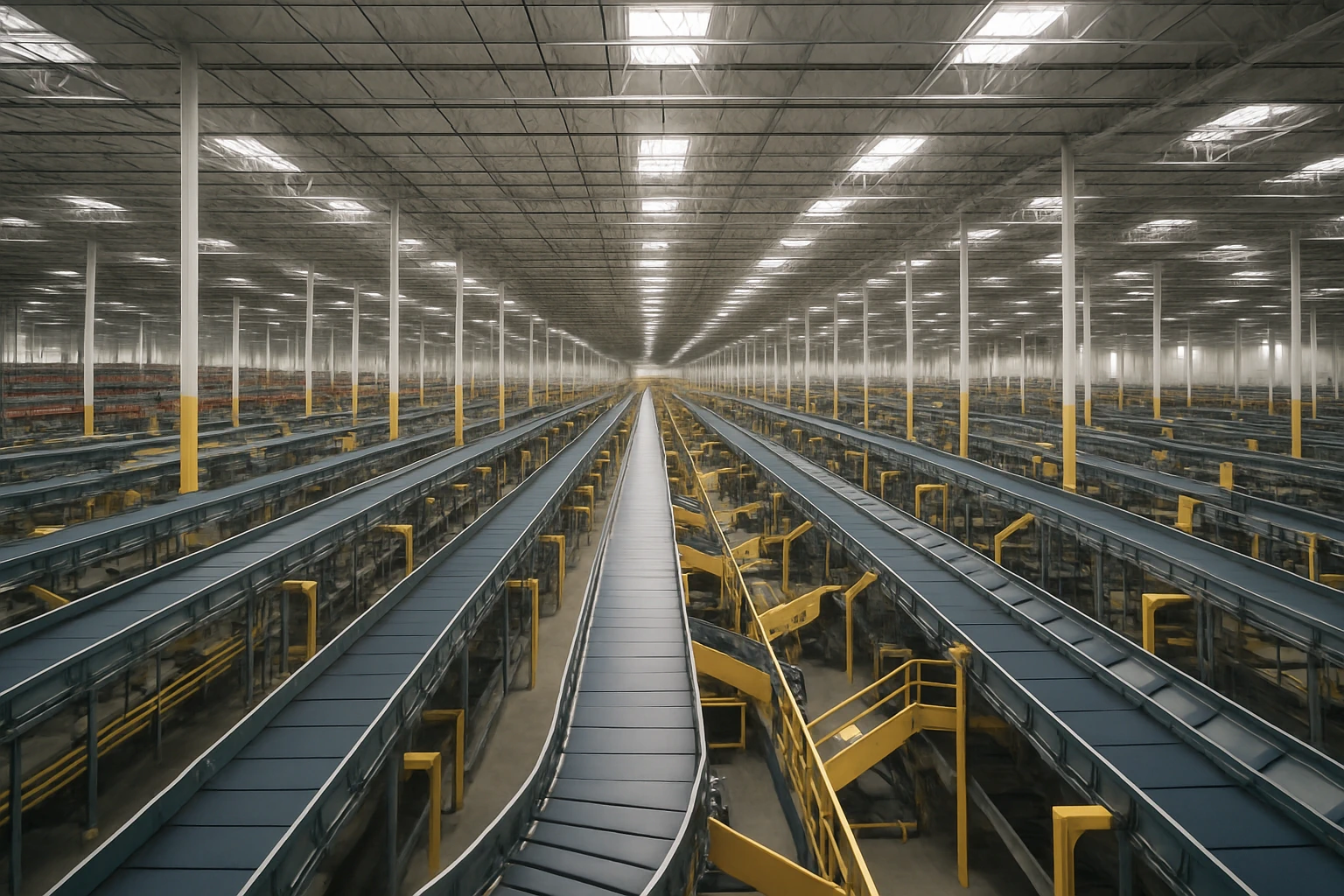
Moreno Valley sits at one of the most consequential logistics crossroads in the country. The March Business Center corridor, sprawling along the 60 freeway east of the 215 interchange, holds millions of square feet of active distribution and fulfillment space. Skechers runs its global super-DC here. Amazon has major fulfillment operations nearby. Dozens of 3PLs and regional operators fill the gaps. The workforce that keeps these buildings running is large, multi-shift, and often overlooked when it comes to one basic question: what do these people eat during their 30-minute break?
This post is for HR Business Partners, site managers, and operations directors at Moreno Valley distribution centers who are ready to move past vending machines and do something real about on-site food. We will cover why the typical options fall short, what programs work for DCs specifically, and how to start without adding a new job for your team.
The industrial parks lining the March Business Center are not surrounded by lunch options the way a downtown office is. Fast food clusters exist, but reaching them requires leaving the gate, managing a parking lot the size of a city block, driving to a drive-thru, waiting in a line that peaks precisely at noon, and getting back through security before your 30-minute break expires. Research on warehouse break realities shows that workers burn 5 to 8 minutes on each end of a 30-minute break just walking to and from the break room, leaving roughly 15 to 20 minutes of actual eating time even before you factor in leaving the facility.
Workers who try the drive-thru route quickly stop trying. Workers who bring food from home face the microwave bottleneck, a single appliance shared among 50 to 200 people on the same break window. Workers who skip the meal entirely show up for the second half of the shift running on caffeine and chips. Occupational safety research consistently links night-shift fatigue and poor nutrition to safety incident rates 30% higher than day shifts, a metric that lands squarely on your recordable-incident log.
Vending is the incumbent solution at most Moreno Valley DCs, and it is genuinely useful for snacks and beverages. What it cannot do is replace a meal. Chips, candy, and energy drinks keep a worker upright for 90 minutes, not for the back half of a 10-hour shift.
There is no universal answer for a DC food program because the right format depends on your headcount, your shift structure, and how much space you have. Here is how the three main options map to the Moreno Valley reality.
For a large fulfillment center running a day shift of 200 or more associates, a recurring hot buffet is the most visible and most-used format. MHP delivers hot food in chafing pans, sets up in your break room in about 10 minutes, and your team serves themselves during the break window. No ordering, no app, no waiting for a delivery driver. The food is there when the break starts.
The key condition is predictability. A buffet works when most of your associates eat during the same window, a noon to 1pm break, for example, or a 5pm to 6pm dinner break on swing shift. If your site runs overlapping shifts with staggered breaks, you may need two delivery windows or a different format. This is the program described in more detail on the Drop-and-Go Lunch page.
For the Moreno Valley context specifically, menu mix matters. The IE warehouse workforce is majority Latino, UC Riverside data puts the Latino share of warehouse workers at roughly 62%, and some site surveys put it higher. A menu that respects the actual food preferences of your workforce gets used; a generic corporate-catering menu does not. This is not a minor detail. It is the difference between a program that runs at 80% participation and one that runs at 20%.
The March Business Center corridor runs around the clock. Night shift associates at Skechers, Amazon, and dozens of 3PLs start their breaks after midnight when every surrounding restaurant is closed or drive-thru only. A smart fridge stocked with fresh, chef-prepared meals solves this completely. Associates tap a badge or card, grab a labeled meal, and go. No line, no break-room scrum, no 30-second window eaten by a POS transaction.
A smart fridge also works at smaller headcounts where a full buffet would overshoot. A site with 75 to 150 associates can run a profitable, high-participation fridge without the minimum headcount a hot buffet requires. The Smart Fridge page covers how installation and restocking work. It is a genuinely low-footprint add for facilities teams.
For many Moreno Valley DCs, the right answer is both: a buffet for the day shift and a fridge to cover swing, overnight, and weekend associates. Our guide to feeding a 24/7 workforce goes deeper on this combination.
Smaller Moreno Valley operations, a 3PL with 40 to 75 associates, a regional DC office building, may not need a daily program. Weekly pre-portioned meal delivery gives associates fresh, labeled grab-and-go meals two or three times a week. It is lighter operationally than a buffet and still meaningfully better than vending. The Weekly Meals program fits this use case well.
California's AB 701, effective January 2022, requires warehouse operators to provide written disclosure of production quotas, prohibits quotas that prevent workers from taking meal and rest breaks, and creates a retaliation presumption if a worker who complains faces discipline within 90 days. The California DIR AB 701 FAQ spells out the compliance obligations clearly.
The connection to food programs is direct. Workers who feel they cannot leave their station, or who cannot reach an off-site restaurant and return in 30 minutes, tend to cut breaks short or skip them. A missed meal break costs the employer one additional hour of premium pay per occurrence under California law. The California Labor Commissioner secured a $1 million settlement in 2024 for Inland Empire warehouse workers including for break violations. An on-site meal option, one workers can grab in 60 to 90 seconds, removes the most common reason workers skip or abbreviate their break.
This is not a legal guarantee. But it is a meaningful risk-reduction step that HR and Operations leaders can document as part of their break-compliance posture.
IE warehouse turnover runs above 40% per year for the sector broadly, per BLS data analyzed by Opensend. Replacement cost per warehouse worker runs 16 to 20% of annual salary by Center for American Progress estimates, roughly $5,600 to $7,000 per departure for a $35K role. At a 500-person site with 40% annual turnover, you are replacing 200 people per year. The cost of a well-run food program, even one the employer partially subsidizes, is a rounding error against that number.
Food consistently ranks among the top-cited perks in Glassdoor and Indeed reviews for IE fulfillment centers. "Free lunch" is not a tech perk anymore. It is a frontline retention tool in a market where every distribution center within 20 miles is competing for the same pool of workers from Perris, Hemet, Banning, and Beaumont.
The operational questions that determine which format fits your site:
The cleanest way to start is a 60-day pilot at a single shift. Pick your highest-headcount shift, set up a hot buffet delivery twice a week, track participation, and let workers experience the program before you decide whether to scale to daily or expand to other shifts. Pilots remove the political risk of committing to a full program before you have internal proof of concept. They also give you real usage data to bring to leadership when you make the case for the budget.
MHP does not require a long-term contract. You can start a pilot, adjust the program based on what you learn, and grow from there. This guide on piloting a workplace meal program walks through the pilot structure in more detail.
The March Business Center and the surrounding industrial parks stretch from Sunnymead Boulevard to the Ramona Expressway interchange, with major operators anchoring both ends of the corridor. Most sites were built between 2005 and 2020; the infrastructure is modern, break rooms are generally adequate, and access control is standard. The surrounding residential areas, Moreno Valley proper, Perris, Mead Valley, Edgemont, are where the workforce lives. Commutes of 20 to 45 minutes each way are the norm.
The competitive reality is that every major operator in the corridor is hiring for the same roles from the same labor pool. Any visible improvement to the associate experience, including food, shows up in Glassdoor reviews, referrals, and 90-day retention rates. It is a lower bar than most employers expect to clear to be meaningfully differentiated.
If your site is in Moreno Valley or the surrounding March corridor, Perris, Mead Valley, Hemet, San Jacinto, we can put together a program recommendation specific to your headcount and shift structure. Tell us how many people you have on your largest shift, whether you run nights, and what your break room looks like, and we will come back with the right format and a site-specific quote.
Get in touch or start by reading how the warehouse and logistics program works for the Inland Empire specifically. If you are weighing the cost of doing nothing, the total cost of not feeding your team is a useful place to anchor the conversation.
A recurring hot buffet works well for sites with 100 or more associates on a predictable shift window. For mixed or overnight shifts, a smart fridge provides 24/7 access so every shift gets a fresh meal, not just the day crew.
MHP schedules deliveries to align with your actual shift breaks. A two-shift site typically gets two separate delivery windows. The program is built around your schedule, not a fixed noon window.
Either model works. Some Inland Empire DCs run fully subsidized programs as a recruiting and retention benefit. Others run zero-subsidy programs where workers pay at the point of service; the employer's value is simply providing better access than the surrounding fast food or vending.
An on-site meal option that workers can grab in 90 seconds reduces the pressure to skip or cut short breaks. When food is right there in the break room, workers are more likely to take the full break, which is exactly what AB 701 requires operators to enable.
Most new programs launch within two to three weeks of signing. A pilot run at a single shift is the fastest path. It proves demand and gives your team confidence before you expand to all shifts.
Tell us about your team and we will recommend the right program and a worksite-specific quote. No high-pressure sales.